
[Music]
one step beyond estimates are that by
2050 66% of the world’s population will
live in cities this means that one day
cities will be home to almost all of us
cities often exists for centuries
languages and nations are often shorter
lived generations pass through foreign
people’s new rulers multitude of
languages the city survives at all but
is this true can cities survive at all
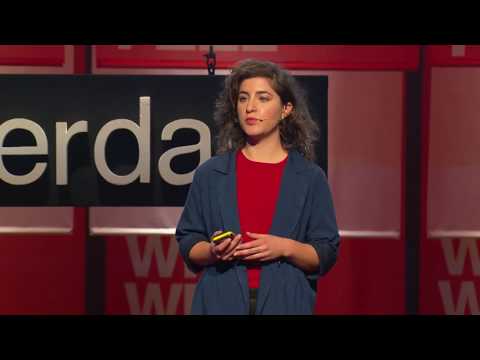
my name is Arnhem our couch and I’m an
architect architecture can be a powerful
tool it can offer its users the
possibility to be confronted with other
people and to create shared memories it
can offer the opportunity for people to
identify with these spaces because they
can connect their memories and stories
to a physical space but what does it
mean if you cannot recognize yourself in
what you see around you if the stories
on this play cannot be accessed by you
are forgotten or excluded because for
example you cannot afford it or you lack
so-called appropriate cultural
backgrounds then you’re not at home a
stranger in the city you live in you’re
not able to contribute not involved not
responsible from a very young age I got
to know what nationalism exclusion war
and being a refugee was and as a result
of that I also had an opportunity to
start a new life here in the Netherlands
with my family and to position myself in
a new environment in those years I lived
in a so-called mixed but actually
segregated neighborhoods and this
influenced the way I view architecture a
lot in those years and in that
neighborhood I had gradually become
Dutch but also a little bit CERN amis
Turkish Antillean and all the other
cultures and
identities which I met in the massive
apartment building we were living in and
this is actually one of the most
valuable experiences that I had and the
reason why I became an architect is
because I realized that architecture can
facilitate this but it can also
discourage it by excluding certain
groups of people in using these spaces
and only if we recognize the multiple
realities of identities and
identifications can a city be formed
that facilitates inclusivity and I will
give you an example of what is at stake
if this inclusivity is not our ambition
after the war ended I visited my family
city mostar in bosnia herzegovina almost
every summer about 70 percent of the
city did not survive the war and even
when the violence was over returning
home was no option because everything
that was familiar was gone because an
important war strategy to destroy a
people is to destroy everything they
know and this is what happened to my
family but is also daily reality right
now for a lot of families for example
families from Syria or every TRAI that
have fled to the Netherlands these last
few years and are maybe your new
neighbors right now people identify
themselves with public buildings and
public spaces landmarks of their lives
in the city connecting them to their
personal story their history bridges
museums libraries and squares these are
all chapters and verses of lives
connected to the people that are using
them what if we could create cities in
which all its citizens could recognize
themselves cities in which everyone gets
to write a verse architecture was used
as a tool in the war in Bosnia
Herzegovina by deliberately destroying
public buildings and spaces a history
and a culture of a city vanished the
most profound act of destruction was
that of the old bridge in mostar the
bridge was a symbol for the city the
city was named after the bridge it stood
for the connection between the two
halves of the city for tolerance and you
it was a important location for meeting
people the location of the celebrated
yearly diving competition and the best
place for first dates for generations of
people the city was the bridge and the
bridge was the city but destroying the
bridge the soul of the city was
extinguished the city became mortal the
city died destruction is not the only
way to remove the soul from a city
changing the rules changing the access
can have the same devastating effect and
when I visited most that after the war I
saw how a lot of public places were
transformed into nationalist hotspots
where certain rules and politics applied
and where specific groups of people were
excluded witnessing this I realized
cities are not only built from bricks
concrete or stone but rather by memories
millions of memories inherently linked
to a certain place and a place you need
access to in order to access those
memories or to create them and people in
most of that were excluded from those
hotspots were unable to access a part of
their history and by deaths their
history was denied and linking this
phenomenon to for example this country
where Dutch colonial past and especially
its victims is denied in public space
can have the same devastating effects
for some of our citizens and people that
know me really well they know that’s
talking about this combination of war
and architecture it’s not my favorite
thing to do because I’ve been doing it a
lot these last few years because I think
it’s important to learn from mistakes
that are made in history and as you
notice this story is not about the
Bosnia of 1993 it’s about you and me and
the cities we live in today and is it
possible to create cities in which a
centuries of memories are preserved but
new ones are collected as well Callay do
skopic spaces with each turn you see a
different story and the multitude of
them is the beauty as guilty as the act
of destruction and exclusion are the act
of building a city can be just as
exclusive and destructive in so many
cities today
the public spaces that are built tell
the stories of the few other people can
walk the streets sometimes even enter a
building but they will never be part of
the story if we are to build inclusive
cities this needs to change but who
decides which stories are told by the
buildings around us who decides which
part of history is on display by
choosing this we choose what is
important we choose who is important the
cities that we create right now these
pricey picture-perfect cities makes us
lose touch they’re short-lived not
shared and not remembered and don’t get
me wrong I’m not against pricey places
like the ones you saw on these last
images but if it cannot exist next to
places that are less pricey or offer
other possibilities of use or maybe
other products then we will create
homogeneous cities cities where that are
filled with places like these where we
can drink coffee and eat banana bread
till we drop dead yeah like I said we as
citizens don’t like any other products
and we have to ask ourselves the
question who decides about this and why
we need to cultivate the fact that human
encounters between different people are
important because it’s the connection
between you and someone else someone
different than you that makes us who you
are if we lose sight of the other if the
other is not part of our daily reality
anymore whoever that other is we will
lose something very valuable the ability
to constantly redefine ourselves in
relation to others and this is exactly
what runs wrong in mostar because people
outside of each other the old bridges
rebuilt but it’s lost its meaning
because it’s just a symbol of a fake
connection Muslims and Catholics live
separated from each other each on on one
side of the bridge with our own
hospitals schools football clubs etc can
we see a city as a book that is
constantly being written without losing
any old chapters even the wounds of the
past interpretations of the present and
with space for new thoughts that even
haven’t been been taught yet
we have to find shared points of
reference in public space to bind
different people to one place that is
what I try to do in most that I made a
design proposal in which I included a
ritual as old as time diving off of the
old bridge is a custom where young men
are learned how to dive and ultimately
test their manhood by diving into the
river every year a diving contest is
held where high bore divers from
different religious backgrounds take the
plunge and in this urban activity it
doesn’t matter who you are or where
you’re from it connects people through
the courage to do so I use this to
design a monument which is dedicated to
the ritual of diving where citizens can
learn step by step how to die from great
heights and with the plunge from the new
old bridge as the final step the three
second jump towards the water provides a
feeling of weightlessness and freedom
where one becomes detached from
everything around oneself including the
struggles of living in a divided city in
order to give all stories past present
and future the space they deserve we
need to start creating cities
differently with public space and
architecture that creates and
facilitates encounters between different
people through shared rituals and
activities we need bold policy makers
who recognize the power of diversity and
inclusivity we need visionary
politicians from different backgrounds
that are willing to listen to the
stories of all of their citizens and are
true representatives of those who they
decide for we need architects to create
public space that connect people and
that reflects shared history and
possible futures I invite you to walk
the streets write your own verse and to
open up to all the unknown stories of
your fellow city dwellers thank you
[Applause]
you
Please follow and like us: