
Translator: Jenny Lam-Chowdhury Reviewer: Iris Chin
I am the daughter of Syrian immigrants to the United States.
I grew up with Syria as a second home.
I have childhood memories in Aleppo and Damascus,
some of the very places that have been devastated by the current war.
I watched my extended family slowly leave the country
as the situation got worse and worse,
and by the time I got to college, I felt like I needed to do something
to help me feel connected to the struggle of my fellow Syrians.
So, I decided to visit a Syrian refugee camp and film a short documentary.
In the summer of 2014, against my parents wishes,
I set out to visit the Zaatari Syrian refugee camp in Jordan,
which turned out to be the beginning of a long journey of self-discovery;
a journey that has led me
to the Refugee Study Center at Oxford University.
Access to the camp was granted through Save the Children Jordan,
and after arriving in Amman, I met my bodyguard, Sultan.
Yes, I said bodyguard,
and he told me to prepare myself for a long car ride.
So, we jumped in his SUV and rode out into the country,
giving me plenty of time to question my decision to visit the camp.
Eventually, the green farmlands morphed into dry sand
as we made our way into the desert,
and soon everything in sight was red earth.
Well, everything except the paved road that we were driving on.
Zaatari was literally in the middle of the desert.
Soon, we turned off the paved road and started driving in the dirt,
and a large white structure loomed in the distance.
At this point, Sultan turned to me with a nervous look
and told me to quickly put away my camera equipment.
So, naturally, I started freaking out!
What if they didn’t let us in?
What if after all of that planning, I would get stuck at the entrance?
What if they didn’t like young Syrian-American women with cameras?
But, luckily, the guard at the gate already knew Sultan,
so he just waved us through.
So, I was finally there, I was finally in Zaatari,
or, so I thought, but we still had more security to go through.
So, Sultan took me to the administration building
where I found myself sitting in front of a young Arab man
behind a large wooden desk,
and he proceeded to lecture me for 30 minutes
about being ethical with my interactions and filming,
and he examined my passport and permission letter at least five times
before deciding that they were real enough for his seal of authority.
But he did finally give it, and that was the last hurdle.
So, I was finally there, after six months of planning.
It turns out, though, it wasn’t what I was expecting.
Walking into Zaatari
I was quickly confronted with a very painful personal truth:
that I, the daughter of Syrian immigrants,
carried with me several stereotypes about refugees
that I didn’t even realize I had.
It was nothing like the stories I had seen on Facebook.
Walking into Zaatari, I thought that I would see
NGO volunteers handing out food to refugees
because that’s what I saw in the news.
Everything that I read before going to Zaatari
seemed to always be that refugees complained about food and services,
that they received aid,
that they were powerless and helpless people.
What I saw, however, was refugees who were not lacking in initiative.
Zaatari had only opened two years earlier, and yet, by the time I visited,
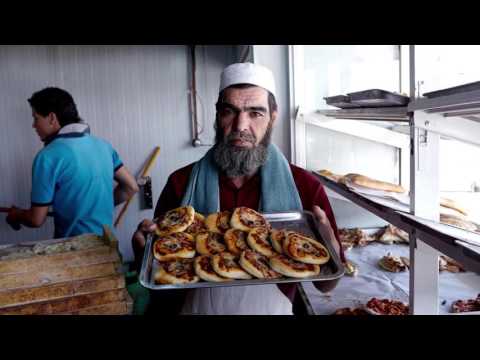
there were hundreds of stores that sold anything you can think of:
hookahs, toys, coffee, Syrian desserts, vegetables, perfume,
wedding dresses, food.
Anything.
When I met Selma, a hairdresser,
I found someone who was taking her community
above a subsistence level,
someone who was going beyond what humanitarian aid provides.
She was helping brides feel beautiful on their wedding day,
in a refugee camp, in the middle of the desert.
I interviewed Selma in her private salon, which she had recently opened.
She was a hairdresser back in Syria
and felt that her life was unpredictable and without purpose
when she moved to Zaatari.
So, together with her mother and sister,
she gathered enough resources to buy a trailer
and opened a private hair salon for women in the camp.
Now, she supports herself and her family
with the income that she makes from her business.
The more stories I heard and people that I spoke with,
the more I began to feel ashamed for the misconceptions that I held.
Even though there were subconscious, I still felt ashamed.
Walking into Zaatari I realized that I carried with me very deeply hidden ideas
about what refugees should look like,
what they should dress like, how they should eat,
how they should behave.
For example, there’s a widely held suspicion that, in spite of war,
refugees are fleeing for economic advantage,
that they’re seeking economic opportunities in rich Western countries.
Well, I must have believed this deep down
because I remember feeling shocked when I heard how many families
went through some form of violence before leaving Syria,
and that most people never even wanted to leave
but felt unsafe after loved ones were shot in the street or taken to prison.
No one said anything about pursuing economic opportunities.
One mother described to me
how she watched a barrel bomb fall from the sky,
crash into the top floor of her building and explode,
while she and her neighbors were running down into the basement.
I heard about army raids that occurred periodically
in the villages around Damascus.
The raids were so horrific
that families started digging large holes in their living rooms to hide in,
whenever they occurred.
These people were living in horrific conditions,
and like you and me,
they simply desired safety and stability.
They wanted their children to grow up on playgrounds,
not in dirt holes beneath their living rooms.
So, why did I have these misconceptions?
Why did I, the daughter of Syrian immigrants,
expects refugees to look, act, and behave a certain way?
Well, I think it has something to do with the saturation of social media
as the main form of knowledge we receive about the world around us.
Although thumbing through Facebook and reading quick headlines
can certainly keep us up-to-date about issues in the world,
they don’t give us the full picture.
140 characters on Twitter can give us quick updates
and statistics concerning the issues we care about.
But we must remember that Twitter posts are just that: 140 characters.
How much can you really know about the way refugees are living in a refugee camp
with such little information?
Our reliance on consumer-friendly media
is actually doing us a disservice in the long run.
And, unfortunately, too many news articles seem to only focus
on a few aspects of a story.
So, what happens
when the same side of the story constantly comes up in your news feed?
What happens when news coverage of refugees seems to always be
about conflicts, like “Police clash with Syrian refugees at Jordan’s Zaatari camp”?
Or, “Syrian refugee killed in riot at camp in Jordan”?
What picture or narrative gets painted in your consciousness
when you read this headline over and over again:
“Rape runs rampant in Syrian refugee camps”?
How can anyone not assume that these places are filled with crime
when this is what you’re seeing in your news feeds?
Do these things happen?
Yes, they do.
But so does so much more.
Bad things make news,
but there are industrious men and women living in these places
trying to make a good life in the midst of a bad situation.
Refugee issues are a lot more complex
than the stories that we read in our news feeds.
Our news feeds cannot be our only source of knowledge
about the world that we live in.
They can give us a foundation, a basic understanding,
but they cannot be our only source of information.
We must move beyond consumer-friendly
to consumer- or, more properly, to citizen-engaged.
We need to work at it.
We must engage more deeply by learning more deeply.
Each refugee carries with her a personal narrative,
along with fears, traumas, desires and dreams,
and she struggles with the same things you and I struggle with every day.
How do I support myself?
How do I make myself look beautiful on my wedding day?
How do I find a job so that my kids can eat and get a good education?
How do I stay connected with friends and family?
Now, I understand
that not all of us can have personal conversations with refugees.
I understand that many of us
will probably never even meet one, or know that we did.
But the refugee crisis
has become part of a daily social and political discourse in America.
Refugees are a part of our global community
who deserve a little more time and effort on our part
when it comes to trying to understand them and the complexity of their situation.
4.8 million Syrian refugees alone.
I think they deserve a little more time than Grumpy Cat in the latest skit on SNL.
They deserve our concern as part of our global community,
as people, like you and me.
Thank you.
(Applause)
Please follow and like us: