
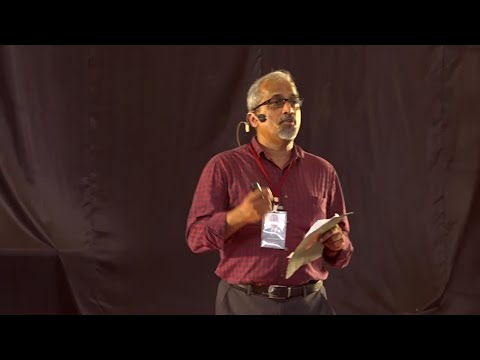
after 39 years in the corporate sector
two years ago I decided to move to the
development sector and even as I look
back at my journey of 31 years all that
I can say is that it has been a very
very eventful journey starting in the
area of automobile engineering I moved
into commercial banking after an MBA in
finance moved thereafter to project
finance and development banking spent 17
years in the area of infrastructure and
then moved into working with communities
in some sense there has been a natural
progression in my own work in having
moved from financing to development this
also was because in many ways in the
choices that I made I was motivated by a
desire to in some sense serve a larger
purpose than my own carrier aspirations
and also ask this question what
difference do you really bring to the
country and society that you live in I
have had the experience and the
opportunity to work with various
innovative ideas in the area of
infrastructure public-private
partnerships in particular but many of
them are examples that are big I thought
for an event like this it would be very
useful to look at a small innovative
example in the area of infrastructure
two examples actually which made a
difference and continue to make a
difference to two small communities in
what is usually a more excluded region
of our country which is the Northeast
and this is something that was possible
when I was CEO of idfc foundation and I
think it resonates very well with the
theme imbibe innovate and impart it
would be very presumptuous on my part to
think that all this innovation was
because of me and I must acknowledge
publicly the contribution of two of my
younger colleagues dr. Sampath Basu and
Samantha Sharma who worked very hard to
make these possible now the fact is that
the needs of infrastructure in India are
huge they are humongous and despite the
investments that have been made in the
last two two-and-a-half decades the
needs continue to be big more so the
needs of infrastructure are very high
particularly in areas that affect the
poor inclusive infrastructure as it is
called so whether it is public transport
whether it is water and sanitation
whether it’s solid waste management
whether it is social infrastructure
health care education whether it’s
village roads whether it’s village
electrification these are areas that
continue to need investment and continue
to need attention and would do so for a
long time to come so the story that I
will tell you is about a small
innovation which to my mind has made a
difference in one of the northeastern
states in our country so the picture
that you have on the screen is that of a
village and this village is the village
of Malling Nong which is in East Cassie
hills in Meghalaya 60 kilometers away
from chillon quit remotely located not
very easily accessible a small village
with 95 households and 500 people it has
a history of agriculture and
horticulture and I must tell you that
some of the best pineapples in this
country are grown in this village it
also had a culture of keeping the
village clean so much so that when a
magazine discover India actually
surveyed several villages in the
northeast they declared it as Asia’s
cleanest village and that propelled this
village from relative obscurity to a
place of prominence so much so that year
after year there were almost 200 to 500
people depending on the season actually
visiting this village what really
happened was that gradually the earnings
from tourism also started improving and
people’s aspirations improved with
increasing tourism in the will
it had electricity but as with often
electricity connections in remote places
whenever there was a problem with the
distribution system getting it repaired
or maintained in time was often a
challenge more critical was the fact
that it lacked public spaces so during
this period when tourism grew in this
place what really happened was that
people started adding little rooms to
their houses which during the evening
would be their dining rooms as well but
during the day served as places where
beverages and food was served and so
gradually this helped them in promoting
the local economy what also happened was
that they added a bedroom to their homes
and what that did was that they were
trying to promote the whole idea of home
stays by tourists but one thing that the
village lacked was good illumination of
public spaces at night and they tried
for several years to try and get funding
to create electricity which would
illuminate public spaces at night so
that the experience of people in the
village would improve it was at this
time that we were advising the
government omegle and we were presented
with a few problems of this kind and one
of the solutions that emerged was why
not use renewable energy and why not use
solar lighting as a solution for the
village after looking at different
possibilities and different sources of
funding we came to the conclusion that
the quickest way to implement a project
of this kind was to use our own CSR
funding and that is what we did as idfc
to use our own CSR funding for this
pilot project what we thought would
happen is that this would help to create
an effective model which could be scaled
up thereafter in doing so we said that
there would have to be a certain number
of minimum conditions one the land
should be given by the community free of
cost they should bring in at least 10%
of the project cost
not in cash but in kind through the
labor component that is required for the
project
it was insisted that they must take on
the operations and maintenance
responsibilities open a separate bank
account for the project set up a project
implementation committee with
representatives of the government the
community and with idfc Foundation and
finally have the entire selection
process overseen by this committee that
was agreed to and we went ahead with the
project
now as idfc and I DFC Foundation we had
handled several several large projects
hundreds of crores sometimes a few
thousand crores in size in terms of
project development and the managing the
entire process of procurement on behalf
of the government we decided that the
same level of rigor that we normally
brought to large projects should equally
be brought to the smaller projects and
that is what we did we made sure that
there was a very transparent process of
selection we made sure that while the
rigor in project development was high we
would pick up specifications which were
already there through the Emma nari to
make the process much simpler we used
empaneled suppliers who are already in
panel with the Ministry of non-renewable
energy as part of this process and so we
found that at the end of it what we
reached was a very very effective
cost-effective way of implementing the
project where the supplier finally was
able to supply lights at close to rupees
twenty-five thousand seven hundred
perlite which was among the least that
you could get for projects in that area
it was also slated that delivery would
be made in a period of six weeks and a
two year warranty
accompanied the entire program all this
actually resulted in a very robust kind
of project structure and delivery that
was possible equally important was that
some of the village youth were trained
to implement this project and so this is
a picture of how the village and the
community together
engaged in the implementation of the
project what did the project achieve
from tourist arrivals of 200 to 500 per
day a few months after the project was
implemented it was implemented in May
2015 by July they were almost 1500
visitors visiting the village from a
level of 80 cars a day it had gone up to
250 parking fees had gone up from 4,000
to 12,500 all in all as this would very
very clearly show that incomes went up
and that the economic resilience and the
economic condition of the village
improved very significantly now this was
something that the government was very
clearly very happy about and they wanted
to implement it in five more villages
but when this story got known and
understood what actually happened was
that with funding from the IR EDA which
is the National Authority for renewable
energy 18 villages in four districts for
a total of 360 streetlights got
implemented and we were able during this
period to bring down the implementation
by so significant an amount that the
project implementation was completed in
less than a month so this is indeed for
many of us it was an inspiring story and
eye-opener of how rigorous work done and
done very very transparently and by
involving the community could result in
change and transformation so renewable
energy can in many ways transform places
it can transform communities equally
creative use and creative selection of
the right technology for the right users
can actually make a difference and
that’s what this really told us so what
are the lessons in all this for us how
do we bring it to scale it is very
important that much of what we do we
realize should not just remain as
creative solutions and creative output
unless they are brought to scale
they cannot be truly classified as
innovation the lessons that we learned
was that even if the projects are small
as long as they are owned and driven by
the community they have a very short
answer of success projects have to be
demand driven not supply created the
minute it is demand driven it is based
on the actual need and uses that the
community has we also realize that we
should just because it is small not
sacrifice rigor and professionalism for
the sake of expediency and all in all
the involvement of all stakeholders in
the process the government the community
the funders the suppliers working
together in a cooperative endeavor is
important how does one reach scale we
reach scale when we move from just
creating individual livelihoods to
creating enterprise asking the question
what is it that we can do to harness the
creative energy particularly in youth in
many of these places that we stay what
are the organization structures what are
the business models which will allow for
this scaling up important to remember
that no size fits all and so we clearly
have to find contextual solutions for
the need that we find in communities we
also realize that for areas like
agriculture and horticulture another
very important area which in the future
would really find a lot of application
is the area of solar cooling solar
cooling for storage of produce and later
on probably solar transportation to make
sure that products can reach markets
very critical for far-flung areas
relatively not well-connected areas
particularly in the Northeast region as
well as other hilly regions in this
country we also realize that as we bring
scale to a lot of these applications
costs get driven downward today in the
electricity sector the cost of
generating power from renewable energy
sources has reached grid parity with
that of non renewable energy or more
conventional energy sources that really
means that with increasing applications
we can make transformative differences
through the sensible use of renewable
energy which is an essential part of
infrastructure creation in this country
last but not the least all these
projects all innovation because by
nature they are disruptive require
champions they require champions at all
levels in the community in the
government people who can fund them
people who are willing to take risks and
the challenges in finding the right
champions to make sure that these
innovations can happen what they can do
though is they can certainly help
excluded and remote communities make
sure that from an economic point of view
they find growth and resilience in the
way they are I hope that as all of us go
on with our lives each of us would be
champions of innovation wherever we are
and that all of us in our own ways can
move from just doing isolated examples
of innovation to creating a movement of
positive innovation which will result in
positive transformation of communities
and society if that happens this
conference objectives would have
succeeded thank you [Applause]