
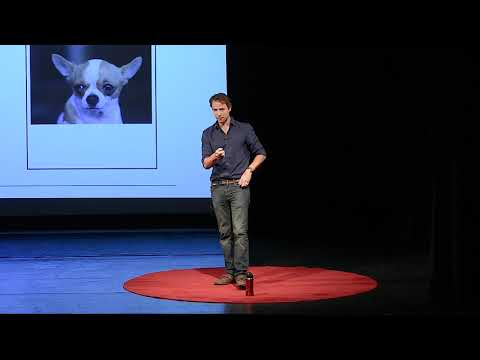
for thousands of years people have been
saying you could be who you want to be
if you think it you can do it just just
make it happen what the hell are they
talking about what I want to do is I
want to explore what that really means
on a literal level so we can start to
take it a bit more seriously which means
we got to turn to this lovely lady right
here now for the longest time we used to
think that the human brain just was kind
of an all-purpose meat computer so kind
of information comes in your senses it
just ticks away and out comes reality
it’s kind of like your stomach digests
your lungs breathe your brain thinks
that’s it and then we did this I want to
play a quick game with you I’m gonna pop
a color up in this box all you have to
do is outloud as quickly as you can tell
me what that color is are you ready okay
would decent so long as the clicker
works but we all know our colors yeah
good all right round two I’m gonna pop a
word in this box all you have to do as
quickly as you can read me that word are
you ready all right we know our colors
we know our words we’re good
round three you know this is coming
anytime someone talks about the brain
you’ve got to play this this time I’m
gonna pop a word up in this box but each
word is gonna be written in a different
colored font your job outloud as quickly
as you can tell me what color that word
is written in so I don’t care about the
word don’t want to hear that word I want
to know what color the letters of the
word are yep here we go out loud so
okay alright wait let’s did you feel it
did you feel that kind of crunch if all
we had was one brain that should be just
fine but here we can feel this kind of
movement this push and pull what we
found out is you don’t have a brain you
have dozens and dozens and dozens of
mini brains scattered all through here
and each of these little mini brains has
its own job so when we see something
like this you got one bit of your brain
that likes what red colors it sees a
color it says cool that’s my job so
what’s it gonna do whatever the hell the
brain does yeah that’s me you got
another bit of your brain that likes
what words does it care what else is
going on in the world it’s got one job
words there’s a word I’m doing it you’ve
got color bit you’ve got word bit
they’re both going and we can feel that
pressure now in the end we are able to
select one out it takes a second but we
can go pearl red so this means we must
have a controller somewhere up here
there must be one module one system that
can somehow organize and coordinate all
those other mini brains now if you had
to pick a spot where you think your
controller lives where in your brain do
you think this guy says maybe the bingo
what’s that bit of the brain that makes
us essentially human the prefrontal
cortex that magical thing guess where
this guy sits so here we go we’ve got
the controller up front way in front of
the brain he’s actually in there a bad
animation on my part we’ve got the
colour bit we’ve got the word bit
they’re both going off now what happens
is the controller controls all of these
things by sending out one signal the
only thing it can do is turn things off
so you’ve got colour bit going you got
word bit going and the controller can
say nope and that’s how the brain works
this is how we talked about it for
decades world comes in through your
senses triggers off all these mini
programs and the controller goes no no
no
no-no-no congratulations there you go
and we thought we were done until this
happened
twelve black lines and one green square
changed everything we thought we knew
about the brain and how it works
so for some of you it’s already
happening but if it’s not what I want
you to do is I want you to imagine that
this green face imagine it’s like a
piece of glass so we can see through it
I want you to imagine that the cube
starts on that green face and goes
backwards down and to the left
cool when you got that push it to the
back I want you to imagine if the cube
actually starts here and it goes
and if you got it in the back bring it
to the front and if you got it in the
front push it to the back is there
anyone who can’t do it he’s just going
what in the hell you guys talking about
if you can’t do it just look away for a
bit and come back it might start to do
it on its own but for the rest of us am
i changing this picture in any way shape
or form so the wavelengths coming off of
here hitting your eye triggering
programs are exactly the same right now
as they were 10 seconds ago yet you can
see two different things who’s doing
that oh it just happened over here good
okay according to our last theory if all
we have is a controller that can shut
things down this should come in and we
can either see it or not see it but here
we can change it we can tweak it if you
want the green in the front it comes out
if you want the green in the back it
goes back oh oh this means you don’t
have a controller you have a coder
sitting in the front of your brain is a
little module that can send signals back
to every other cell within your brain
tweak how it functions at the molecular
level so that you can experience the
world in a way you think it should be
not in the way it actually is and if
that sentence doesn’t make you feel
uncomfortable then you didn’t understand
what I just said let’s try this again
sitting in the front of your brain is a
module this module can send signals back
to every other cell in your brain and we
now know cells outside of your brain
tweak how it functions at the functional
level so that you literally see hear
smell taste feel the world you think
should exist not the world that actually
does exist easiest way to understand it
we used to talk like this the worlds out
there it sends signals in brain
processes that’s reality we now know
this isn’t true sure there’s a world out
there there’s something here but at any
one time we are pushing back and it’s
this we got to deal with now now this
leads to the important quest
what codes the coder if the coder is
changing things up what dictates how it
changes things in research we tend to
say it’s your schema but the easiest way
to understand it is this it’s your
stories the stories we use to make sense
of the world how it works who we are how
we fit within it how everything
interacts those stories drive our coder
our coder then tweaks our brains so that
is exactly what we get and a very real
sense our stories drive our perceptions
not the other way around now wait a
second we got a small problem here if
you I love dogs if we’ve got this coder
going all the time that would take an
incredible amount of energy if this
thing in the front of our brain was
constantly tweaking moving shaking
changing programs we estimate you’d only
be awake three and a half four hours a
day that’s how much energy this thing
would take so most of the time you’re
not actively coding your coder is doing
this it’s simply predicting right now
none of you are actually listening to me
and that kind of hurts my feelings but
you’re all about 1 to 2 seconds in front
of me simply predicting the words that
are going to come out of my mouth and so
long as these words are close enough to
your prediction you live in the
prediction not in reality so long as our
predictions work we don’t even need a
world that makes sense we can just live
in our predict prediction and make sense
of those things around us now here’s
what I want to do how do we access our
coder if most of the time we’re living
in our predictor how do we actively
access our coder so that we can change
the stories so we can change the way it
impacts this so we can live experience
understand the world differently now
there’s many ways to do it but there are
three primary ones relative to us or
relevant to us excuse me
number
one is this learning it’s the one thing
we do all the time especially in this
setting here the more new information we
can bring in the more we can attach that
to our old stories and start to slowly
tweak it and see something different
when we say you don’t read the same book
twice we mean it as you age as you learn
more you literally understand see sense
things differently
our memories now our understanding of
the world at this age was different than
ten years ago it will be different in
ten years that’s what learning is doing
it’s changing our coder which is
changing our perception number two is
this what am i showing you right now
what is this is it clouds is it a map
take a moment what are you feeling right
now
confused does some of you feel kind of
kind of a little crunch maybe in your
chest a furrow brow what that gives us I
can’t quite make sense of it
congratulations you’re coder is on right
now that feeling that crunch that that
is a sign that you don’t have a clear
prediction for the world so you zip into
the present you’re all here now thank
you nice to meet you and your coder
starts actively furiously working to say
how can I fit this into the world now
I’m gonna put you back in prediction
mode take this feeling here’s a
prediction and now let’s go back easy as
confusion when we are confused that
sensation is the coder coming on saying
do I got a change how does this work how
do I understand this that feeling that
crunch that’s good that is the sign that
your coder is actively working and in
that moment in that time we get to start
making decisions and choices about our
story which brings us into idea number
three now I want to get us back into
predictor mode here so let’s start with
a quick question how many senses does
the typical human being have
I’m not trying to trick you all I’m how
many senses does a typical human being
have five sweet what are they
sight smell taste hearing touch sweet
all right and what if I told you that
answer is totally wrong that in reality
human beings have way more than five
senses in fact at last count we have
about twenty-one unique senses now take
a moment what do you feel in this moment
when something you hold dearly that you
treasure turns out to be wrong how many
of you feel like oh the world kind of
stopped kind of focused kind of curious
what do you mean there’s 21 senses
you’re coder is now back on again
failure when we have a prediction that
fails I must have pressed something or
when a screen does this this is a
perfect example of what I’m talking
about when we have a prediction of how
the world should work and then it starts
working differently you don’t have a
choice you’re half you have to jump into
your coder do you that is the sign that
uh oh my prediction doesn’t make sense
and at this moment I could die if I
don’t make sign heed to write a new
program to make sense of this for the
future so we’ve got learning
we’ve got confusion and we’ve got
failure those are the three biggest and
easiest ways to access our coder now I’m
gonna end here we have a quick problem
with failure and it’s this when you make
a failure when a prediction fails your
error alarm kicks on and you become
hyper focused your coders ready to go it
would be wonderful if we just
automatically learned at that point
unfortunately that’s not what happens
love it or hate it anytime you screw up
your coder kicks on but at that moment
you have a choice you can choose to
engage with it and if you choose to
engage your brain flips into a pattern
that we call theta and that means that
it’s physically changing it’s updating
itself to say Oh
okay how can we make sense of this how
can we work in other words you learn
from it but if at the same point you say
oh no that’s just too uncomfortable
don’t worry about it and you ignore it
your brain flips into a thing called
beta it starts to erase what just
happened at about 72 hours later you’ll
forget that error ever occurred you’ll
go right back to your prediction and
you’ll probably make the same mistake
again
so it’s not enough to make an error at
that moment you have to recognize that
that feeling that’s the moment you get
to pause and choose and say okay I’m
going with it let’s learn or mmm
now life’s good as it is let’s go
backwards there’s not a right or a wrong
but I urge you try and engage with as
much as possible because that is how the
coder builds our stories that is the
signal that congratulations we get to
evolve we get to grow so thank you guys
so much for hanging out
I hope oh we’re back on I’ll leave it
there see you guys
you [Applause]
Please follow and like us: