
people say I’m a dropout which is
literally true but because I like
college courses in a sense I like going
to college more than anyone
I remember seeing a bumper sticker with
the Bell logo on it and it said we don’t
care we don’t have to you know and
that’s what a monopoly is that’s what
IBM was in their day and that’s
certainly what this the public school
system is they don’t have to care what’s
that believe nation at seven my one word
is believe and I believe in you I
believe you have Michael Jordan level
talent at something and I want you to
find it embrace it and use it to make a
difference now I get asked a lot one of
the most common questions that get asked
that people is is it worth it to get an
education is is it worth it to go to
college university or not what are my
thoughts and so I thought I’d create a
new series the test series to showcase
the advice and wisdom from different
famous entrepreneurs to get their
perspective and hopefully help you make
a better decision so today we’re gonna
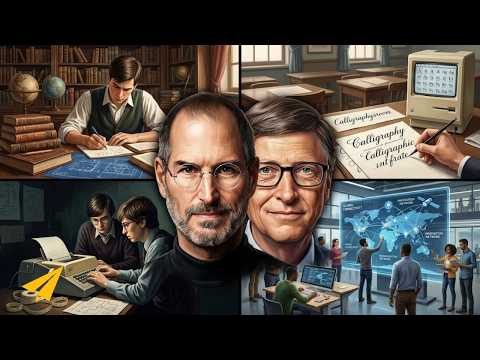
learn what Bill Gates and Steve Jobs
think about education enjoy you dropped
out of Harvard and in hindsight it was
obviously start Microsoft but at the
time for your parents they wouldn’t have
known the success that that was gonna go
on to become how did they feel about
their son doing that well they were very
generously you know paid for my tuition
at the time officially I went on leave
and so you know if the company hadn’t
gone well Harvard’s very generous about
letting people come back so it really
wasn’t kind of a permanent thing so you
never expect so you were thinking at
some point I’ll end up going back and
finishing I wasn’t but I’d been
unrealistic and the business hadn’t
worked out it I could of and I loved
school I mean I loved it when I was
there and even now I read more textbooks
and so it’s kind of ironic that I’m a
dropout because I I read more I like to
learn as as much as anyone I know
people say I’m a dropout which is
literally true but because I like
college courses the online college
courses there
company called the learning company that
I buy tons and tons of their stuff and I
do in at least four or five courses a
year in a sense I like going to college
more than anyone education is
essentially a social construct it’s not
that the universities have secret
knowledge that only they have available
you know I took these numbers won’t make
any sense anymore but the hardest
freshman math class was called math 55 I
assume it’s not called that anymore
but it was it was a group of it is a
group of 80 people whose personal
positioning was they were the best
person at math that they had ever met so
there were 79 frauds one person who
really was the the best at math I ended
up the guy who came in first in the
class is a lawyer in New York now the
guy who came in second is a professor of
chaos theory of Princeton and then I
came in third so I knew okay math she’s
that’s interesting anyway I didn’t take
physics 55 but I read the Fineman book
and so if you’re motivated seriously you
don’t have to take a course the Fineman
book if you’re hardcore just read the
final and book through the problems you
want to learn to do software read the
art of computer programming good luck
doing the problems but you know anyone
that’s rated 30 or harder is like super
hard to do it’s always been in the
textbook but the percentage of students
who just buy textbooks and and read them
and know the subject is vanishingly
small you kind of have to have this
thing where a bunch of kids all come at
the same time and you know if you don’t
study you’re gonna get a bad grade and
your parents may not like that you have
to create all these social things in
order for people to get into this mode
of hyper concentrating and actually
understanding why should I concentrate
you know if I’m a high school student
they put X’s and Y’s up on the board how
does that relate to my life now if you
understood that being good at math
let’s forget a good job travel the world
you might say okay it does relate to me
but that’s a very indirect thing and the
kind of discipline to care about that to
concentrate that’s what’s missing why
should people engage in that learning
and how do you create the environment
and the sense of achievement and the
sense of capability that’s sitting in
there and you know looking at X’s and
Y’s manipulating them seems like a smart
thing to do
right now you know if you ask who are
the customers of education the customers
of Education are the society at large
employers that hire people right things
like that but ultimately I think the
customers are the parents not even the
students but the parents the problem
that we have in this country is that the
customers went away the customers
stopped paying attention to their
schools for the most part well what
happened was is that mothers started
working and they didn’t have time to
spend at PTA meetings and watching their
kids school schools became much more
institutionalized and parents spent less
and less and less time involved in their
kids education and what happens when a
customer goes away and a monopoly gets
control which is what’s happened in our
country is that the service level almost
always goes down
I remember seeing a bumper sticker when
the telephone company was all won AT&T
the Bell System
I remember seeing a bumper sticker with
the Bell logo on it and it said we don’t
care we don’t have to you know and
that’s what a monopoly is that’s what
IBM was in their day and that’s
certainly what the public school system
is they don’t have to care now it turns
out what some go through some economics
the most expensive thing most people buy
in their lives is a house second most
expensive thing is a car usually in a
car cost average cars proximately about
$20,000 now 16 $20,000 and an average
car lasts about what eight years
you buy another one so approximately you
know $2,000 a year right for an eight
year commitment well your child goes to
school right approximately eight years
in K through eight right
you don’t like to switch schools it’s
about an eight year commitment what is
the state of California spend per pupil
per year and a public school what they
spend per year per pupil is about forty
four hundred dollars okay about twice as
over twice as much as a car now it turns
out that when you go to buy a car you
have a lot of information available to
you to make a choice and you have a lot
of choices
I mean General Motors and Ford and
Toyota and Chrysler and Nissan they are
advertising at me like crazy I can’t get
through a day without seeing five car
ads and they seem to be able to make
these cars efficiently enough that they
can afford to take some of my money and
advertise other people with it so that
everybody knows all about these cars and
they keep getting better and better and
better each use a lot of competition and
there’s a warranty that’s right but in
schools since people don’t feel like
they’re spending their own money they
feel like it’s free right
no one does any comparison-shopping
matter of fact if you want to put your
kid in a private school you can’t take
the 4,400 dollars a year out of the
public school and use it you have to
come up with you know five or six
thousand dollars of your own or even
forty four hundred dollars of your own
money I believe very strongly that if
the country gave each parent a voucher a
check for forty four hundred dollars
that they could only spend at any
accredited school that several things
would happen number one schools would
start marketing themselves like crazy to
parents to get students secondly I think
you see a lot of new schools starting
I’ve suggested as an example if you go
to stand for business school they have a
public policy track they could start a
school administrator track so you
get a bunch of people coming out of
college tying up with somebody’s got a
business school I could be starting
their own schools
you could have twenty five year old kids
out of college very idealistic full of
energy instead of starting a Silicon
Valley company they’d start a school and
I believe they would do far better than
many of our public school teachers do
the third thing you’d see is I believe
that you would see the quality of
schools again just like in a competitive
market start to rise
some schools ago broke a lot of the
public schools would go broke there’s no
question about it would be rather
painful for the first several years and
but I think far less painful than the
kids going through the system as it is
right now and some people the biggest
complaint is of course that schools
would pick off the all the good kids and
all the bad kids would be left to wallow
together in either a you know a private
school or the remnants of the public
school to me that’s like saying well all
the car manufacturers are going to make
BMWs and Mercedes is and nobody’s going
to make a $10,000 car well I think the
most hotly competitive market right now
is the ten thousand dollar car area
you’ve got you know all the Japanese
playing in it you’ve got General Motors
that spent five billion dollars
subsidizing Saturn so far so that they
can compete in that market you’ve got
Ford which has just introduced two new
cars in that market
you’ve got Chrysler with the neon so the
the market competition model seems to
indicate that where there is a need
there is a lot of providers willing to
tailor their products to fit that need
and a lot of competition which keeps
now I’ve got two very special bonus
clips from Bill Gates and Steve Jobs
highlighting some of their best advice
for college students but before that I
want to know what did you think what do
you think about the education system
what do you think about going to college
is it worth it or not share your
thoughts in the comments below thank you
guys so much for watching I believe in
you I hope we continue to believe in
yourself and whatever your one word is
much love I’ll see you soon and enjoy
well let me ask you to kind of reflect
back to when you were the age of the
folks in the room here 20 or so the with
the experience that you’ve accumulated
since that time we’ve got a bunch of
incredibly smart ambitious creative
folks in the room here we’re going to be
the future doers and makers and
influencers what advice would you in
part based upon your recollection of
when you were sitting in this seat at
that age well I think it’s if anything a
more interesting time to be lucky enough
to be a student at Harvard the ability
to take innovation and solve problems
including the class of problems I’ll
cloud inequity problems how do you you
know help low-income students do as well
as high income students how do you go to
Africa and help the health and education
take the incredible population growth
that will be there and make that a
positive asset for that continent these
are very tough problems and you know
they’ve eluded being solved so obviously
the easy problems are not the ones
you’ll you’ll get to work on so whether
it’s you know health costs or climate
change or you know robots that are do
good things and not bad things or the
policies around those things this is a
fascinating time to be alive you know I
don’t know what it’ll be like 50 or 60
years and what the problems will be but
in your generation you know cancer
infectious disease so many things will
be solved and the societal framework of
how you avoid polarization and how you
maintain trust those things will also
mean some brilliant breakthroughs when I
was young there was an amazing
publication called the Whole Earth
Catalog which was one of the Bible’s of
my generation it was created by a fellow
named Stuart brand not far from here in
Menlo Park and he brought it to life
with his poetic touch this was in the
late 60s before personal computers and
desktop publishing
so it was all made with typewriters
scissors and Polaroid cameras it was
sort of like Google and paperback form
35 years before Google came along it was
idealistic overflowing with neat tools
and great notions Stuart and his team
put out several issues of the Whole
Earth Catalog and then when it had run
its course they put out a final issue
it was the mid-1970s and I was your age
on the back cover of their final issue
was a photograph of an early morning
country road the kind you might find
yourself hitchhiking on if you were so
adventurous beneath it were the words
stay hungry stay foolish it was their
farewell message as they signed off stay
hungry stay foolish and I have always
wished that for myself and now as you
graduate to begin anew I wish that for
you stay hungry stay foolish thank you
all very much if you had to think of one
word that’s most important to you that
sums you Apple that would be collect a
little beacon pay believe nation if you
want to know what the most important one
word is for Tony Robbins Gary Vaynerchuk
Oprah Winfrey will.i.am and Howard
Schultz I have a very special secret
video for you check the description for
details [Music]
literally true but because I like
college courses in a sense I like going
to college more than anyone
I remember seeing a bumper sticker with
the Bell logo on it and it said we don’t
care we don’t have to you know and
that’s what a monopoly is that’s what
IBM was in their day and that’s
certainly what this the public school
system is they don’t have to care what’s
that believe nation at seven my one word
is believe and I believe in you I
believe you have Michael Jordan level
talent at something and I want you to
find it embrace it and use it to make a
difference now I get asked a lot one of
the most common questions that get asked
that people is is it worth it to get an
education is is it worth it to go to
college university or not what are my
thoughts and so I thought I’d create a
new series the test series to showcase
the advice and wisdom from different
famous entrepreneurs to get their
perspective and hopefully help you make
a better decision so today we’re gonna
learn what Bill Gates and Steve Jobs
think about education enjoy you dropped
out of Harvard and in hindsight it was
obviously start Microsoft but at the
time for your parents they wouldn’t have
known the success that that was gonna go
on to become how did they feel about
their son doing that well they were very
generously you know paid for my tuition
at the time officially I went on leave
and so you know if the company hadn’t
gone well Harvard’s very generous about
letting people come back so it really
wasn’t kind of a permanent thing so you
never expect so you were thinking at
some point I’ll end up going back and
finishing I wasn’t but I’d been
unrealistic and the business hadn’t
worked out it I could of and I loved
school I mean I loved it when I was
there and even now I read more textbooks
and so it’s kind of ironic that I’m a
dropout because I I read more I like to
learn as as much as anyone I know
people say I’m a dropout which is
literally true but because I like
college courses the online college
courses there
company called the learning company that
I buy tons and tons of their stuff and I
do in at least four or five courses a
year in a sense I like going to college
more than anyone education is
essentially a social construct it’s not
that the universities have secret
knowledge that only they have available
you know I took these numbers won’t make
any sense anymore but the hardest
freshman math class was called math 55 I
assume it’s not called that anymore
but it was it was a group of it is a
group of 80 people whose personal
positioning was they were the best
person at math that they had ever met so
there were 79 frauds one person who
really was the the best at math I ended
up the guy who came in first in the
class is a lawyer in New York now the
guy who came in second is a professor of
chaos theory of Princeton and then I
came in third so I knew okay math she’s
that’s interesting anyway I didn’t take
physics 55 but I read the Fineman book
and so if you’re motivated seriously you
don’t have to take a course the Fineman
book if you’re hardcore just read the
final and book through the problems you
want to learn to do software read the
art of computer programming good luck
doing the problems but you know anyone
that’s rated 30 or harder is like super
hard to do it’s always been in the
textbook but the percentage of students
who just buy textbooks and and read them
and know the subject is vanishingly
small you kind of have to have this
thing where a bunch of kids all come at
the same time and you know if you don’t
study you’re gonna get a bad grade and
your parents may not like that you have
to create all these social things in
order for people to get into this mode
of hyper concentrating and actually
understanding why should I concentrate
you know if I’m a high school student
they put X’s and Y’s up on the board how
does that relate to my life now if you
understood that being good at math
let’s forget a good job travel the world
you might say okay it does relate to me
but that’s a very indirect thing and the
kind of discipline to care about that to
concentrate that’s what’s missing why
should people engage in that learning
and how do you create the environment
and the sense of achievement and the
sense of capability that’s sitting in
there and you know looking at X’s and
Y’s manipulating them seems like a smart
thing to do
right now you know if you ask who are
the customers of education the customers
of Education are the society at large
employers that hire people right things
like that but ultimately I think the
customers are the parents not even the
students but the parents the problem
that we have in this country is that the
customers went away the customers
stopped paying attention to their
schools for the most part well what
happened was is that mothers started
working and they didn’t have time to
spend at PTA meetings and watching their
kids school schools became much more
institutionalized and parents spent less
and less and less time involved in their
kids education and what happens when a
customer goes away and a monopoly gets
control which is what’s happened in our
country is that the service level almost
always goes down
I remember seeing a bumper sticker when
the telephone company was all won AT&T
the Bell System
I remember seeing a bumper sticker with
the Bell logo on it and it said we don’t
care we don’t have to you know and
that’s what a monopoly is that’s what
IBM was in their day and that’s
certainly what the public school system
is they don’t have to care now it turns
out what some go through some economics
the most expensive thing most people buy
in their lives is a house second most
expensive thing is a car usually in a
car cost average cars proximately about
$20,000 now 16 $20,000 and an average
car lasts about what eight years
you buy another one so approximately you
know $2,000 a year right for an eight
year commitment well your child goes to
school right approximately eight years
in K through eight right
you don’t like to switch schools it’s
about an eight year commitment what is
the state of California spend per pupil
per year and a public school what they
spend per year per pupil is about forty
four hundred dollars okay about twice as
over twice as much as a car now it turns
out that when you go to buy a car you
have a lot of information available to
you to make a choice and you have a lot
of choices
I mean General Motors and Ford and
Toyota and Chrysler and Nissan they are
advertising at me like crazy I can’t get
through a day without seeing five car
ads and they seem to be able to make
these cars efficiently enough that they
can afford to take some of my money and
advertise other people with it so that
everybody knows all about these cars and
they keep getting better and better and
better each use a lot of competition and
there’s a warranty that’s right but in
schools since people don’t feel like
they’re spending their own money they
feel like it’s free right
no one does any comparison-shopping
matter of fact if you want to put your
kid in a private school you can’t take
the 4,400 dollars a year out of the
public school and use it you have to
come up with you know five or six
thousand dollars of your own or even
forty four hundred dollars of your own
money I believe very strongly that if
the country gave each parent a voucher a
check for forty four hundred dollars
that they could only spend at any
accredited school that several things
would happen number one schools would
start marketing themselves like crazy to
parents to get students secondly I think
you see a lot of new schools starting
I’ve suggested as an example if you go
to stand for business school they have a
public policy track they could start a
school administrator track so you
get a bunch of people coming out of
college tying up with somebody’s got a
business school I could be starting
their own schools
you could have twenty five year old kids
out of college very idealistic full of
energy instead of starting a Silicon
Valley company they’d start a school and
I believe they would do far better than
many of our public school teachers do
the third thing you’d see is I believe
that you would see the quality of
schools again just like in a competitive
market start to rise
some schools ago broke a lot of the
public schools would go broke there’s no
question about it would be rather
painful for the first several years and
but I think far less painful than the
kids going through the system as it is
right now and some people the biggest
complaint is of course that schools
would pick off the all the good kids and
all the bad kids would be left to wallow
together in either a you know a private
school or the remnants of the public
school to me that’s like saying well all
the car manufacturers are going to make
BMWs and Mercedes is and nobody’s going
to make a $10,000 car well I think the
most hotly competitive market right now
is the ten thousand dollar car area
you’ve got you know all the Japanese
playing in it you’ve got General Motors
that spent five billion dollars
subsidizing Saturn so far so that they
can compete in that market you’ve got
Ford which has just introduced two new
cars in that market
you’ve got Chrysler with the neon so the
the market competition model seems to
indicate that where there is a need
there is a lot of providers willing to
tailor their products to fit that need
and a lot of competition which keeps
now I’ve got two very special bonus
clips from Bill Gates and Steve Jobs
highlighting some of their best advice
for college students but before that I
want to know what did you think what do
you think about the education system
what do you think about going to college
is it worth it or not share your
thoughts in the comments below thank you
guys so much for watching I believe in
you I hope we continue to believe in
yourself and whatever your one word is
much love I’ll see you soon and enjoy
well let me ask you to kind of reflect
back to when you were the age of the
folks in the room here 20 or so the with
the experience that you’ve accumulated
since that time we’ve got a bunch of
incredibly smart ambitious creative
folks in the room here we’re going to be
the future doers and makers and
influencers what advice would you in
part based upon your recollection of
when you were sitting in this seat at
that age well I think it’s if anything a
more interesting time to be lucky enough
to be a student at Harvard the ability
to take innovation and solve problems
including the class of problems I’ll
cloud inequity problems how do you you
know help low-income students do as well
as high income students how do you go to
Africa and help the health and education
take the incredible population growth
that will be there and make that a
positive asset for that continent these
are very tough problems and you know
they’ve eluded being solved so obviously
the easy problems are not the ones
you’ll you’ll get to work on so whether
it’s you know health costs or climate
change or you know robots that are do
good things and not bad things or the
policies around those things this is a
fascinating time to be alive you know I
don’t know what it’ll be like 50 or 60
years and what the problems will be but
in your generation you know cancer
infectious disease so many things will
be solved and the societal framework of
how you avoid polarization and how you
maintain trust those things will also
mean some brilliant breakthroughs when I
was young there was an amazing
publication called the Whole Earth
Catalog which was one of the Bible’s of
my generation it was created by a fellow
named Stuart brand not far from here in
Menlo Park and he brought it to life
with his poetic touch this was in the
late 60s before personal computers and
desktop publishing
so it was all made with typewriters
scissors and Polaroid cameras it was
sort of like Google and paperback form
35 years before Google came along it was
idealistic overflowing with neat tools
and great notions Stuart and his team
put out several issues of the Whole
Earth Catalog and then when it had run
its course they put out a final issue
it was the mid-1970s and I was your age
on the back cover of their final issue
was a photograph of an early morning
country road the kind you might find
yourself hitchhiking on if you were so
adventurous beneath it were the words
stay hungry stay foolish it was their
farewell message as they signed off stay
hungry stay foolish and I have always
wished that for myself and now as you
graduate to begin anew I wish that for
you stay hungry stay foolish thank you
all very much if you had to think of one
word that’s most important to you that
sums you Apple that would be collect a
little beacon pay believe nation if you
want to know what the most important one
word is for Tony Robbins Gary Vaynerchuk
Oprah Winfrey will.i.am and Howard
Schultz I have a very special secret
video for you check the description for
details [Music]
Please follow and like us: