
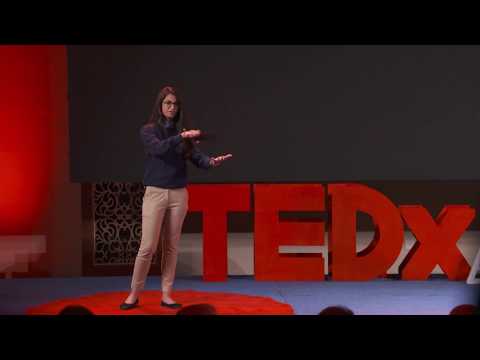
realms of compassion and morality and
all those other human complications that
seem far too large to contemplate and
actually just like to pause for a second
on something more semantic because my
talk started out as a question and does
moral fatigue dilute compassion and the
nature of questions implies that there
are one or a number of specific reasons
to elicit an answer and given that I
can’t really say that I on to these huge
questions about morality so instead
you’re going to have to bear with me
while I call this a deconstruction so
that’s the framework we’re working under
it’s really just me sorting through my
own emotional conflict um and also just
a quick thing when I say media I’m
largely referring to news coverage and
broadcasting on both traditional and new
mediums so here we actually go you see
morality has defined is the principles
concerning the distinction between right
and wrong
it’s the differentiation of intentions
decisions and actions and moral dilemmas
manifests themselves all around us they
they wreak havoc whether it’s you know
stopping yourself a meeting that last
slice of pizza or avoiding that
convenient coffee shop down the road
that you know donates to causes that you
just can’t get behind or maybe it’s
confessing to something that’s going to
send your best friend off to prison for
the next 10 years the last one’s
actually famous it’s called the
prisoner’s dilemma and I use it in game
theory the point is is that all of these
examples rely on this conflict between
self-preservation and self-interest and
goodwill for others and so when I was
thinking about these things what struck
me is that doing the right thing seems
to have an inherent connotation of doing
justice by other people it’s something
to bear in mind on the other hand
we have immorality which is the active
opposition to any moral principles the
bad people I actually like to say the
bad decisions because I think that’s an
important distinction to make and I’ll
leave that with you but what I think is
more interestingly well like of course I
do is a morality especially at this
point in time and a morality is the
indifference to any moral principles you
see it’s like being thrown into a rink
is how I think of it because we’ve been
asked to deflect these punches from both
the Augmented nature of tragedy and the
media at the same time and this has
edged us closer and closer to it simply
not caring to be indifferent to be
unaffected by the plight of others and
this this is dangerous our collective
morality is on this slippery slope
towards this indifference we’ve gone
from questioning these infinite shades
of grey’ to not even caring if black
white or grey exist and so this morality
I think exists not for being mall but
for the sake of appearances to appear
moral and I think it’s actually quite
redundant most of the time because it’s
really just a reflection of my phone
screen or my laptop or my well my mobile
is my phone and so it really doesn’t
exist in its own right we are operating
at its most basic threshold of what it
takes to be moral and that’s because the
weight of making a decision weighs heavy
it is literally exhausting and it’s
force us to reach a state of compassion
fatigue it’s also the reason why I as an
18 year old take have literally taken a
nap every single day for the past two
years but that’s a different
conversation and it’s because these
images and these stories we see have a
profound impact we’re emotional beings
it’s easier to sit there and put on that
Facebook filter to avoid that difficult
conversation in the morning the
to feel that blunt-force of empathy one
of my one of my personal I con Susan
Sontag said this about one of her
experiences with photography and she
said that some limit had been reached
not not just that of horror
I felt irrevocably grieved wounded
something went dead something is still
crying and I think we’ve all been there
I know I have and for that very reason I
feel like my own morality sometimes
thunders within my head but can’t seem
to break out of my own mind you see now
more so than ever we all here consume
media vociferously and it affects how we
think and we act and more crucially
don’t so I’m not asking any of you to go
out into the streets and beat your chest
I’m just saying that you need to be
cognizant about the fact that your
apathy is dangerous right I’m sorry
and that’s just so important because
what’s actually interesting is that when
I sat down to write this since you’re
actually delivering it today I’ve seen a
completely new side of this argument
emerge cataclysmic political decisions
have taken place in the last few months
and as I watch my world change rapidly
and absolutely terrifyingly I’ve also
seen people mobilize like never before
because great hardship always gives
birth to great movements I’ve seen the
power of the press and the media as a
collective as the voice of morality and
it’s been and it’s because and sorry and
it’s it’s emboldened people it’s because
representation matters and in emboldened
and that is the media at its most
quixotic sidestepping my little bit of
optimism there for a second your apathy
has still done the damage we’ve
cultivated an empathy gap and I
completely understand this because
distance provides escape
from emotionally and mentally it
provides shelter from that absolutely
assaulting truth but what I’ve taken
from that is that and I think we all
know this is that there’s no point in
finding shelter under a house of cards I
think at some level we all do you know
this for me personally it’s rooted in
the belief that the human condition is a
shared one and in our finer moments that
shared humanity echoes louder than
anything else but then when I was
reading up about this I my belief was
confirmed in the Golden Rule which is
it’s part of normative moral philosophy
it’s a it’s a moral Maxim that’s
concerned it’s prevalent in nearly every
single human culture and religion which
to me suggests that it’s a fundamental
part of human nature you see it’s an
ethic concerned with reciprocity to
treat others as you would want to be
treated yourself and this demands that
an active decision is made one of my
favorite existential philosophers
because I have many jean-paul Sartre
once said that when we say that man
chooses for himself we do mean that
every man must choose for himself but by
that we also mean that in choosing for
himself he chooses for all men mankind
women um in essence it operates on the
foundations of compassion there is an
implied unbreakable connection between
the individual and the society a
connection through which each action
takes on an additional responsibility
and when I looked into this honor that’s
that’s the metaphorical level and when I
looked into this on a more on the word
level the etymology of compassion in
Latin is actually Co suffering it’s
cognate to the Greek noun pathos to
evoke sympathy and I think that that’s
so absolutely beautifully tragic to
suffer together as if all of human
understanding isn’t based on what we
have in common but rather on our ability
to sit down and take with one another
for one another there’s no doubt that
it’s hard to feel morale all the time
because if we felt every ounce of pain
in the world we would implode quite
simply our emotions would be obliterated
and we would cease to remain
compassionate but because if I have to
make a moral decision on one thing do I
really need to make a moral decision on
everything while it’s helpful in me
yearns for this capacity I am a cynical
idealist at best and even I know that I
cannot encapsulate the pain of the world
but I can choose to not be blind by it
to it rather um the reason I decided
that I needed to talk about this today
is because I read something that really
it hit home and it kind of borrowed
itself inside um and it was this quote
by Andrew Boyd who I actually anyway and
so so Andrew Boyd said compassion hurts
when you feel connected to everything
you feel responsible for everything and
you cannot turn away your destiny is
bound with the destiny of others you
must either learn to carry the universe
or be crushed by it you must be able to
love the world and sit down and let stay
at the table with its worst horrors I do
not know how to solve our growing
aversion to compassion I cannot answer
those huge questions about morality but
I know that we have to be compassionate
none of us here can escape the tragedy
of the world that’s just how it is but
you can choose to change the way you
process what you consume I’m a sucker
for metaphor but I think this analogy
actually sums that up better compassion
fatigue has had me hinged on the balance
between wanting to be like a completely
exposed nerve and not having any nerve
endings at all to be numb and while
compassion breeds pain I would always
like to pick the former and I’d hoped
that you’d commit that also essentially
this dog has stemmed from a disease
to talk about something that has felt so
overwhelming for so very long to
acknowledge that the struggle for
morality is a struggle in the face of
adversity with its teeth to allow myself
to sit down and be scared of sitting
down with the world’s Horrors to remind
myself that I can and will become strong
enough one day because we cannot live
and be submerged by waves of apathy
instead we must learn to live against
the current constantly seeking out
compassion thank you very much
[Applause] [Music]