
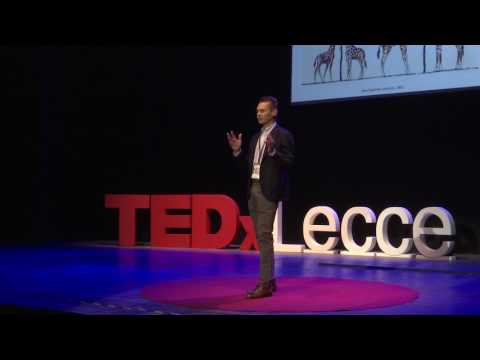
good evening the topic that was me
given it is very difficult and memory
genetics for which I will leave from afar
I will leave from this image that has been
taken last year when it has
participated in the expedition to Tanzania
organized by michele menegon of the museum
of the sciences of trento that has me
asked to accompany him hunting for
frogs and asked me to try to
sequences of frogs directly in the
places where he hunted them at night for
check if this species that he
he had found was a new species
it will take a species that was already
known for me it was an experience
formidable both from the point of view
personal from the point of view
I learned a lot of professional skills
Things I learned about frogs 50 years
millions of years the history of the exhibition
think a story of just over 70 80
thousand years in comparison
michele mian who is unlucky as they do
frogs to multiply use a
recall system as usual the
male who must call the female e
Imagine this scene where you have the
females who listen to the various brands that
sing this this song that
then it is based only on this croaking and
the females listening to this croaking
try to understand if the male brands
vigorous and more or less what are his
dimensions because it is more the tone al
deeper this big and big hanger
so imagine the scene in which there
it is the females who listen to the males
males naturally are competing
among them to procure let’s say for
to have the female then first male
he starts cracking
the second male does and the third male does
cra cra the fourth male cra cra cra e
so on so on consider this
phenomenon that pushed by testosterone for
which there is a harmonized push to and that
leads to the males to sing this then
love serenade so think about when
he heard a frog to sing for
several hours what level of hormones has
reached a level of hormones that rises
continuously until this frog
does not succeed in mating and
this year I ‘m back in another one
tropical forest that a forest of the
borneo where there is the frog of the falls
we went hunting for the frog
waterfalls that is a frog that he tried to
call the female malafemmina not
he could hear it because of the sound of water
it covers what we get from the male
then for will be developed one
system a type of recall that is not
more a vocal call is a call
visual moves the legs this way in
this way the female to able to
see the male
of course this movement is also
a movement that is dictated by one
hormonal thrust so after a few hours
that this females this male calls
the female already gets so much to do one
thing like this that for me is a stuff
really incredible is one thing
wonderful that mother nature has
developed now however as it has
developed as this frog does to have
this memory that leads her to change
his behavior because in
that environment the sound can not be
perceived the second the brand that is a
let’s say it was the first person he has
thought that at the bottom of the world maybe not
we had been given it had not been done
delivered as we know it today
introduced the concept of evolution
has however the march developed a theory
particular based on the use
in the organ leads to its development
with this very particular example that
the example of this animal that
should stretch the neck to look
to take the leaves from the tree and
doing so transfers inside
of the neck a fluid that comes then
transferred to offspring for which children
of these giraffe will have the neck
always longer but based on
this theory if one day the giraffe
he stopped feeding on leaves
of the tree decided to feed itself
leaves that live this neck on the ground
over time it would regress because there
it would be more reason to have a neck
that continues to grow in this
so now this theory has been
refuted by a gentleman who for 22
generation has cut the tail from a bull
a mouse then generation later
generation the tail was cut but
the 23rd generation this mouse
he still had a long tail because
this was a theory that had no basis
scientific
today we know that
thanks to darwin who already did understand
that evolution worked that way
but in fact it was due to characteristics
that were transferred to the offspring
that were part of a diversity that
there is within the species today
we know these features
they write in our DNA that ours
manual of human education
we have about 20,000 instructions and the
our cells read them all for
be able to build what we do
we are and therefore we can say that the
our DNA in a sense brings the
memory of our evolutionary process from
when we started walking and ea
travel those roads that have us
led to colonize the entire planet
so if on one side we have one
memory within our DNA that
causes us to be a result of one
evolutionary process extremely
there is another in the cells
kind of memory that today goes so much of
fashion a concept of which probably
all of you have heard that it is
that of epigenetics as you see
this slide the epigenetics e
this inheritable cellular memory
that modifies the expression of genes
without changing the DNA sequence one
of the mechanisms through which
epigenetics manifests itself and the
DNA methylation is a bit like it
we took an indelible marker
we went to cancel the instructions that
are written in our manual on
book the instruction still present though
in fact it is no longer usable
because it has been masked
now this concept is a concept
extremely important and that there
It allows you to figure out how do we
all organisms exist
multicellular in all their cells
they have the same DNA you have never thought about
we are composed of about 100 thousand
billions of cells that have all the
same instructions
yet if we look at our body
we see that we have cells that are
extremely different from each other
to think about a liver cell e
compare it with a cell of the
leather are different
but not the same manual of the
instructions now how it works even
Cell types you see are about are
over 200
how it works at the time of
conception
when therefore the speed comes
fertilized that we form zygote
we pass through a process in which
the cells are totipotent stem cells
so they are children who are in
able to do anything when
they will become great then however when the
plasticity settles in the uterus
a specialization process begins
of cells that are less than two months old
the formation of the embryo
here is a bit like our path of
life we when we are born we have it
possibility of becoming anything
but then we do it day by day
of the choices we specialize there
we close some doors behind them
for example, now prevent 53
years of doing the helicopter pilot at the
maximum will be able to change jobs and do the
gardener because something I can
all in all try to do for the
our cells exactly the same
thing
initially stem cells must be in
able to differentiate themselves specialize
but then with the progress of the
specialization must also them
close some doors and do it myself
pulling DNA also using others
mechanisms that are however permanent that
they cause these cells once
differentiated keep this memory
on the cellular identity that
guarantees that a cell of the skin
dividing you make another cell
of the skin this is a mechanism
extremely articulated and extremely
precise is a mechanism that we
we try to fight when
we try to get stem cells
adults
but you know the difficulty that we
researcher we have neither produce cells
adult stems precisely because
we try to counterfeit a mechanism
that extremely efficient and effective
who instead tries to keep this
cellular identity now very often
these methylation concepts
Heritability heritability have been
used so we say improper and
this is due to the fact that
DNA methylation can be seen
as an epigenetic mechanism the
indelible marker but methylation
of DNA as well as many others
dynamic mechanisms that regulate
the expression of genes is also part of it
of everyday life of one
cell but the le is not transferred
daughter cells
for example when we eat an apple
what we do is turn off everyone
the enzymes we do not need to
turn on the genes instead of those who serve
to metabolize fructose when we see
milk, let’s keep the genes turned off
responsible for the metabolism of the
fructose instead we use for example
those genes so we light up that there
they are used to metabolize lactose
now this ignition mechanism is
shutdown is part of everyone’s life
the days of a cell also passes
through DNA methylation but not
it is a stable mitigation as if not
we would cancel your education for one
moment with a pencil and then use yes
a rubber to restore education
ok so the mechanism we can say
it works more or less in the same way
but the consequences are dramatically
different these are not not blocks
that are transferred to the cells
daughters
and then there is another important concept
that comes very often and referred to you
I mentioned beforehand firm hands that is
that of legacy now this
slide behind me to report a
some of the titles I’ve recovered from
internet these days if you are looking for
on google and epigenetics and methylation
you will find 50,000 records at least that there
report a concept that as well as
that of the GMOs that entered the
our common thinking is wrong too
this concept is a concept that comes
interpreted in a correct way if
see you mix concept of
methylation which then this thing that
it can on the one hand lead to the pins
genetics when it is transferred to
daughter cells with the concept of
methylation instead extremely dynamic
that is what
with which we find ourselves dealing
every day every time you change one
environmental condition off we feed
with something different and even comes
transferred this concept of
inheritability to generation
next as if we had the strength
to change what is ours
genetic heritage to be transferred
something different our children like you
I said before this is something that does not
it can take place at the time when it loses
goths form both a race is total
because we must return to the state
zero to allow cells to
to be able to differentiate
this is a concept that comes a lot
often man interpreted perhaps also
because we are human beings
we think that the brand at the bottom
he said something very interesting
we can try to change it
we can manage to change us
even our children themselves when
we have sequenced the human genome there
we realized instead that much of it
what we are
much of what we do instead is
written inside our
but we have the genetic patrimony
hope of not being just a sum of
genes that then perform a function
as a machine we have hope
that with the feeding with the breath
changing the environmental conditions we are
able in some way to alter
the genes if we can do it like
we can always do it with
the power supply but this is not a
process that eventually determines a
transfer of characteristics to
progeny, in short, how we can close
say that we hope again of
be able to intervene by changing the
our future but my lords
the brand was not right in some
cases are exceptions
literature that we still do not manage to
explain from the scientific point of view
but the exceptions do not rule the
confirm the thanks
[Applause]
[Music]
Please follow and like us: