
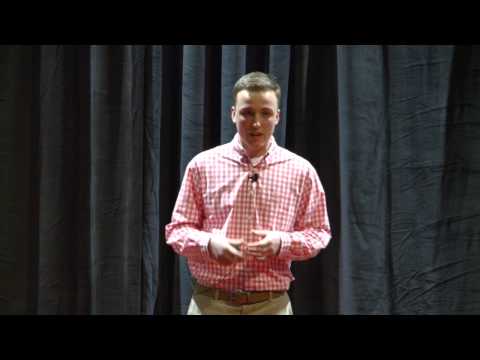
I’m Matt Smith or some of you may know
me as dumpster Dan and I am a dumpster
diver over the past year and a half I
have rescued over $40,000 worth of food
electronics and clothing all from
dumpsters and I’ve donated almost all of
it
to local charities now the image you
have of dumpster divers it might not be
entirely accurate not all of us are
homeless and not all of us are hippies
and you might also think that dumpster
diving it’s a little bit out there it’s
a little nasty and occasionally it can
be but more importantly I think gives us
a first-hand look at some of the biggest
issues within our current food system
and the biggest issue that I’ve
encountered with my dumpster diving is
undoubtedly food waste in America are
notorious waste habits leads to the
upwards of 40% of our food supply ending
up directly in the trash most of it
before it even reaches the shelves of
stores now no system can exist with a
40% loss rate without having some
serious consequences and keep in mind
all this waste is occurring while one in
six Americans and one in five American
children struggle with food insecurity
meaning they lack consistent access to
food and the actual act of wasting food
it has much deeper implications than we
normally consider think of everything it
takes to grow a single crop there’s the
water resources the soil nutrients any
chemical treatments there’s some
petroleum products used to harvest to
process and to transport the crowd on
top of all that there’s human labor when
we waste food all those inputs are also
being wasted as well and apart from that
there’s further environmental
consequences when food is dumped in some
of these appalling quantities most of it
isn’t in contact with oxygen and the
microorganisms that decompose this food
they release a methane gas instead of
the typical carbon dioxide and keep in
mind that methane gas is 20 times more
potent every taining heat within that in
this fear
which makes it a substantial contributor
to global warming now I should take a
step back here and explain what led me
to digging through storage dumpsters and
talking about trash for fun and it all
began with my passion for distance
running however in my junior year of
high school I took exercise and
nutrition a step too far and before I
knew it I was locked in the Death Grips
of anorexia I was depressed I was
isolated and frankly I was dying I was
running up to eight hours a day and it
was during this time that I was
hospitalized for three weeks and while
in the hospital I knew I had to find
something else I was passionate about
and I had watched a few videos on
dumpster diving and I knew I had to give
it a try
and that’s exactly what I did as soon as
I got out and gave it a shot and
instantly I was hooked just by the sheer
amount of valuable items I was finding
and I began diving everywhere and within
a single month I’d stockpiled an entire
room in my family’s basement completely
full of food and I had no clue what to
do with it all so that’s when I began
donating it to nursing homes to food
pantries to senior centers and when I
donated the food they always had the
same question for me why our store is
throwing out so much perfectly safe
healthy edible food and for stores it
comes down to economics for them they’re
not a charity and they’re not supposed
to be but it’s not entirely their fault
either because of our aesthetic taste
stores play standards on the type of
produce the enters into the store only
allowing the best looking ones in and
discarding the rest and similarly our
obsession with expiration dates
contributes a massive amount of waste as
well the USDA has stated that sell by
dates used by dates best by dates they
all have very little to do with health
and safety and instead they’re there to
signify when the food is at peak
freshness or peak flavor not that it’s
necessarily unsafe to eat and stores
have an excuse for all this waste
if they were to donate it and someone
was consumer and gets sick the store
would be faced with a string of lawsuits
and that would likely ruin the
reputation of their company but that’s
what they want you to think in reality
they’re protected by the Good Samaritan
Act of 1996 and it protects all people
that donate food to nonprofits in good
faith and the University of Arkansas is
law school they have confirmed that
there has never been a single case of
anyone ever being sued from donating
food so essentially it’s a non-issue and
in a similar way as dumpster divers we
face a legal gray area as well even
though it’s legal to dive in Grand
Rapids we’re still putting ourselves at
risk for being charged with trespassing
prowling at night or disorderly conduct
so what does all of this information
mean for our daily lives and there are
several things we can do to reduce our
own personal food waste we can challenge
expiration dates we can organize our
refrigerators and our cupboards keeping
the oldest food up front to prioritize
that and we can also keep our family and
our children in on this process to teach
them frugal food habits as well and then
next step would be to actually volunteer
your time there are dozens of homeless
shelters and food pantries within the
Grand Rapids area and they rely almost
exclusively on volunteer work to provide
meals to those in need but sometimes I
take a step back and I realize that all
these efforts
they’re only rescuing a very small
fraction of the total food waste in
America and every year us Americans we
waste 165 billion dollars worth of food
and I’ll throw a number out there let’s
say that dumpster divers that we rescue
$500,000 worth of food a year in
comparison to that 165 billion we’re
merely rescuing 3/10 thousandth of a
percent of the total food waste that
goes on and that leads me to the
question is it worth spending my time
digging through dumpsters to only rescue
a miniscule amount of waste
and in a broader sense is it worth
spending our time our money and our
energy trying to make a difference even
though our efforts seem hopeless of
causing any change and personally with
that mindset I think we’re losing the
end goal of our mission with it we’re
not all called to create some
overhauling change in society but we are
responsible for those around us for me
the victory seeing that one child smile
when I give them a toy I just found or
helping a single mother lower her
grocery bill but however much it was
that week just to make it a little more
bearable for her when we take initiative
like this day after day week after week
month after month that’s when her
actions slowly start to piece themselves
together what we once thought was
useless was complete waste of our time
those efforts they now start to
accumulate and they spread a much larger
message than we ever could have imagined
for me I was dumpster diving for fun
then I was dumpster diving for food and
now I’m dumpster diving to raise funds
to build wells in Africa when it comes
down to it we don’t have to be rich we
don’t have to be famous and we don’t
have to be some radical activists with
our whole lives devoted to just a single
cause oftentimes I think we dismiss our
powerful potential to cause change
because we believe that we’re too young
we’re too old we’re too busy or even
we’re too tired in reality we can be a
high school student we can be a college
student or we can be working away at a
nine-to-five job if we can still find
ways to improve our community we simply
have to be aware of the inefficiencies
and sufferings around us and we have to
be willing to work for the people that
are stuck in these situations I think
Oscar the Grouch ironically the
character who lives in a trash can that
he summed it up best and Oscar says just
because your life is trash that doesn’t
mean you can’t do great things it’s
called the garbage can not a garbage cannot thank
Please follow and like us: