
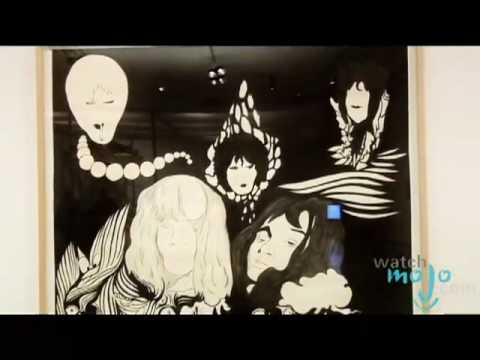
I know it’s only rock and roll but i
like it hi I’m Rebecca Brayton and
welcome to watchmojo.com and today we’ll
be speaking with Dominic Malone creator
of the exhibit sympathy for the devil
art and rock and roll since nineteen
sixty seven of all the rock songs why
did you choose to call this exhibit
sympathy for the devil I wanted a title
that was familiar to people a title of a
song that you know people would
understand and recognize but also a
title that kind of alluded to the
subject of the show so sympathy for the
devil to me ludes to the fact that when
rock music incorporates avant-garde
strategies it takes a risk of looking
pretentious or alienating their audience
bike becoming perhaps too sophisticated
on the flip side when when avant-garde
art when contemporary art engages with
rock music it risks losing sort of
seriousness the history of any given
culture can be learned of course through
history books but also by tanking in the
art and culture of a specific time and
in the case of the arts and rock and
roll of the 1960s onwards these media
may even have had an impact on that
history as well politics are very much
being expressed in the cultural realm
you had events like Woodstock that you
know not only were important from a
musical standpoint but also from a
political one or even the Altamont
concert of The Rolling Stones where you
know the Summer of Love kind of dyes
where you know the Hells Angels run amok
and start beating up on people in the
crowd and where you know this sort of
promised all the sort of politicized
promise of that moment it suddenly turns
dark and I think that if you look at say
similar kinds of events now they’re
Saudi politicized there’s so much about
a certain you know commerce they’re
about you know anything you know in a
way but politics but I think because
there was such a strong youth movement
at that time you know responding so
strongly to you know civil rights issues
and the Vietnam
or n rock music was really kind of the
soundtrack of that generation and so it
was sort of inevitable that the two
would come together and then you know
the fact that rock music starts to kind
of get involved you know kind of brings
it to another dimension the political
unrest and social awareness of the 1960s
were inspiration to musicians and
artists alike it was only a matter of
time before these two media began to
overlap I really wanted to make the show
about the the real kind of lived overlap
and collaborations between our art and
rock music or artists and rock musicians
and so for me that really starts with
Andy Warhol Velvet Underground you
actually start working together in 1966
but then released the album the velvet
underground and nico in 1967 and kind of
makes that relationship between art and
rock and roll a more formal one it’s
also the year that the beatles released
sergeant pepper’s Lonely Hearts Club
Band when Jimi Hendrix releases are you
experienced when the rock music is
actually being very serious and
incorporating all these avant-garde
musical strategies and being recognized
by music critics and the press as as no
longer being something that’s just like
music kids dance to but it’s actually
supposed to be taken seriously
like it hi I’m Rebecca Brayton and
welcome to watchmojo.com and today we’ll
be speaking with Dominic Malone creator
of the exhibit sympathy for the devil
art and rock and roll since nineteen
sixty seven of all the rock songs why
did you choose to call this exhibit
sympathy for the devil I wanted a title
that was familiar to people a title of a
song that you know people would
understand and recognize but also a
title that kind of alluded to the
subject of the show so sympathy for the
devil to me ludes to the fact that when
rock music incorporates avant-garde
strategies it takes a risk of looking
pretentious or alienating their audience
bike becoming perhaps too sophisticated
on the flip side when when avant-garde
art when contemporary art engages with
rock music it risks losing sort of
seriousness the history of any given
culture can be learned of course through
history books but also by tanking in the
art and culture of a specific time and
in the case of the arts and rock and
roll of the 1960s onwards these media
may even have had an impact on that
history as well politics are very much
being expressed in the cultural realm
you had events like Woodstock that you
know not only were important from a
musical standpoint but also from a
political one or even the Altamont
concert of The Rolling Stones where you
know the Summer of Love kind of dyes
where you know the Hells Angels run amok
and start beating up on people in the
crowd and where you know this sort of
promised all the sort of politicized
promise of that moment it suddenly turns
dark and I think that if you look at say
similar kinds of events now they’re
Saudi politicized there’s so much about
a certain you know commerce they’re
about you know anything you know in a
way but politics but I think because
there was such a strong youth movement
at that time you know responding so
strongly to you know civil rights issues
and the Vietnam
or n rock music was really kind of the
soundtrack of that generation and so it
was sort of inevitable that the two
would come together and then you know
the fact that rock music starts to kind
of get involved you know kind of brings
it to another dimension the political
unrest and social awareness of the 1960s
were inspiration to musicians and
artists alike it was only a matter of
time before these two media began to
overlap I really wanted to make the show
about the the real kind of lived overlap
and collaborations between our art and
rock music or artists and rock musicians
and so for me that really starts with
Andy Warhol Velvet Underground you
actually start working together in 1966
but then released the album the velvet
underground and nico in 1967 and kind of
makes that relationship between art and
rock and roll a more formal one it’s
also the year that the beatles released
sergeant pepper’s Lonely Hearts Club
Band when Jimi Hendrix releases are you
experienced when the rock music is
actually being very serious and
incorporating all these avant-garde
musical strategies and being recognized
by music critics and the press as as no
longer being something that’s just like
music kids dance to but it’s actually
supposed to be taken seriously
Please follow and like us: