
constantinople byzantine new rome the
city has been known by a lot of names hi
I’m Rebecca Brayton and welcome to
watchmojo.com and today we’re continuing
our travel series with a look at the
historic city of a symbol straddling the
Bosphorus Strait its skyline studded
with domes and minarets Istanbul is one
of the truly great romantic cities its
history tracks back from Byzantium to
Constantinople to its place at the head
of the Ottoman Empire today it hums as
Turkey’s cultural heart and business
capital assemble is the only metropolis
in the world which is situated on two
continents Europe and Asia in this city
you can walk the streets where Crusaders
and Janissaries once marched admire
mosques that are the most sublime
architectural expressions of Islamic
piety and hunt for bargains in the Grand
Bazaar Istanbul is situated near the
North Anatolian fault line which runs
from northern Anatolia to the Marmara
sea this fault line has been responsible
for several deadly earthquakes in the
region throughout history there are
several buildings in Istanbul that are
steeped in history Hagia Sophia was
built as a Byzantine Cathedral by
Emperor Justinian the first nearly 1500
years ago and converted into a mosque
after the Ottoman conquest of
Constantinople in 1453 don’t be fooled
by its Dell brick exterior its soaring
dome is breathtaking as are what’s left
of the original mosaics upstairs on the
balcony level urban legend has it that
the hekia Sophia might not withstand
Istanbul supposedly imminent huge
earthquake so get there while you can
directly opposite the park outside Hagia
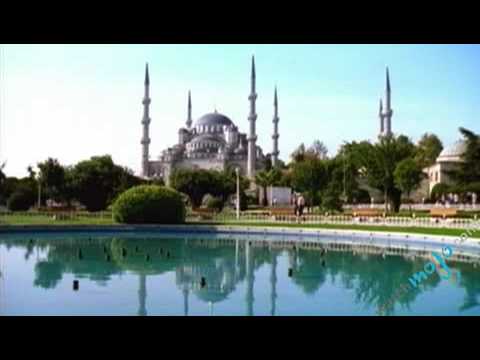
Sophia is the majestic Blue Mosque also
known as the Sultan Ahmed mosque a
relatively more recent structure built
in the 17th century today it is still in
use for worshippers at our day in prayer
times this structure is one of Istanbul
finest with its shining grey domes and
piercing minarets throughout the
Byzantine period the Hippodrome was the
centre of the city’s social life huge
amounts were bet on chariot races but
these races were not simple sporting
events they also provided some rare
occasions during which the Emperor and
the common citizens could come together
in a single venue one of the oldest
monuments still surviving from antiquity
is the serpentine column the column was
moved from Greece by Constantine the
Great when Constantinople became the new
capital and as stood at the Hippodrome
ever since the walled obelisk also known
as the column of Constantine is situated
near the serpentine column at the 7th
the Hippodrome the 105 foot-high obelisk
was constructed of roughly cut stones
and was originally decorated with gilded
bronze plaques and a sphere at the top
to Moses obelisk once graced the Great
Temple of Karnak in ancient Thebes it
was brought to Constantinople by Emperor
Theodosius in 395 in carved
city has been known by a lot of names hi
I’m Rebecca Brayton and welcome to
watchmojo.com and today we’re continuing
our travel series with a look at the
historic city of a symbol straddling the
Bosphorus Strait its skyline studded
with domes and minarets Istanbul is one
of the truly great romantic cities its
history tracks back from Byzantium to
Constantinople to its place at the head
of the Ottoman Empire today it hums as
Turkey’s cultural heart and business
capital assemble is the only metropolis
in the world which is situated on two
continents Europe and Asia in this city
you can walk the streets where Crusaders
and Janissaries once marched admire
mosques that are the most sublime
architectural expressions of Islamic
piety and hunt for bargains in the Grand
Bazaar Istanbul is situated near the
North Anatolian fault line which runs
from northern Anatolia to the Marmara
sea this fault line has been responsible
for several deadly earthquakes in the
region throughout history there are
several buildings in Istanbul that are
steeped in history Hagia Sophia was
built as a Byzantine Cathedral by
Emperor Justinian the first nearly 1500
years ago and converted into a mosque
after the Ottoman conquest of
Constantinople in 1453 don’t be fooled
by its Dell brick exterior its soaring
dome is breathtaking as are what’s left
of the original mosaics upstairs on the
balcony level urban legend has it that
the hekia Sophia might not withstand
Istanbul supposedly imminent huge
earthquake so get there while you can
directly opposite the park outside Hagia
Sophia is the majestic Blue Mosque also
known as the Sultan Ahmed mosque a
relatively more recent structure built
in the 17th century today it is still in
use for worshippers at our day in prayer
times this structure is one of Istanbul
finest with its shining grey domes and
piercing minarets throughout the
Byzantine period the Hippodrome was the
centre of the city’s social life huge
amounts were bet on chariot races but
these races were not simple sporting
events they also provided some rare
occasions during which the Emperor and
the common citizens could come together
in a single venue one of the oldest
monuments still surviving from antiquity
is the serpentine column the column was
moved from Greece by Constantine the
Great when Constantinople became the new
capital and as stood at the Hippodrome
ever since the walled obelisk also known
as the column of Constantine is situated
near the serpentine column at the 7th
the Hippodrome the 105 foot-high obelisk
was constructed of roughly cut stones
and was originally decorated with gilded
bronze plaques and a sphere at the top
to Moses obelisk once graced the Great
Temple of Karnak in ancient Thebes it
was brought to Constantinople by Emperor
Theodosius in 395 in carved
Please follow and like us: