
in the deep blue sea a basic
understanding of aquatic realities can
mean everything if it gets out they
won’t let me scuba if I can’t scuba then
what’s this all been about what am i
working toward welcome to watchmojo.com
it we’re counting down the five most
interesting facts that we could learn
about scuba diving some of you may
already know that scuba means
self-contained underwater breathing
apparatus and a few of you may even be
part of the dive world’s equivalent of
the mile-high club the 20 meter club but
for those of you unfamiliar with the
ways of the scuba well it’s about to go
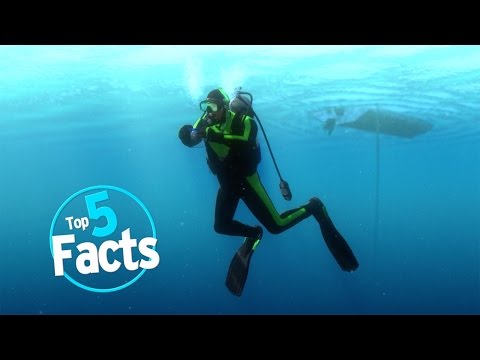
down number 5 what suits keep divers
warm thanks to nitrogen gas bubbles
after working on the Manhattan Project
an American physicist named Hugh
Brandner invented the wetsuit in 1952
nine years after Jacques Cousteau and
Aimee Ganga introduced the Aqualung and
while experienced divers fully
understand the specifics of the neoprene
design not everyone realizes how a
wetsuit works some think it’s the
enclosed water that actually warms the
body and sure that helps but it’s the
bubbles of nitrogen gas within the
neoprene suit that keep the body warm
nitrogen is a very poor conductor of
heat which prevents the cold seawater
from drawing out all of your body heat
as long as the suit fits tightly the
enclosed water won’t flush out thus
allowing the gas to keep the body warm
number 4 altitude diving happens at
1,000 feet above sea level ok so any
dive below sea level may be enough for
some of you but others need something
more and for some that something is
altitude diving which takes place at 300
meters or a thousand feet above sea
level before executing the dive you’ll
need the proper knowledge and the proper
legal documents to and that’s because of
the potential decompression sickness
from the reduced atmospheric pressure
this is a danger at sea level as well
but high altitudes make it even more
complicated in fact the US Navy
recommends a 12-hour wait before making
the dive and a system known as cross
corrections helps divers make the
necessary calculations so what’s the
most ambitious altitude dive well that
took place at Chile’s Lago leakin cobber
in 1982 measured
approximately 19,000 feet above sea
level number three decompression
sickness is not just for scuba divers
divers learned very early on that they
must control the rate of their ascent or
face very serious consequences
decompression sickness horrible
debilitating illness caused by the
formation of nitrogen in your tissues
and bloodstream commonly referred to as
DCs or simply the bends the condition is
also known as caisson disease and the
term inadvertently arose through
American industrialism in the 19th
century when feats of engineering had to
be performed under water workers toiled
away in the compressed atmospheres of
caissons unfortunately before 1841
nobody knew decompression sickness was a
thing and in 1873 the construction of
the Brooklyn Bridge led to a sobering
reminder of what people injured in the
name of engineering with a recorded 110
cases of decompression sickness number 2
deep diving gets you turnt I’m gonna ask
the DJ play Kokomo and get this place
turned up so we all know what a drunk
person sounds like right well in scuba
diving somebody experiencing the
raptures of the deep will act in the
same bizarre manner you know what I
think this course will gentlemen the hit
of oxygen yay no human is immune to the
conscious effects of nitrogen narcosis
which sets in at a hundred feet
underwater as oxygen itself becomes
toxic at such depths trained scuba
divers use a breathing gas called
trimmings which combines nitrogen helium
and oxygen this is what helped a British
diver the late John Bennett become the
first scuba diver to ever dive 1,000
feet deep in 2001 granted at that depth
getting tipsy on some n is not as big of
a problem as hypothermia
number one colors disappear underwater
reality takes on a different form under
water because water absorbs different
wavelengths of light to different
degrees as you go deeper under water
colors effectively disappear from the
visible spectrum one by one at roughly
15 feet cutting yourself would mean
bleeding blue blood here I’m bleeding
who at about 25 feet your tangerine will
look more like an oversized blueberry at
around 150 feet you’ll have no idea
which M&Ms to eat first in which to eat
last because they’ll all look the same
I only the brown ones you’ll scream in
frustration which will confuse the rest
of your diving party because sound
travels nearly four and a half times
faster under water making it difficult
to determine the source of a sound
basically the world under the sea is
much different than life above um so
what fact about scuba diving surprises
you the most and where my 20 metre Club
members at for more crunk top tens and
Leakey wetsuit top fives be sure to
subscribe to watchmojo.com
you
understanding of aquatic realities can
mean everything if it gets out they
won’t let me scuba if I can’t scuba then
what’s this all been about what am i
working toward welcome to watchmojo.com
it we’re counting down the five most
interesting facts that we could learn
about scuba diving some of you may
already know that scuba means
self-contained underwater breathing
apparatus and a few of you may even be
part of the dive world’s equivalent of
the mile-high club the 20 meter club but
for those of you unfamiliar with the
ways of the scuba well it’s about to go
down number 5 what suits keep divers
warm thanks to nitrogen gas bubbles
after working on the Manhattan Project
an American physicist named Hugh
Brandner invented the wetsuit in 1952
nine years after Jacques Cousteau and
Aimee Ganga introduced the Aqualung and
while experienced divers fully
understand the specifics of the neoprene
design not everyone realizes how a
wetsuit works some think it’s the
enclosed water that actually warms the
body and sure that helps but it’s the
bubbles of nitrogen gas within the
neoprene suit that keep the body warm
nitrogen is a very poor conductor of
heat which prevents the cold seawater
from drawing out all of your body heat
as long as the suit fits tightly the
enclosed water won’t flush out thus
allowing the gas to keep the body warm
number 4 altitude diving happens at
1,000 feet above sea level ok so any
dive below sea level may be enough for
some of you but others need something
more and for some that something is
altitude diving which takes place at 300
meters or a thousand feet above sea
level before executing the dive you’ll
need the proper knowledge and the proper
legal documents to and that’s because of
the potential decompression sickness
from the reduced atmospheric pressure
this is a danger at sea level as well
but high altitudes make it even more
complicated in fact the US Navy
recommends a 12-hour wait before making
the dive and a system known as cross
corrections helps divers make the
necessary calculations so what’s the
most ambitious altitude dive well that
took place at Chile’s Lago leakin cobber
in 1982 measured
approximately 19,000 feet above sea
level number three decompression
sickness is not just for scuba divers
divers learned very early on that they
must control the rate of their ascent or
face very serious consequences
decompression sickness horrible
debilitating illness caused by the
formation of nitrogen in your tissues
and bloodstream commonly referred to as
DCs or simply the bends the condition is
also known as caisson disease and the
term inadvertently arose through
American industrialism in the 19th
century when feats of engineering had to
be performed under water workers toiled
away in the compressed atmospheres of
caissons unfortunately before 1841
nobody knew decompression sickness was a
thing and in 1873 the construction of
the Brooklyn Bridge led to a sobering
reminder of what people injured in the
name of engineering with a recorded 110
cases of decompression sickness number 2
deep diving gets you turnt I’m gonna ask
the DJ play Kokomo and get this place
turned up so we all know what a drunk
person sounds like right well in scuba
diving somebody experiencing the
raptures of the deep will act in the
same bizarre manner you know what I
think this course will gentlemen the hit
of oxygen yay no human is immune to the
conscious effects of nitrogen narcosis
which sets in at a hundred feet
underwater as oxygen itself becomes
toxic at such depths trained scuba
divers use a breathing gas called
trimmings which combines nitrogen helium
and oxygen this is what helped a British
diver the late John Bennett become the
first scuba diver to ever dive 1,000
feet deep in 2001 granted at that depth
getting tipsy on some n is not as big of
a problem as hypothermia
number one colors disappear underwater
reality takes on a different form under
water because water absorbs different
wavelengths of light to different
degrees as you go deeper under water
colors effectively disappear from the
visible spectrum one by one at roughly
15 feet cutting yourself would mean
bleeding blue blood here I’m bleeding
who at about 25 feet your tangerine will
look more like an oversized blueberry at
around 150 feet you’ll have no idea
which M&Ms to eat first in which to eat
last because they’ll all look the same
I only the brown ones you’ll scream in
frustration which will confuse the rest
of your diving party because sound
travels nearly four and a half times
faster under water making it difficult
to determine the source of a sound
basically the world under the sea is
much different than life above um so
what fact about scuba diving surprises
you the most and where my 20 metre Club
members at for more crunk top tens and
Leakey wetsuit top fives be sure to
subscribe to watchmojo.com
you
Please follow and like us: