
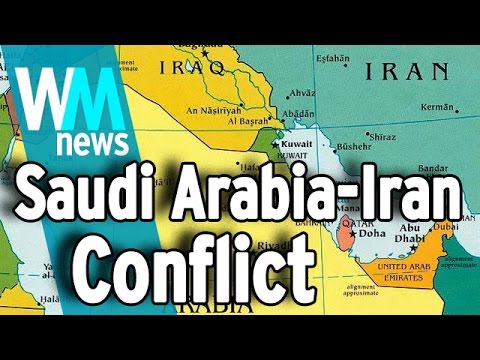
moving into 2016 the political tension
in the Middle East shows no sign of
subsiding welcome to watchmojo.com n’t
we’re counting down ten crucial facts
you should know about the Saudi Arabia
Iran conflict number ten what are the
origins of Saudi Arabia’s prosperity
Saudi Arabia’s oil based economy is one
of the most prominent in the world the
country holds at least 18 percent of
global petroleum reserves and is the
planets largest oil exporter the
petroleum sector accounts for over 90
percent of Saudi budget revenues the
foundations for these figures were first
laid in the early 20th century when
Saudi Arabia struck oil for the first
time in 1938 around the mid 1970s as a
founding member of OPEC and a chief
benefactor from rising oil prices post
arab-israeli war Saudi Arabia further
established itself as a leading producer
and is one of the most prosperous Middle
Eastern countries however that wealth is
not spread evenly throughout the
country’s population it is instead
concentrated within a few super-rich
families while a possible 20% of the
population lives well below the poverty
line number 9 what is at the root of the
region’s political conflict oil has
historically proven to be the fuel for
political problems in the region
especially between Saudi Arabia and Iran
another major oil producer the 1979
Iranian Revolution was in part triggered
by the early 70s oil boom with Iran
seeking to end US and British influence
on its oil industry the revolution ended
with governmental overthrow and the
establishment of a new regime under the
Grand Ayatollah Ruhollah Khomeini once
productive links with the USA were
severed and for Middle Eastern nations
including Saudi Arabia Iran became an
alarming influence number 8 what is the
religious divide between Saudi Arabia
and Iran
the BBC describes the divide between
Sunnis and Shia as quote the largest and
oldest in the history of Islam and it’s
a major component in the current crisis
the vast majority of the world’s Muslim
population is Sunni including between 75
and 90% of the Saudi populace however
Iran is majority Shia and often cites
its need to protect other Shia
minorities as reason for various
political stances in modern times the
sunni-shia divide can be felt across the
Middle East and is often considered the
primary spark for conflict however some
commentators believe that the religious
split operates as a mask deflecting
attention from other reasons for war
number seven is Saudi Arabia in a period
of change after years of prosperity
Saudi Arabia now looks to be headed into
a potentially dangerous downturn the
problem is that the Saudi economy relies
too heavily on its oil industry and oil
is gradually becoming less lucrative
unlike Dubai for example which is
developed into an international center
for business and commerce Saudi Arabia
has little else to fall back on the
country has placed all of its proverbial
eggs into one basket there is an
ever-increasing focus on the renewable
energies market but until comparable
success can be achieved
Saudi residents are likely to see their
quality of life decrease while they
begin to be taxed for the first time
number six what is the current state of
the Middle East with conflicts raging
and tensions rising the situation in the
Middle East seems to get more complex
with each week Saudi Arabia and Iran are
perhaps the most influential nations
involved as they’ve come to represent
Sunni and Shia Muslims respectively the
Syrian civil war is one of a series of
proxy wars being fought between the two
countries with Yemen Iraq and Bahrain
all playing host to similar problems in
late 2015
Iran and Saudi Arabia entered into early
negotiations for peace but events in
January 2016 antagonized
the situation further and made peace a
near impossibility
number five what sparked the recent
conflict between Iran and Saudi Arabia
on January 2nd 2016
Saudi Arabia announced that it had
executed 47 people at 12 different sites
across the country while many of those
executed were known criminals and
terrorists one name inspired outrage in
Iran Nimr al-nimr
was a prominent Shia cleric in Saudi
Arabia a significant leader within the
country’s Shia minority he was handed a
death sentence for quote seeking foreign
meddling in Saudi Arabia disobeying its
rulers and taking up arms against the
security forces his killing was seen as
an attack against the Shia population in
general and against Iran by association
the executions have also been labeled as
a distraction made to draw attention
away from the weakening Saudi economy
the Iranian response which included
violent protests against the Saudi
embassy in Tehran has helped further
divert attention however Saudi Arabian
actions have drawn widespread criticism
from around the world regardless many
people thought that the charges against
him were more political number four what
is the future of oil where once Saudi
Arabia was unquestionably among the
richest and most powerful middle eastern
states their position and influence is
now under considerable threat oil is not
as valuable as it was mostly because of
oversupply and a slowdown of economic
growth in China and Europe prices fell
to below $35 a barrel in January 2016
the lowest in 12 years historically
Saudi Arabia has cut production to
balance declining prices but it is
refusing to do so this time
OPEC forecasts that prices will recover
to around $70 a barrel by 2020 believing
that the US will suffer more in the
meantime than the Middle East with at
least a little economic hardship on the
horizon though the Saudi government may
struggle to fund various conflicts in
which its involved number three what
does
Ismene for Syria in October 2015 the
first steps towards finding some form of
saudi-iranian resolution in the Syrian
civil war were made with diplomats from
both countries meeting in Vienna the war
came about because of choices that
people made and what people have the
power to choose they have the power to
change while Iran alongside Russia
supports the regime of Syrian President
Bashar al-assad Saudi Arabia along with
the u.s. backs the opposition the Saudi
government is said to be concerned about
growing Iranian influence in the
conflict both on the battleground and at
the negotiation table for Iran nimona
Elna Mona’s execution alongside
convicted al-qaeda and Isis terrorists
sends a clear and provocative signal and
it doesn’t offer much hope for peace in
the near future number two how will this
impact Sunni and Shia tensions the
execution of Nimr al-nimr will only have
entrenched the sunni-shia divide further
the war in Syria is an example of how
complicated international relations in
the region have become and the focus on
a quote religious divide is likely to
continue for as long as political power
struggles and unstable economies persist
Saudi Arabia itself is predominantly
Sunni Muslim so it might be expected
that al nemetes execution would cause
few problems within the nation itself
but because it’s been shaped as an
attack on religion rather than as a
matter of domestic policy repercussions
spread across all borders into all
regional conflicts and all future
negotiations number one how will this
impact relations with the United States
the u.s. finds itself in an especially
precarious position while it remains an
ally of sorts of Saudi Arabia the
relationship between Washington and
Riyadh has grown more and more fraught
ever since 9/11 al nemetes execution is
another cause of what Hillary Clinton
calls quote serious questions
traditionally us-iranian relations have
been less positive but the link between
the two has greatly
proved during Barack Obama’s time in the
White House especially on the back of
Iran’s nuclear deal the saudi-iranian
cold war represents a balancing act for
America and a real problem for whichever
party wins the 2016 presidential
election did these facts get you
thinking to vote for which news story is
covered next
head over to watchmojo.com slash the
jest and be sure to hit that subscribe
button for more newsworthy top 10s
published every week
Please follow and like us: