
what does it all mean
these guys had an idea welcome to
watchmojo.com and today we’re counting
down our picks for the top ten
philosophers for this list we looked for
historically significant thinkers whose
philosophies directly affected the
societies in which they lived and whose
intellectual approaches ideas and/or
principles remain relevant to
contemporary civilizations number 10
David Hume Scottish philosopher and
historian Hume is considered to be the
leading neo skeptic of the early modern
period have a little patience only till
I have the pleasure of seeing all the
Chukchi shut up and the clergy sent
about that business mr. Hume any
hypothesis he states that pretends to
discover the ultimate original qualities
of human nature not at first to be
rejected as presumptuous and chimera he
also postulated that human behavior is
ruled by passion rather than reason and
encouraged a system of free will
interested in the exploration of what we
know and what we can know his philosophy
established the foundation of studies
and cognitive science sight touch smell
and sound only after that does the mind
organize and file and connect
information number 9 jean-paul stop
synonymous with existential philosophy
sought claimed to be human is to be
conscious it is to be free to imagine
free to choose and to be responsible for
one’s lot in life so he comes to the
conclusion that if God exists man is not
free and if man is free God does not
exist if we perceive something then we
must be conscious of perceiving it he
argued these views heavily informed
starts with seminal work being in
nothingness as well as his own life as
an artist public figure and activist and
are an essential contribution to
postmodern thought of the late 20th
century
number eight John Locke a British
philosopher in the late 1600s Locke
proposed that the mind was a blank slate
or tabula rasa at birth he also called
for man’s right to life liberty and
estate natural law he argued dictates
that these rights are essential and it
is the government’s duty to protect them
at all costs Locke’s essay concerning
human nature and his two treatises of
government were inspirational to other
Enlightenment thinkers and a driving
ideological force behind both the French
and American revolutions number seven
jean-jacques Rousseau author of the
social contract Russo’s political
theories are essential to the
understanding of modern-day democracy
basing his ideas on an anthropological
study of human nature Rousseau concluded
that man is born free but everywhere he
is in Chains to solve this paradox
Rousseau outlines an idealized political
structure citing the duties of citizens
to the state and in turn the state’s
obligation to protect the citizens
inherent right to freedom number six
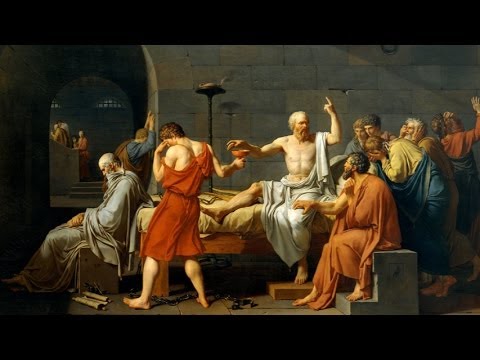
Socrates declaring that the unexamined
life is not worth living socrates
philosophy focused on justice and virtue
this study took form through a dialectic
strategy of contemplating certain
questions to reveal universal truths a
process now known as the Socratic method
asking questions where there were
questions to be asked not remaining
content with assumptions or with
Authority this is very subtractor but
perhaps his most enduring statement was
I know that I know nothing highly
critical of the ruling elite in Athens
Socrates was sentenced to death for
impiety
and corrupting the youth becoming a
martyr to the love of knowledge and the
legendary father of Western philosophy
number five
Confucius also known as kunchu Confucius
search for remedies to the social and
political chaos of his time he believed
in the restoration and maintenance of
traditional Chinese values to
re-establish an ethical Society this
philosophy was bill
on the principles of loving others
self-discipline and self-restraint and
an early precursor of the golden rule
though he never saw the fulfillment of
these ideals within his lifetime
Confucianism continues to have a
meaningful impact on cultural practices
in many parts of East Asia number four
finaid account deemed founder of the
modern age day cap saw the whole
philosophy as an intricate web anchored
in metaphysics and physics with
practical applications in other sciences
and ethics integral to dick Health’s
ideas was Cartesian dualism I think
therefore I am he explained noting that
one’s existence is housed in the mind
completely separate from the body a
champion of rationalism and empirical
study decaf provided the foundations of
modern scientific methodology and
thought number three Friedrich Nietzsche
German philosopher and cultural critic
Nietzsche highlighted the death of God
predicting an end to traditional modes
of philosophy and religion and the
ushering in of an era of nihilism though
Nietzsche rejected the notion of
universal constraints or truth it is
hotly debated as to whether or not
Nietzsche was nihilistic or working
towards overcoming nihilism a prolific
thinker whose life was cut short by
illness his ideas continue to ignite
controversy and inspire debate number
two plato believing the truth was best
pursued through rational inquiry plato
conceptualized two rounds one of
idealized versions of all things which
he called forms and our physical world
we’re imperfect versions of these forms
exist as illustrated by his allegory of
the cave plato’s republic best outlines
these ideas applying them to the
conceptualization of an ideal society
though his work veers toward the
abstract Plato’s writing is an essential
contribution to the annals of Western
philosophy inspiring thinkers for the
past two and a half millennia before we
unveil our number one pick here are a
few honorable mentions
number one Aristotle named tutor of
Alexander the Great Aristotle’s works
cover everything from physics to theater
a student of Plato’s Academy
Aristotle diverged from his predecessors
rationalist pursuits by embarking on
empirical study of the natural world
this focus led him to conclude that no
metaphysical notion of form exists
without evidence of real substance a
quintessential characteristic of
Aristotelian thought this idea would
have far-reaching influence on the
development of Western philosophy
theology and science as did his
principles of causality and the golden
mean do you agree with our list
what great thinker gets your head
spinning for more mind-blowing top 10s
published every day be sure to subscribe
to watchmojo.com
Please follow and like us: