
former NFL star OJ Simpson charged with
his ex-wife’s murder and again it was
the trial of the century it’s the law of
the land and the land where nothing is
more important than the law but the
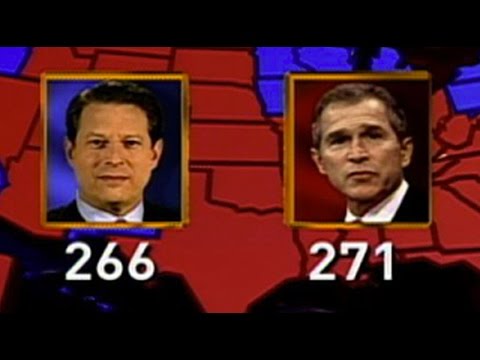
debate over Bush v Gore goes on to this
day not least among some of the justices
themselves welcome to watchmojo.com and
today we’re counting down our picks for
the top ten court cases that changed
America the Supreme Court in 1824
provided an answer within the framework
of a case known as Gibbons versus Ogden
or more simply the steamboat case for
this list we’re looking at court rulings
from the United States that had a
significant historical impact in shaping
the country that exists today now please
take your seats Court is now in session
Court has just ruled part of that law is
unconstitutional this is being described
immediately now is a big win for
advocates of gay rights number ten Bush
v Gore the last 80 years the Florida
Court has always ruled that the right to
participate in the democratic process is
more important than a voter’s ability to
follow instructions the 2000 u.s.
presidential election resulted in one of
the most controversial and divisive
legal decisions in the nation’s history
in Florida the vote was deemed too close
to call and the Florida Supreme Court
called for a recount but the United
States Supreme Court overturned the
order and cited in favor of george w
bush effectively declaring him the next
president which caused concern for many
critics who believed the court had
overstepped the standard is whether or
not the intent of the voter is reflected
by the ballot gore lost with grace but
after the events of 9/11 and the war on
terror many wondered what would have
been in store for america had the court
decided differently but the debate over
Bush v Gore goes on to this day not
least among some of the justices
themselves number nine obergefell V
Hodges now gay marriages back at the
and this time it deals with if states
have to recognize their legality while
many countries around the world have
embraced same-sex marriage for years
it wasn’t until 2015 that the US Supreme
Court legalized the right of people of
the same sex to marry making it a
fundamental one there was a glimmer of
hope among the advocates for same-sex
marriage under the law that Chief
Justice Roberts might find his own path
named after James obergefell a man who
sought to have his marriage to another
man recognized in Ohio the Supreme Court
ruled in a five-to-four split that
same-sex marriage was legal under the
Constitution’s 14th amendment citing the
amendments due process and equal
protection clauses the case overturned
the 1971 ruling against same-sex
marriage in Baker V Nelson in 1970
they’d applied in Hennepin County but
were turned down in a case that
eventually went to the state Supreme
Court where they lost number eight
Marbury v Madison literally the last day
of Adams presidency he was busy signing
commissions for these federal judgeships
this case was of vital importance to
American history as it declared that the
US Supreme Court had the authority to
overturn laws made by Congress and
perhaps more significantly awarded it
the power to interpret and lay down the
law the upshot of the case was that
Chief Justice John Marshall ruled that
the court had the power to review uphold
and strike down executive actions
pursuant to the Judiciary Act of 1789
and in doing this to strike down part of
that federal law in this case the court
unanimously sided against Marbury who
had brought forth a case petitioning for
the court to force the Secretary of
State to give him an appointed position
that had been promised to him by the
previous administration the decision
stated that the law allowing the Supreme
Court to do so was unconstitutional and
therefore would not be honored
president Jefferson won his battle
against Marbury and his companions they
never received their commissions Chief
Justice John Marshall however won the
war to establish the Supreme Court as
the final arbiter of the meaning of the
Constitution number 7 Citizens United v
Federal Election Commission
vote for this guy bunch of tired of this
stuff acknowledging the disproportionate
influence that corporate money can play
in the outcome of political campaigns
the US had sought to control what was
termed electioneering communication the
radical decision in Citizens United v
Federal Election Commission reversed
that trend leading up to the Democratic
primaries in 2008 conservative lobbying
group Citizens United wish to run and
advertise a disparaging movie about
Hillary Clinton we all know we’re going
up against some pretty powerful forces
that will say do and spend whatever it
takes to stop me and stop you the
Supreme Court decided they could with
this decision the Supreme Court granted
the same First Amendment rights to
corporations and unions as to individual
citizens the subsequent rise of super
PACs has allowed wealthy corporations
and individuals to attempt to influence
elections in a manner that may have
serious and far-reaching repercussions
and after today’s ruling the
corporation’s only need a few more years
of inflaming people before the message
suddenly shifts to everything’s great
number six New York Times V Sullivan
back in the 1960s the New York Times
made a mistake effectively stating
untrue facts about the police force of
Montgomery Alabama in relation to Martin
Luther King jr. and the southern United
States civil rights movements an
editorial writer named Grover Hall for
the another Montgomery paper saw that
and wrote an editorial where he called
it lies lies and lies the police
commissioner lb Sullivan sued them for
libel a form of defamation however the
court ruled in favor of the New York
Times stating that a free press is
necessary for a free country this case
set the precedent that in order to be
found guilty of defamation one must
prove that there was an intention to
harm known as malice number five Dred
Scott v Sanford black race has for more
than a century been regarded as beings
of an inferior order
they have no rights which the white man
is bound to respect this is the story of
Dred Scott an african-american slave who
moved with his owner to a free territory
after the death of his owner Scott was
inherited by his former owners widow and
he attempted unsuccessfully to purchase
freedom for himself and his family he
filed a lawsuit however stating that as
he lived in a territory where slavery
was outlawed he was entitled to his
freedom they pointed to colonial laws in
the text of the Declaration of
Independence and constitution the 5th
Amendment says that no one can be
deprived of life liberty or property
without due process the Supreme Court’s
decision stated that all African
Americans free or not were not
considered American citizens and
therefore had no right to bring about a
lawsuit this decision is consistently
listed among the worst in the history of
the Supreme Court so essentially the
procedural basis on which they lost was
that they were citizens of nowhere
number 4 United States v Nixon I’m
saying that when the President does it
that means it’s not illegal Nixon
actually said that and the Supreme Court
said I’ll just have to see about that
the Watergate special prosecutor
subpoenaed Nixon to hand over several
documents as evidence specifically tapes
he had recorded citing executive
privilege Nixon refused the case went
down in history as the Supreme Court
placed clear and defined limits on how
far the president could go with regards
to executive privilege the case set the
groundwork for what would ultimately end
in Nixon’s resignation 16 days after the
Court handed down its decision I shall
resign the presidency effective at noon
tomorrow
number three Miranda v Arizona go ahead
it’s for declamatory sentences followed
by a question for a total of 57 words
okay uh it’s look it obviously starts
with you have the right to remain silent
I know you’ve heard this
and then um it I think it sounds
something like the famous Miranda rights
are named after Ernesto Miranda who
confessed under police questioning to a
horrible crime however at no time had
Miranda been informed of his right to
remain silent
and to have an attorney present it’s
what days so obvious you can’t believe
that was every time that we didn’t have
it while the Arizona Supreme Court ruled
that Miranda’s confession was admissible
the US Supreme Court disagreed this not
only set a valuable precedent but also
gave countless cop shows the familiar
phrase read him his rights his rights
twice in terms of the rights of
criminals Miranda v Arizona built on the
earlier trial of Gideon B Wainwright
which stated that all defendants had the
right to legal counsel here is what we
said an accused person cannot
effectively defend himself without
counsel the accuse cannot possibly
evaluate the lawfulness of his arrest
number two Brown V the Board of
Education of Topeka the 1896 court case
of Plessy v Ferguson was a troubling one
as it was that case that declared
separate but equal standards to be right
effectively legalizing segregation in
the United States
the Plessy decision introduced a new
phrase into the language
separate-but-equal 21 states with soon
passed segregation laws under the
protection of Plessy it wasn’t until
1954 that several parents went to court
again making the case that separate but
equal was a myth and that
african-americans were being treated as
second-class citizens we conclude that
in the field of public education the
doctrine of separate but equal has no
place the Court unanimously ruled in the
parents favor stating that the Equal
Protection Clause of the Fourteenth
Amendment made separate but equal
unconstitutional proving to be a
landmark win in the history of the civil
rights movement
I felt so validated it was pure joy to
go into that classroom for me I mattered
before we rule on our top pick here are
some honorable mentions the Planned
Parenthood League of Connecticut’s
executive director Griswold and one of
its doctors Buxton were arrested and
charged under a Connecticut law that
forbade the use of contraceptives by
anyone including married couples let me
join the others and once again saying
that today is a milestone in the long
struggle to protect our children from
tobacco we’ve heard that we couldn’t
survive before when we had 700,000
members and when we had 17 million
members evolution was about to go on
trial with an unusual cast of characters
a group of civic boosters trying to put
their little town on the map McCulloch
versus Maryland entailed of necessity
the question who is supreme the federal
government or the government of the
several states number one roe v– wade
he actually researched the history of
abortion and his visceral response was
the state ought not to be telling
doctors how to regulate pregnancy the
Constitution is very clear on the laws
of men but it’s somewhat hazy about
women in the midst of feminism second
wave many women sought to control their
own bodies and futures by obtaining the
right to seek an abortion the Supreme
Court’s decision stated that it was a
woman’s right to seek an abortion within
the first trimester although second
trimester abortions could be regulated
and third trimester abortions could be
banned by the state altogether citing
clauses under both the ninth and the
14th amendments to the Constitution
though these regulations have since
evolved through other landmark cases but
at the core of the case was whether or
not they should overturn roe v wade the
1973 decision that legalized abortion
and made a woman’s a woman’s
reproductive choice as a fundamental
right this milestone ruling has been the
subject of intense debate and the issue
continues to be contentious even in the
21st century my view is regardless of
whether you think prohibiting abortion
is good or whether you think prohibiting
abortion is bad regardless of how you
come out on that my only point is the
Constitution does not say anything about
it do you agree with our list
what landmark cases did we miss for more
top 10s about history and pop culture
published every day be sure to subscribe
to watchmojo.com leadership on this
change
his ex-wife’s murder and again it was
the trial of the century it’s the law of
the land and the land where nothing is
more important than the law but the
debate over Bush v Gore goes on to this
day not least among some of the justices
themselves welcome to watchmojo.com and
today we’re counting down our picks for
the top ten court cases that changed
America the Supreme Court in 1824
provided an answer within the framework
of a case known as Gibbons versus Ogden
or more simply the steamboat case for
this list we’re looking at court rulings
from the United States that had a
significant historical impact in shaping
the country that exists today now please
take your seats Court is now in session
Court has just ruled part of that law is
unconstitutional this is being described
immediately now is a big win for
advocates of gay rights number ten Bush
v Gore the last 80 years the Florida
Court has always ruled that the right to
participate in the democratic process is
more important than a voter’s ability to
follow instructions the 2000 u.s.
presidential election resulted in one of
the most controversial and divisive
legal decisions in the nation’s history
in Florida the vote was deemed too close
to call and the Florida Supreme Court
called for a recount but the United
States Supreme Court overturned the
order and cited in favor of george w
bush effectively declaring him the next
president which caused concern for many
critics who believed the court had
overstepped the standard is whether or
not the intent of the voter is reflected
by the ballot gore lost with grace but
after the events of 9/11 and the war on
terror many wondered what would have
been in store for america had the court
decided differently but the debate over
Bush v Gore goes on to this day not
least among some of the justices
themselves number nine obergefell V
Hodges now gay marriages back at the
and this time it deals with if states
have to recognize their legality while
many countries around the world have
embraced same-sex marriage for years
it wasn’t until 2015 that the US Supreme
Court legalized the right of people of
the same sex to marry making it a
fundamental one there was a glimmer of
hope among the advocates for same-sex
marriage under the law that Chief
Justice Roberts might find his own path
named after James obergefell a man who
sought to have his marriage to another
man recognized in Ohio the Supreme Court
ruled in a five-to-four split that
same-sex marriage was legal under the
Constitution’s 14th amendment citing the
amendments due process and equal
protection clauses the case overturned
the 1971 ruling against same-sex
marriage in Baker V Nelson in 1970
they’d applied in Hennepin County but
were turned down in a case that
eventually went to the state Supreme
Court where they lost number eight
Marbury v Madison literally the last day
of Adams presidency he was busy signing
commissions for these federal judgeships
this case was of vital importance to
American history as it declared that the
US Supreme Court had the authority to
overturn laws made by Congress and
perhaps more significantly awarded it
the power to interpret and lay down the
law the upshot of the case was that
Chief Justice John Marshall ruled that
the court had the power to review uphold
and strike down executive actions
pursuant to the Judiciary Act of 1789
and in doing this to strike down part of
that federal law in this case the court
unanimously sided against Marbury who
had brought forth a case petitioning for
the court to force the Secretary of
State to give him an appointed position
that had been promised to him by the
previous administration the decision
stated that the law allowing the Supreme
Court to do so was unconstitutional and
therefore would not be honored
president Jefferson won his battle
against Marbury and his companions they
never received their commissions Chief
Justice John Marshall however won the
war to establish the Supreme Court as
the final arbiter of the meaning of the
Constitution number 7 Citizens United v
Federal Election Commission
vote for this guy bunch of tired of this
stuff acknowledging the disproportionate
influence that corporate money can play
in the outcome of political campaigns
the US had sought to control what was
termed electioneering communication the
radical decision in Citizens United v
Federal Election Commission reversed
that trend leading up to the Democratic
primaries in 2008 conservative lobbying
group Citizens United wish to run and
advertise a disparaging movie about
Hillary Clinton we all know we’re going
up against some pretty powerful forces
that will say do and spend whatever it
takes to stop me and stop you the
Supreme Court decided they could with
this decision the Supreme Court granted
the same First Amendment rights to
corporations and unions as to individual
citizens the subsequent rise of super
PACs has allowed wealthy corporations
and individuals to attempt to influence
elections in a manner that may have
serious and far-reaching repercussions
and after today’s ruling the
corporation’s only need a few more years
of inflaming people before the message
suddenly shifts to everything’s great
number six New York Times V Sullivan
back in the 1960s the New York Times
made a mistake effectively stating
untrue facts about the police force of
Montgomery Alabama in relation to Martin
Luther King jr. and the southern United
States civil rights movements an
editorial writer named Grover Hall for
the another Montgomery paper saw that
and wrote an editorial where he called
it lies lies and lies the police
commissioner lb Sullivan sued them for
libel a form of defamation however the
court ruled in favor of the New York
Times stating that a free press is
necessary for a free country this case
set the precedent that in order to be
found guilty of defamation one must
prove that there was an intention to
harm known as malice number five Dred
Scott v Sanford black race has for more
than a century been regarded as beings
of an inferior order
they have no rights which the white man
is bound to respect this is the story of
Dred Scott an african-american slave who
moved with his owner to a free territory
after the death of his owner Scott was
inherited by his former owners widow and
he attempted unsuccessfully to purchase
freedom for himself and his family he
filed a lawsuit however stating that as
he lived in a territory where slavery
was outlawed he was entitled to his
freedom they pointed to colonial laws in
the text of the Declaration of
Independence and constitution the 5th
Amendment says that no one can be
deprived of life liberty or property
without due process the Supreme Court’s
decision stated that all African
Americans free or not were not
considered American citizens and
therefore had no right to bring about a
lawsuit this decision is consistently
listed among the worst in the history of
the Supreme Court so essentially the
procedural basis on which they lost was
that they were citizens of nowhere
number 4 United States v Nixon I’m
saying that when the President does it
that means it’s not illegal Nixon
actually said that and the Supreme Court
said I’ll just have to see about that
the Watergate special prosecutor
subpoenaed Nixon to hand over several
documents as evidence specifically tapes
he had recorded citing executive
privilege Nixon refused the case went
down in history as the Supreme Court
placed clear and defined limits on how
far the president could go with regards
to executive privilege the case set the
groundwork for what would ultimately end
in Nixon’s resignation 16 days after the
Court handed down its decision I shall
resign the presidency effective at noon
tomorrow
number three Miranda v Arizona go ahead
it’s for declamatory sentences followed
by a question for a total of 57 words
okay uh it’s look it obviously starts
with you have the right to remain silent
I know you’ve heard this
and then um it I think it sounds
something like the famous Miranda rights
are named after Ernesto Miranda who
confessed under police questioning to a
horrible crime however at no time had
Miranda been informed of his right to
remain silent
and to have an attorney present it’s
what days so obvious you can’t believe
that was every time that we didn’t have
it while the Arizona Supreme Court ruled
that Miranda’s confession was admissible
the US Supreme Court disagreed this not
only set a valuable precedent but also
gave countless cop shows the familiar
phrase read him his rights his rights
twice in terms of the rights of
criminals Miranda v Arizona built on the
earlier trial of Gideon B Wainwright
which stated that all defendants had the
right to legal counsel here is what we
said an accused person cannot
effectively defend himself without
counsel the accuse cannot possibly
evaluate the lawfulness of his arrest
number two Brown V the Board of
Education of Topeka the 1896 court case
of Plessy v Ferguson was a troubling one
as it was that case that declared
separate but equal standards to be right
effectively legalizing segregation in
the United States
the Plessy decision introduced a new
phrase into the language
separate-but-equal 21 states with soon
passed segregation laws under the
protection of Plessy it wasn’t until
1954 that several parents went to court
again making the case that separate but
equal was a myth and that
african-americans were being treated as
second-class citizens we conclude that
in the field of public education the
doctrine of separate but equal has no
place the Court unanimously ruled in the
parents favor stating that the Equal
Protection Clause of the Fourteenth
Amendment made separate but equal
unconstitutional proving to be a
landmark win in the history of the civil
rights movement
I felt so validated it was pure joy to
go into that classroom for me I mattered
before we rule on our top pick here are
some honorable mentions the Planned
Parenthood League of Connecticut’s
executive director Griswold and one of
its doctors Buxton were arrested and
charged under a Connecticut law that
forbade the use of contraceptives by
anyone including married couples let me
join the others and once again saying
that today is a milestone in the long
struggle to protect our children from
tobacco we’ve heard that we couldn’t
survive before when we had 700,000
members and when we had 17 million
members evolution was about to go on
trial with an unusual cast of characters
a group of civic boosters trying to put
their little town on the map McCulloch
versus Maryland entailed of necessity
the question who is supreme the federal
government or the government of the
several states number one roe v– wade
he actually researched the history of
abortion and his visceral response was
the state ought not to be telling
doctors how to regulate pregnancy the
Constitution is very clear on the laws
of men but it’s somewhat hazy about
women in the midst of feminism second
wave many women sought to control their
own bodies and futures by obtaining the
right to seek an abortion the Supreme
Court’s decision stated that it was a
woman’s right to seek an abortion within
the first trimester although second
trimester abortions could be regulated
and third trimester abortions could be
banned by the state altogether citing
clauses under both the ninth and the
14th amendments to the Constitution
though these regulations have since
evolved through other landmark cases but
at the core of the case was whether or
not they should overturn roe v wade the
1973 decision that legalized abortion
and made a woman’s a woman’s
reproductive choice as a fundamental
right this milestone ruling has been the
subject of intense debate and the issue
continues to be contentious even in the
21st century my view is regardless of
whether you think prohibiting abortion
is good or whether you think prohibiting
abortion is bad regardless of how you
come out on that my only point is the
Constitution does not say anything about
it do you agree with our list
what landmark cases did we miss for more
top 10s about history and pop culture
published every day be sure to subscribe
to watchmojo.com leadership on this
change
Please follow and like us: