
[Music]
there was something incredibly joyful
about imagining a story with the setting
with characters with an ultimate meaning
and trying to bring it together in you
know little sentences lined up it was
just something really pleasureful about
that be listed like being a small god
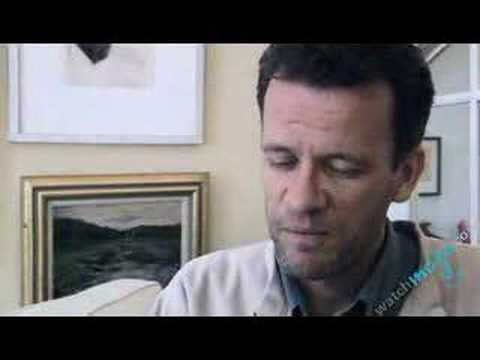
Life of Pi is award-winning author Yann
Martel’s best known literary work for
which he won the prestigious Man Booker
Prize
this is watchmojo.com I’m your host
Leila today I get the chance to talk to
this writer about delighting readers and
what it all comes down to you started
writing full-time at 27 was that a
decision you made or did that come about
naturally it sort of came about
organically I didn’t really choose
writing I think writing chose me
everything else fell away you know from
anthropology to zoology and I was sort
of left with writing and when I started
I wasn’t very good and I bit by bit I
got better so I didn’t know what I was
doing and it says I wasn’t thinking I’ll
do this to comment on that I was just
doing it how did you sort of contend
with your own uncertainty about where
you were going we’re taught to be very
reasonable in the West we value that
reasonable people make a lot of money
reasonably people can make you blog get
a lot of power and I just was fed up
with being so reasonable I thought
what’s the point of being so reasonable
where does it get me and thank God I
ended up in India at the end of this
process and that’s where I started doing
Life of Pi which in a sense is a book
that says stop making sense have a you
know have a vertical view of life rather
than a horizontal one well now just a
material chemical one don’t worry if
it’s not true you know you don’t have to
be certain about anything in life it’s
you know life is the process it’s not
the knowledge so just entertain
transcendence and you’ll be better for
it so in a sense it’s a totally
unreasonable proposition I think I’m the
better for it and I think generally in a
way people are the better for it for
being less reasonable can you talk to us
a bit about the balance between the
composition the delivery of the story
and the story you’re telling itself well
you have to do the writing and then you
think about it I love tinkering just to
see it improve makes you feel better
even simple things like language you
have to write in English you know let’s
say you’re writing an English novel has
to be in reasonable English you know you
can’t just throw in you know Albanian in
it if you want because they won’t
understand it
there’s normal compromises of trying to
communicate in the other sense I write
literary stuff and there’s no real
compromises because by and large in our
Western capitalist profit-driven society
art is irrelevant when you think about
other people to who it’s irrelevant and
that it’s not really irrelevant to them
no no it isn’t i think that the writer
ultimately is a free element you know
you’re not responsible to anyone art is
witness you know that the genuine artist
just says this is life not the good
parts or the bad parts just this is life
including you know the good the bad the
ugly everything and it’s that active
witness that makes art so necessary and
so true both art and religion
essentially at their core there are
stories and I think we are story animals
so I think the work of a lifetime is to
figure out what your story is
what story you gonna tell of yourself of
your family of your city of your country
and then ultimately of your universe
thank you so much for your time I really
appreciate it oh my pleasure
there was something incredibly joyful
about imagining a story with the setting
with characters with an ultimate meaning
and trying to bring it together in you
know little sentences lined up it was
just something really pleasureful about
that be listed like being a small god
Life of Pi is award-winning author Yann
Martel’s best known literary work for
which he won the prestigious Man Booker
Prize
this is watchmojo.com I’m your host
Leila today I get the chance to talk to
this writer about delighting readers and
what it all comes down to you started
writing full-time at 27 was that a
decision you made or did that come about
naturally it sort of came about
organically I didn’t really choose
writing I think writing chose me
everything else fell away you know from
anthropology to zoology and I was sort
of left with writing and when I started
I wasn’t very good and I bit by bit I
got better so I didn’t know what I was
doing and it says I wasn’t thinking I’ll
do this to comment on that I was just
doing it how did you sort of contend
with your own uncertainty about where
you were going we’re taught to be very
reasonable in the West we value that
reasonable people make a lot of money
reasonably people can make you blog get
a lot of power and I just was fed up
with being so reasonable I thought
what’s the point of being so reasonable
where does it get me and thank God I
ended up in India at the end of this
process and that’s where I started doing
Life of Pi which in a sense is a book
that says stop making sense have a you
know have a vertical view of life rather
than a horizontal one well now just a
material chemical one don’t worry if
it’s not true you know you don’t have to
be certain about anything in life it’s
you know life is the process it’s not
the knowledge so just entertain
transcendence and you’ll be better for
it so in a sense it’s a totally
unreasonable proposition I think I’m the
better for it and I think generally in a
way people are the better for it for
being less reasonable can you talk to us
a bit about the balance between the
composition the delivery of the story
and the story you’re telling itself well
you have to do the writing and then you
think about it I love tinkering just to
see it improve makes you feel better
even simple things like language you
have to write in English you know let’s
say you’re writing an English novel has
to be in reasonable English you know you
can’t just throw in you know Albanian in
it if you want because they won’t
understand it
there’s normal compromises of trying to
communicate in the other sense I write
literary stuff and there’s no real
compromises because by and large in our
Western capitalist profit-driven society
art is irrelevant when you think about
other people to who it’s irrelevant and
that it’s not really irrelevant to them
no no it isn’t i think that the writer
ultimately is a free element you know
you’re not responsible to anyone art is
witness you know that the genuine artist
just says this is life not the good
parts or the bad parts just this is life
including you know the good the bad the
ugly everything and it’s that active
witness that makes art so necessary and
so true both art and religion
essentially at their core there are
stories and I think we are story animals
so I think the work of a lifetime is to
figure out what your story is
what story you gonna tell of yourself of
your family of your city of your country
and then ultimately of your universe
thank you so much for your time I really
appreciate it oh my pleasure
Please follow and like us: