
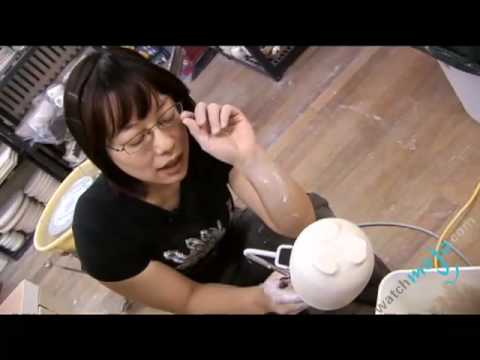
so now we’ve gone out of the Calhoun and
this would be the piece that would get
out of the first heating the first the
first firing yeah all right let’s go so
now it’s been bisque half pig that’s it
so this is what we’d guess at this point
so it some solid but not too solid I
mean it would shatter if you kind of hit
it you know a little harder and as you
can see you know you still have the
little face while the space is a little
different than kind of surprised looking
but then this is where you would glaze
shine from yeah yeah so this is when you
would glaze your piece the way I would
glaze this guy this guy has green on the
inside but to not complicate things too
much I’m just gonna make him transparent
completely I’m going to grab a set of
tongs and then you just cut a dip it in
slowly until it’s completely covered and
what’s happening here is that it’s wet
but because the piece is only half fired
the pistol has some absorbency to it so
the liquid actually absorbs a piece
right away so as you can see I’ve just
dipped it in but it’s dry now I could
touch it and it becomes like this kind
of fill with powder because of the tongs
you do have these little markings here
and what I usually do is if the markings
are you know
too prevalent I could just rub it and
once it gets fired you will be able to
see it anymore and what about the little
face cross the road oh but once it fires
it becomes transparent because it’s a
transparent glaze whereas if it was a
colored obviously you know it would be
covered in green but because this is a
transparent place you know the little
face will show after the firing you
don’t want to have anything on the
bottom of your piece because if you
leave the glaze on the bottom and you
fire it you will stick to your shelf so
you really want to kind of wipe off your
bottom ok so that’s a very important
actually I guess that’s a really good
yes because even if you have like a
ruined your yes I mean your shelf
exactly absolutely it’s happened before
Please follow and like us: