
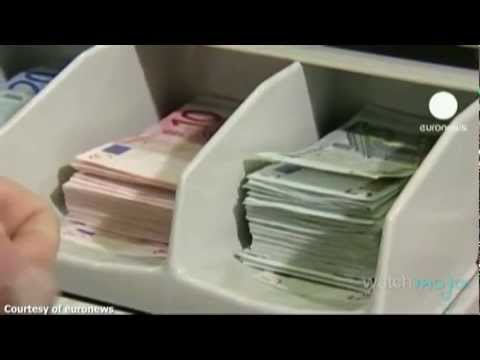
this is Europe’s most significant
monetary reform since the Roman Empire
welcome to watchmojo.com and today we’ll
be learning more about the history of
the euro the euro is the form of
currency used by the ever-evolving
eurozone countries the eurozone consists
of countries from the European Union
that adopted the euro as their common
currency and only legal tender while the
euro was officially introduced on
January 1st 1999 the idea behind this
common currency dated back decades
historically Europe was one of the
world’s largest trading regions but that
trade was complicated by fragmented
currencies as early as 1929 the League
of Nations contemplated in economic and
monetary union
however World War two derailed those
ambitions during the cold war efforts to
strengthen ties between non communist
nations were made 1951 s Paris treaty
linked Belgium France West Germany Italy
Luxembourg and the Netherlands and
created the European Coal and Steel
community those six countries signed the
Treaty of Rome in 1958 to found the
European Economic Community which was a
precursor to the European Union the idea
of Economic Cooperation eventually
resurfaced a report published in 1970
suggested the centralization of
financial policies in Europe this set
the wheels in motion for a single
European currency and central bank in
1979 most of the EEC nations instituted
the European monetary system to
stabilize exchange rates and offset
inflation of the newly created European
currency unit or ECU much of the 1980s
was spent realistically planning the
establishment of the economic and
monetary union 1986 is single European
act augmented cooperation between the
EEC nations in terms of politics and
economics the bold Maastricht treaty was
signed February 7 1992 and it was this
Accord that created the European Union
it also established 1999 as a deadline
for the creation of a
and currency and set the basis for the
shared financial strategy countries were
required to meet stringent criteria in
order to sign the agreement low budget
deficits and debt ratios were just some
of the required measures the groundwork
for the euro was laid during the 1990s
the European monetary Institute replaced
the EMC F in 1994 and became the
prototype for the European Central Bank
the currencies named euro was chosen in
December 1995 as many countries endorsed
it to their populations the United
Kingdom Denmark and Sweden eventually
decided to opt out of its use and kept
their own currencies each participating
nations currency was converted to the
Euro via triangulation this negated
discrepancies between the various
countries standards for rounding and
important numbers it was finally
determined in December 1998 that one ECU
would equal one euro
the euro was first circulated on January
1st 1999 in non-cash transactions and
accounting for example traveler’s checks
stocks and mortgages were all available
in Euros the national currencies of the
eurozone countries were then
discontinued and established at fixed
rates with each other the changeover to
the euro was a three-year transition
paper money and coins from the old
system was accepted until 2002 at which
point enough euro notes and coins had
been produced after its launch the Euro
performed better than expected
it opened trading on January 5th at one
dollar 19 cents u.s. dealers were amazed
by how quickly it replaced the national
currencies for example the mighty
deutsche mark was predicted to trade in
parallel but it disappeared immediately
following the introduction of this
currency the eurozone expanded and
changed significantly Greece qualified
for membership in 2001 and more nations
joined in the years that followed as the
world experienced a financial crisis in
2007-2008 so did the eurozone problems
in Europe stemmed from the strict
guidelines member countries were
expected to adhere to and from the
over-optimistic idea that the work
ethics and viewpoints on debt of these
countries would converge over time aside
from strength
ties between eurozone countries the Euro
helped increase tourism within that area
time will tell if this currency reform
is a lasting solution
Please follow and like us: