
while it’s undoubtedly groundbreaking
the nuclear framework deal that has been
reached between the west and Iran is
also controversial due to the safety
concerns Iran’s nuclear ambitions may
potentially introduced into world
relations welcome to watchmojo.com down
ten crucial facts you should know about
the Iran nuclear framework deal number
ten how did iran come to be iran known
officially as the islamic republic of
iran and culturally as Persia is one of
the world’s oldest civilizations as it
can trace its foundations back to 3800
to 3200 bc home to over 78 million
people Iran has the second largest
population in the middle east after
Egypt furthermore its population
comprises multiple ethnic and religious
groups with Farsi being the official
language and Shia Islam the official
religion as of 2015 Iran has been under
a distinctive political system dating
back to its 1979 constitution known as
an Islamic Republic which blends
religion and democracy with its
religious supreme leader having a
sizeable authority on political
decisions number nine what is Iran’s
position in the world Iran has the
Middle East second largest economy with
an estimated GDP of 366 billion dollars
between two thousand thirteen and
fourteen geographically the country
holds a unique position in the Middle
East as its location is of importance
within Eurasia and Western Asia as well
as to the Strait of Hormuz an
historically significant choke point
that is the only sea passage between the
Persian Gulf and the open ocean
politically Iran has had incredibly
hostile and strained relations with many
countries notably the United States
Israel and close neighbours Saudi Arabia
ever since the late 70s Iran has been
accused by the west of sponsoring
terrorist activities abroad and trying
to extend it
points as such the spectre of a nuclear
armed Iran does little to reassure
western governments number eight how our
relations between the u.s. and Iran the
tenuous relationship between the Western
superpower and the Middle East nuclear
energy powerhouse can be traced back to
nineteen fifty three when the United
States CIA aided the United Kingdom in
overthrowing Mohammad Mossadegh the
first democratically elected prime
minister of Iran Musa deck had been in
the process of nationalizing Iran’s oil
production as the country was one of the
world’s major producers of the resource
at the time but only received fifteen
percent of the profits while the UK
received the remainder prior to this the
relationship between both countries was
relatively free of strife or threat but
since the 1950s when the Shah began his
regime Iran has never forgiven the
intervention of the United States
following the 1979 Iranian Revolution
the Shah fled the country to the US when
the u.s. refused to return him to the
country iranian students stormed the
American Embassy in Tehran and took 52
diplomats hostage though none of the
hostages was harmed that incident left a
bitter taste in America’s mouth as they
believed Iran violated the principle of
international law which grants diplomats
immunity tensions between the two
countries were further exasperated when
in 1988 a commercial Iranian Airbus was
shot down by the USS Vincennes killing
all 290 passengers and crew members the
United States never formally apologized
to Iran although a settlement was
reached in 1996 that saw the u.s. pay a
60 1.8 million dollar settlement to the
families of the deceased the previous
year the United States had placed a
trade embargo on Iran and ever since
there’s been an uneasy truce between the
two nations as both have access to
nuclear energy number seven what is the
current government of Iran the
government of Iran has
four main office holders who control
various sections the two that hold the
strongest positions are the Supreme
Leader and the president the Supreme
Leader is the most powerful position
within the government as it appoints
those in charge of powerful departments
such as the commander of the military
forces following the Iranian Revolution
and the death of ruhollah khomeini the
Assembly of Experts elected Ali Khomeini
as Iran’s supreme leader in June 1989
this Shia cleric has allegedly publicly
opposed nuclear weapons on account of
Islam in the form of a fatwa though its
existence is debated the president is
the second most powerful position and is
elected by the people of Iran Hassan
rouhani assumed the office of the
president in august 2013 following a
landslide victory when he garnered
support from both those in favor of
policy reform and religious Iranians
named by Time magazine as one of the
world’s most influential people rouhani
is seen by many as a moderate politician
since taking office he has worked on
improving many issues including women’s
rights building the economy removing
internet censorship and strained foreign
relations number six what is the nuclear
program of Iran the US helped launch
Iran’s nuclear program in the 1950s with
in another program called atoms for
peace this American program saw
previously secretive nuclear information
and Technology become accessible to
different civilians and countries
following the Iranian Revolution in 1979
and the subsequent overthrowing of the
shop Iran’s nuclear program evolved to
include uranium enrichment plants
uranium mines and processing facilities
all of which Iran has stated are solely
for peaceful purposes such as
electricity and medical isotopes in fact
Iran plans to ramp up production of
electricity through nuclear facilities
by 2025 in order to meet its ever
increasing demand number 5 what is the
Iran nuclear deal framework
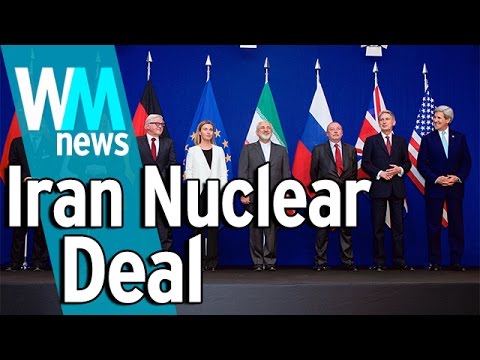
the Iran nuclear deal framework was
reached in Lausanne Switzerland in late
march and early april 2015 following
high-powered negotiations attended by
the foreign ministers of the United
States the United Kingdom Russia Germany
France China the European Union and Iran
these talks centered on Iran’s
continually controversial nuclear
activities at the end of the discussions
an announcement outlined that all
participating nations had reached an
agreement regarding a framework and that
all final decisions have to be made by
june thirtieth 2015 the outlined deal
touched on various hot-button issues
such as the reduction of Iran’s nuclear
facilities and production the removal of
economic sanctions against Iran and the
enhanced and unprecedented
investigations of Iran’s nuclear
facilities all while iran denies
intentions that it’s attempting to build
a nuclear weapon number four who opposes
the deal framework this deal would pose
a grave danger to the region into the
world and would threaten the very
survival of the State of Israel one of
the fiercest opponents of the nuclear
framework deal is nuclear power Israel
its leadership has perennial II
threatened unilateral strikes on iran
despite the fact that Iran is home to a
large Jewish community either way Israel
sees the concessions granted by the West
as dangerous and as such is requesting
tougher demands such as the end of
Iran’s research and development of
advanced centrifuges and unlimited
anywhere anytime inspections by
international monitors conservative
hardliners in the United States are also
wary of the terms and as such are
pressing for a vote in Congress on the
nuclear agreement if the vote passes it
would prevent President Barack Obama
from stopping sanctions on Iran for the
duration of a congressional review and
if it receives enough votes the bill
could also override a possible veto by
Obama number three how would the deal
benefit Iran for the first time in
recent memory it seems as though Iran’s
conservative hardliners are out of step
with the governor
senior officials lawmakers and even
Iran’s military the Revolutionary Guard
have praised the nuclear framework deal
and the government of President rouhani
the deal would benefit Iran by removing
American and European sanctions and help
thaw the country’s decades-long
isolation from the West which has led to
political tensions and a badly injured
Iranian economy number two how would the
deal benefit the world the benefits of a
greater Iranian transparency would be
immeasurable to the world with the
framework deal outlining the varied
steps that Iran must take in order to
have Western sanctions removed the deal
would also give the IAEA the
International Atomic Energy Agency
unprecedented access to Iran’s nuclear
facilities and would put it in charge of
verifying Iran’s nuclear commitments
these would mainly be Iran scaling back
their nuclear enrichment programs and
not building further enrichment
facilities furthermore Iran has accepted
to turn Fordo an underground uranium
enrichment facility into a center for
scientific research number one will Iran
follow through on the framework
agreement following the announcement of
the nuclear deal framework the United
States and Iran published separate fact
sheets outlining the details of the
agreement and with different emphasis on
certain aspects yet some have questioned
the viability of such a deal while Iran
has stated that sanctions would be
removed as soon as the agreement is
officially signed the US has stated the
opposite that sanctioned removal would
occur in phases and only after
verification that Iran has fulfilled its
commitments nevertheless this landmark
framework agreement has been touted by
President Obama as a quote
once-in-a-lifetime opportunity and to
garner added security in the Middle East
this framework gives Iran the
opportunity to verify that his program
is in fact peaceful however as June
thirtieth 2015 was the deadline for such
decisions the commitments made by all
parties were not yet enshrined did these
facts surprise you to vote for which new
story is covered next head over to
watchmojo.com / suggests
and be sure to hit that subscribe button
for more newsworthy top 10s published
every week
[Music]
Please follow and like us: