
when many of us think about community we
think about our neighborhoods our cities
we think about our churches our schools
think about the business districts in
our neighborhood we think about all the
things that together make us feel safe
and grounded all the things that make us
feel like we are part of something
children and young people who live in
communities that are supported by
resources and good schools and loving
parents caring adults are 40 48 percent
more likely to succeed in life than
those who are not in fact if children
are born into poverty and god forbid
you’re a boy that’s born into poverty
you’re forty eight percent less likely
to achieve rush Chetty of stanford
reported in his 2016 equality of
opportunity project that where you come
from
who you’re born to if your parents are
married and how much they make plays a
major role in determining where you’ll
end up later in life when young people I
work with are asked what they think
about their community what what vision
do they have of their community many
times their responses I see sirens I
hear ambulances I remember someone
bleeding on the ground those kind of
traumatic daily experiences that young
people in our very community experience
are critical to their growth process or
lack of growth process what if they look
around what do they see they see
billboards see what hang on I’m Way
behind okay they see billboards of
people who are selling cigarettes and
liquor who are predatory attorneys
trying to get them to think about how to
make a quick dollar they see ways that
young people are incarcerated the
examples that they see of themselves and
what they what people are selling them
their neighborhood are absolutely
horrendous
and I’ll talk a little bit more about
how some great community leaders have
done something about that but what if
their example is a whole house full of
brothers and sisters who haven’t
completed their high school diploma or a
family who has had to move more times
than they can count what if their
example is a father that they’ve never
known who’s been in prison their whole
life or that the adults in their home
are not gainfully employed this doesn’t
mean that those people do not love them
it doesn’t mean that they don’t care for
them but those are the examples that
many young people are seeing on a daily
basis so how does a young person who
really believe that there’s more out
there how do they make that happen for
themselves how can that work for them
what does a young person have to do or
engage in or endure to make sure that
the dreams they have become a reality I
wonder a lot do we really have to be
taught inextricably to the place that
we’re born or maybe the people that have
raised us or our conditions or
circumstances research says that they do
but I don’t think so
and the reason I am sure of that is
because I watched young person after
young person across my lifetime change
because they had the resiliency to do so
but how do they do that what do they
need to bring that resiliency to life
what do they need in their tough
neighborhoods to make sure that those
same young people can succeed this is
really what I came to talk about I think
that communities are a mirror image to
the young to the people who live in them
and that across the country there are
270 cities that have youth build
programs and I’m going to talk about the
model a little bit and talk about what
we expected young people YouthBuild
program is our design has come
unity and youth development programs
they have designed to help young people
transform their lives and become leaders
in their community they’re designed for
16 to 24 year olds who are low or very
low-income backgrounds in Louisville are
young people over the last 16 years
about 60% of them are parenting already
75 percent have not gotten their high
school diploma by the time they register
with us
generally 35 to 50 percent of them have
been caught up in the foster care system
some sort of way and this last year 40
percent of our young people entering the
program were homeless so we’re talking
about young people being resilient in
the face of all of that hardship yet
what we really try to do is build a
place of respect and love for young
people help them meet the challenges and
face their fears and overcome
generational poverty just really one
young person at a time I’m going to tell
you a story I’m trying to do this we’ll
see how this works out but I’m going to
try to mirror a community that I love
Smoketown and a young person whom I love
we’ll call him LF when we move to the
Smoketown neighborhood when youth build
moved to the subtil neighborhood in 2010
we were just coming on the the front end
of the hope sticks project which was
really set up to bring down the public
housing in that neighborhood and build
new in 2012 scout magazine named smoked
down the 13 most violent neighborhood in
the nation we’re experiencing daily
shootings and drug deals decaying
infrastructure
LF who’s a gentle young quiet man had
moved around so much in his lifetime his
short life time that he had no real bond
with his school community or with
friends because he wasn’t there long
enough in that school to
and get to know the young people he was
a really good guy and one night after I
shortly after I hadn’t met him he was
arrested because his cousin had put a
gun that was in the car in his jacket
pocket so that he would not be arrested
because it would not be arrested so our
young guy was arrested and that started
really a hellish experience for him
however I’m going to talk about the
resilience of this young man the
isolation that a community feels these
are some of the things crime and
violence is one that he and this
community have in general together in
isolation the Smoketown neighborhood is
nestled between the central business
district and the highlands yet nobody
wants to travel through it or at least
that was our experience back then it
wasn’t performing well on any measures
and in 2011 we were named the fourteenth
poorest neighborhood in the US LF had a
family of ten siblings none of whom had
graduated from high school although they
were brilliant because two of his
sisters had already graduated from youth
build they were underperforming all of
his brothers and sisters economically
academically and socially and even
though the schools that he went to made
fun of him and never really knew him
this is also the social isolation that
he felt really caused him to build a
shell around him that did not allow any
of us in originally a lack of basic
daily needs this community had no
grocery store no shoe shop no cleaners
no bank no ice-cream store no coffee
shop one restaurant no ice oh I said it
and Playa liquor stores his family had
not enough food for the eleven people in
the family repeatedly moving
homeless one said it closed to his name
and a backpack no bike no toys no
electronic equipment so what did it take
for him and for Smoketown to change
because I think that’s probably what the
message I want to give the reality is
that communities have to commit to the
belief that growth is possible through
hard work and God knows they don’t they
people don’t deserve the trust that we
ask people to put into us because of the
years of desperation that those
communities have had to endure but we
ask them to trust and build
relationships use resources as wisely as
possible and bring as many people to the
table to help change those communities
as we can the same thing is true for LF
we want resources we know he needs
resources we know that he needs love and
attention so this is kind of where the
intersection comes together so to commit
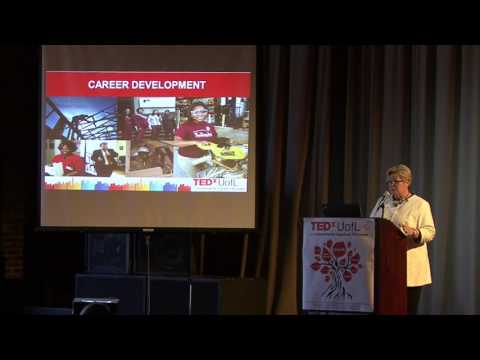
to the future we asked our young people
to begin by first earning their high
school diploma we asked them to commit
to career development either in
construction which is the youth build
model across the nation across the world
in nursing we’ve added nursing we’ve
added culinary arts in this last year
environmental education and each of the
speakers that have spoken so far today
it’s interesting because we have
relationships with those agencies
because it’s important to connect young
people to the community but what
happened for Smoketown is that the
little housing authority did tear down
the three hundred sixty five units of
housing and build back 280 units of
beautiful new mixed income housing that
spread out more broadly in the
neighborhood we worked with ideas xlab
to start a steam program in two
wonderful young artists work to have
been working together with us to build
five days a week after school math and
science programs using the arts we took
a problem at a liquor store and turn
into an Art Center we ideas xlab is
front more than 50 artists to our
neighborhood a Health and Wellness
Center is opening for LF he earned his
high school diploma here in
certifications and career advancement
he’s completed thirteen hundred and
fifty service hours and earned two
AmeriCorps scholarship awards he started
his first job he’s in the middle of an
internship program now in tech business
and last year he spent two weeks in the
gardens of Versailles studying gardening
and high-volume production you have to
commit I think to changing behaviors
that have defeated your community in the
past and have to be defeated you
personally in the past four Smoketown we
have to figure out how to permanently
reverse our underground economy drug
trafficking human trafficking
if you don’t these things will persist
they’ll develop on their own money has
to flow through communities so social
awareness is critical new businesses are
moving into Smoketown law offices
architects restaurants and bakery so we
talked earlier what are we going to do
about not gentrifying that community we
have developed and reconstituted the
Neighborhood Association so we can watch
and pay attention at all times about the
people who live there the people who
want to remain there and we will never
be that that community will always have
public housing at its core so how do we
make that public housing the richest and
highest quality of life place to live
for people in this community we’ve
opened fresh stops a fresh stop sight
and have 60 families and we’re in the
process Community Foundation of
Louisville has taken possession of a two
acre lot from the hillerich and Bradsby
company and will be turning that within
the next year so well we’ll see what we
turning into but we hope it’s going to
be a park and a business hub General
Electric brought 600 volunteers together
with over 50 partners and 11 agencies in
the city working together to really work
and change our community
we put in soccer fields 150 Street trees
in a new park our campus alone is gone
through a four hundred thousand dollar
acquisition to a three million dollar
campus with Gardens orchards buildings
barns rain gardens and incredible places
for young people to eliminate their
barriers understand how to cope really
understand that progress is possible for
them we took another liquor store
together with ideas xlab we’re turning
that into a community laundromat the
number one thing that the community said
they needed so this that’s him right in
the middle in the garden and okay and
the palace in Versailles
the guy on the left is also in France he
study there two years prior and then
these guys went the year in-between this
is Bates we’re dance Theatre of Harlem
came in and taught workshops through
ideas xlab and this is the project that
we worked on with Kentucky Arts and
Crafts Festival Kentucky Arts and Crafts
Museum excuse me working with folks
through the prison and our young people
putting their stories on these beautiful
pieces that were woven together and
that’s now on our wall in our building
for LF he was placed into stable housing
and he’s been there for a year now his
stability is allowing him to remain
steady on his job keeps his clothes in
one place he can take a shower every
night he always knows that the fruit the
food he puts in the fridge is going to
be in the fridge when he comes back and
he has committed to serving others so
what do we mean by that so he’s come
from a place where he wouldn’t let
anybody into a place where he’s giving
and that’s possible when young people
have the right resources and love around
them and attention to their success when
yeah I believe that when young people
are given the chance to serve as all of
us are our hearts fill up in his case
his passion for service has grown into a
place where he works in nature
these are three arboriculture
certification certifications planting
hundreds of trees and trees width
Louisville grows and now tending to one
of the most prestigious gardens in
Louisville that’s one of his jobs his
head is always high now and he takes his
skateboard down the road and you can
feel the freedom that he feels as you
watch him skate away he’s working and
planning and saving for his future and
in the fall he will begin college is one
of my past graduates told one of his
until his employer and the employer
called me in tears one day he said I
just had to let you know this Larry just
came in and told me mr. Chris this is
the year then I move into the middle
class I’m buying a house this year I
can’t tell you how that makes me feel
saddened at one point maybe to feel like
he didn’t deserve to be in the middle
class and also saddened by the fact that
it took him so long to be able to get
there as hard as he worked but the
reality is tides can change
neighborhoods have space our community
has space for more middle class
neighborhoods we have a space for more
high quality neighborhoods even though
some of the people who are living in
them may be in poverty and working their
way out really what I’m trying to say is
that successful Renaissance azar
possible in all the neighborhoods that
Jessica talked about and that John
talked about slope town is no longer the
13th highest crime-ridden neighborhood
we are no longer have the status of the
14th poorest neighborhood in the nation
communities and young people can drive
with the right amount of hope and
resources and support what I’d like you
to do is help stoke the fires and the
hearts of young people that you join us
in smoke town or a neighborhood of your
choice that you or anyone that
you know who’s really interested in
working with young people that you
connect them to those young people
because young people need them or if you
just want to come to smoke down and buy
your bi-weekly produce we got that for
you to smoke town is open for business
and our young people are entrepreneurs thank you
Please follow and like us: