
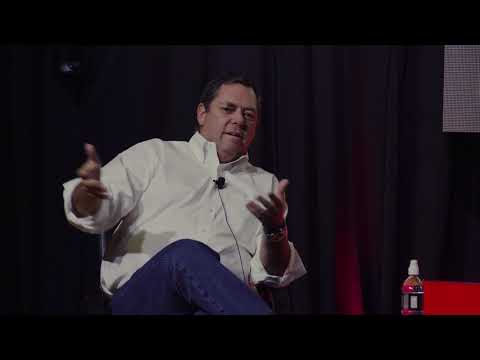
all the theme for our TEDx this year is
your city or design and we’re anxious to
hear your your vision about that topic
but most people in our audience have not
met you and I thought we could dig back
a little bit and give people a look at
Paul Foster you were born in Snyder
Texas but since nobody knows where that
is we’ll skip till you were two and you
moved to Lovington spent your formative
years in Lovington until you graduated
from high school right in your in your
high school annual there’s a photograph
of you and underneath it’s the boy voted
most likely to succeed I have a question
how did they know what did you do
in Lovington that gave the high school
some premonition that Paul Foster would
be successful well I don’t know I always
worked from the time I was a very young
child I always trying to figure out how
to make money most of it honestly and I
had a paper round when I was 11 years
old and I sold fireworks and I made
candles and I did all kinds of sort of
unusual things but I was always trying
to make money and I’m and I don’t really
know why I’m not like I needed money but
but I think I just was a little bit in a
very small way very entrepreneurial from
from a very young age so I pictured this
all-american boy in Lovington lots of
friends and riding bicycles what’s the
worst thing you ever did at a kid oh
gosh you can tell us about yeah there’s
one kind of embarrassing one where we
three three of my good friends and I all
got BB guns for for Christmas and so we
went out in this pasture way out behind
our house a couple of miles and came
across this this this farm and we knew
the farmer of course everybody’s a small
town everybody nearby
and we had these new BB guns and we
started was this chicken ran across and
we started shooting at and of course
none of us knew how to shoot and all of
a sudden this chicken just fell dead and
I’m not gonna say who was made the fatal
shot but we were horribly embarrassed
and didn’t know what to do and where we
ran home and you know of course it
didn’t tell her parents or anything and
we had a substitute teacher on Monday
morning that I got a regular teacher was
was not I guess was sick or whatever and
the substitute teacher was the wife of
this farmer and we thought they knew and
so anyway that was that was one very
scary thing we thought we were all going
to prison for killing a chicken but what
we’re glad you did you graduated from
high school
entered Baylor as a pre-med student and
then graduated four years later with a
degree in accounting that’s another
story unto itself but once you graduated
you went through a series of about six
jobs and ended up at El Paso refinery in
1990 as a as the controller and and
marketing manager at that time it was
your first time in El Paso and then two
years later that company went bankrupt
Wow and here you were in El Paso Texas
35 years old
recently removed from a difficult
marriage to young children and broke
what was going on in your head well it
was it was a tough time it was in the
refining business there were a lot of
refineries going broke and and so it was
a tough business to be in it’s something
I had chosen to do and and now I was
having doubts about whether this was
really the industry I wanted to be in
and so I started you know brushing up
the resume and trying to figure out what
I wanted to do next and I was virtually
convinced that that I was going to find
a different industry and and then
the the refinery had gone bank probably
Chapter seven it was a really nasty
bankruptcy he never restarted and so
everybody got laid off we went from 400
employees down to I think five and so I
was one of the five but still they
didn’t look good and and the banks that
had the big the line share that that
ended up foreclosing and took ownership
of this asset and so I started looking
at that and I’m like these they don’t
know what to do with this and so I put a
little business plan together and and
basically persuaded them that they
needed me to help them manage this asset
that they had sort of accidentally
acquired and and it all started from
there you ended up buying the refinery
in 2000 was yeah well first we put a
management company together and manage
the asset for the refinery and it was
all very complicated because Chevron had
a refinery across the street and we put
a deal together with them to manage and
operate the two together and then it
became apparent to me that that nobody
wanted to own these assets Chevron
didn’t want it the banks didn’t want it
and I saw a lot of value there and I was
like I gotta figure out how to do this
and the problem is I didn’t have any
money
and so it was you know not an easy thing
to accomplish but I immediately started
working on trying to come up with a plan
probably in 1997 started working on
trying to figure out a way to put this
thing together and buy and then and it
only worked if you bought both of them
you couldn’t just buy one because they
they were in you know permanently tied
together and so it was it was very
complicated trying to figure out how to
how to put it all together and finance
it well we’re glad you did
over the years Paul you bought real
property and and built things in this
community and everything from the foster
Stevens basketball complex to
found that Farah the mills building the
Center building the Plaza Hotel the blue
flame building so many real assets that
you have purchased and and and renovate
and preserve which is a great story for
our community but somewhere in your
career you had to have stopped and said
whoa I’m making a lot of money what am I
going to do with it is is there a time
that that happened and you and and you
decided what you were gonna do in El
Paso yeah I think so I mean when when we
started having success with the refinery
and and we decided to take it public
become a public company and so we were
able to monetize some of this investment
that we’ve made over the years yeah I
started trying to figure out you know
how do I give back to this not not just
to this community but to the sort of the
the the vehicles along the way that
helped me to get to where I am and you
know I’ve always felt like I wanted to
give back to El Paso because this is
where I had most of my success the same
with you know Baylor where I went to to
college and in other places I just have
felt not obligated in any way but I felt
like I really wanted to try to improve
and give back to those institutions that
helped me get to where I am certainly El
Paso was a much better place which
brings us to the theme today that a lot
of your investments in giving has a lot
to do with what you saw in 1990 when you
were here and 2017 where is El Paso
going in your mind I think and I think
most people feel it I think helped Paso
is is is really in a good place right
now it’s a great time to be here I think
we have a great future ahead of us we’re
just getting started
and
terms of downtown you can feel the
energy you can you can see the
development it takes a lot of money it
takes a lot of time it takes some vision
and and we all need to work together but
I feel like El Paso is is already a
great city but poised to be just a
fantastic city as as we move forward I
think Juarez is a huge component of that
we have a very unusual situation I think
we’re the largest sort of binational
city in the in the world and and not
just by a national but we’re separated
by a border but but our population is
very homogeneous we’re very mixed we you
know we marry across the border
but you know it’s it’s very fluid and
people go back and forth and very
comfortable and course after 9/11 that’s
not as easy as it used to be but we need
to continue to figure out ways to
capitalize on that and I just think that
that that these two cities can be
fantastic if we if we do things the
right way so in that light
give us one big idea that you that you
would like to see both cities pursue
well I think that if you look at the
area down by the the bridge the downtown
bridge or bridges both sides of the
border the development hasn’t been great
you know there’s some business there but
it’s it’s disjointed what I think is
that they’re on both sides of the border
there should be a sort of a Mercado type
environment the cities need to work
together they need to create a safe zone
so people feel safe going to both sides
and and back and forth you need to have
bars and restaurants you need to have I
mean even the pink store I mean that
most of us have been to the pink store
out of Columbus little Columbus New
Mexico you know they’ve got it how do we
not have something like that here it’s
just amazing to me that we don’t have
the shopping and the and the dining and
the bars when people come to this town
like even you know the University of
Arizona was here last night to play ball
I guarantee you most of the fans that
came from Tucson wanted to go to once I
mean you don’t go to the border without
one to the cross and see see what’s over
there and I don’t know affirm any of
them did but the fact is it’s not as
easy as it ought to be and and there
ought to be a concerted effort by both
sides by the business communities and
the political communities on both sides
to make this a bi-national tourist
destination where people
want to go and and I think I think it
can be accomplished it can be safe I
don’t even think it costs that much
money you’ve you’ve got the properties
we just need to get the business
community in the in the the legislators
city council state legislators whatever
whatever is necessary to focus on it
make it a priority you have to work with
the federal government make the bridge
crossing experience a little bit better
and you know they have they have to
worry about security and I get that but
they could still it could still be a
better experience crossing the bridge
and I just think it’s a fantastic
opportunity that’s a Masai dia and it’s
one that’s been discussed about putting
a Mercado there one of the big questions
there’s always safety and you address
that but since you live with the cabinet
secretary for innovation and commerce is
that really possible in in what it oh I
think it’s absolutely possible
I mean Mars I mean you look at first of
all people think that we live in such a
dangerous place and I can’t tell you how
many times you know I tell people I live
in El Paso and they’re like oh my god
you know are you able to stay safe and
I’m like we’re the safest large city in
America every single year and those are
FBI statistics those are not Chamber of
Commerce statistics and San Diego is
almost always number two and it’s not a
coincidence that the two safest cities
in America are on the border and on the
other side of the border granted they
have issues they have to be dealt with
and and and we have drug violence that
kind of comes up and down or whatever
but they absolutely have the ability to
create a safe zone to make people feel
safe and and
and I believe I believe this is
something that could be done you know we
also also have the soccer team over
there that’s also right on the border
it’s only about a mile from downtown and
you look at that whole area and if you
develop it the right way it could just
be fantastic for both sides of the
border it would be a big vision for El
Paso and want us to pursue together
I want to we’re running out of time I
wanna wrap up with this you’re on a the
side sometimes pall of a lot of
controversy the ballpark the bond issues
I know you feel about during Guiteau
what should help in your mind what you
know Passos stop doing to attain a
global city distinction I think we need
to stop stop beating each other up we
need we need to all row in the same
direction you know my view is that we
can improve this city if we do it
together and you know you mentioned the
during Guiteau situation you know I know
there are a lot of a lot of passionate
feelings about that but the truth is
that the buildings that are there are
not buildings that need to be saved
there are probably 30 trost buildings in
El Paso
you can’t save all 30 Prost buildings if
you want to improve downtown if you want
to have a great downtown concentrate on
the ones that make sense to improve and
the others you might just have to let a
few go and there’s that’s okay and if
trust will sell out I think he’d
probably tell you that you you look at
you you mentioned you know what do we
what do we need to do different or have
yeah what do we need to quit do it and
it kind of reminds me of the the old
analogy you hear about the the bucket
with with the lobsters in it you have a
big bucket and you have lobsters and one
of them starts climbing
and he’s making progress and he’s going
to do some great things and right before
he gets to the top the others grab him
and pull him back down and then they
start beating each other up and in fact
they start eating each other and
somebody else starts trying to make it
to the top and they pull them down and
what they ought to be doing is helping
each other get to the top and then when
this guy gets the top he reaches down
and helps the next one up and I just am
a big believer in trying to collaborate
trying not to have a lot of controversy
and trying to accomplish great things
together
well we’re as I said Oh Pass is a better
place because of you and Alejandra and
and I know you you both flew back today
to be with us on the TEDx stage it’s an
honor to have you here so it’s a good
place to stop thank you Paul
thank you
[Applause]
Please follow and like us: