
dynamic title almost life-affirming I
would say and the reason for that is
because I was only allowed to have five
words if I could have had more it would
have been called you can save the world
I’ll be in the bar but actually I think
many of us recognize that there are lots
of problems in the world we find
ourselves kind of lost as to what to do
about them and we wonder what our role
is in in what’s going wrong in the world
and if we think that one percent of the
population the world’s population now
has more owns more wealth than the other
ninety-nine percent combined and that 62
people in the world have more wealth
between the 62 of them than the poorest
half of the world population that’s 3.6
billion people so if they put all their
money together they would have less
money than these 62 people and that’s
clearly somewhat imbalanced but I think
nothing highlights the plight of our
world population more than this really
the fact that we have African children
who are running around ten pound ten
cents per day mining for minerals for
batteries for smartphones so that we can
look at pictures of cats and argue with
strangers on social media and that’s the
very sorry state of the world so what
can we do about here well the idea is
that you can say the world and we all
can and it’s actually a lot easier than
we might think but of course if you’ve
ever been on an aircraft you’ll have
noticed when they do the safety
announcement that it’s important to put
your own oxygen mask on before you start
helping other other people so we need to
look at ourselves and that’s what I’ve
been trying to do and I’ve been doing
some research into what motivates us to
do you know if we’re going to understand
how we can fix the world we need to
understand what’s wrong so we need to
understand
why people do the things they do and so
must my over the obvious starting point
was Maslow’s hierarchy of needs I don’t
know whether people are very familiar
with with this but it’s a theory of
human motivation and the idea is that it
explains everything that we do but the
reality of it is that it simply doesn’t
I mean what Maslow said was that we have
this hierarchical set of needs which
start with our most basic needs like our
physiological needs they need to eat to
drink to go to the bathroom and so on
and once we satisfied those then we look
for safety and security and then once we
satisfy those needs we start to look for
friends and then we look for the esteem
other people and I had a problem with
this because there’s lots of things did
aren’t included there I mean just a
drinking alcohol for example or watching
the television or or as far we was
talking about you know playing video
games which of our human needs is
satisfied by by these things so this got
me thinking well maybe Maslow’s missed
something here and the first thing i
noticed that he’d missed he kind of said
that once we’ve satisfied each level of
needs we pass on to a next level and
what I think he missed was the fact that
if we think about these this first level
of needs as our survival needs the need
to to eat and to drink and so on this
this actually you know if you think
about it in today’s terms yes it’s
perhaps correct but if you think about
early humans as as I’m today I was
talking about earlier you know we we
can’t think about them as having the
same needs as they had diff very
different needs and so for them the
threat of death was very real and so
safety finding safety would have helped
them to eat so it’s not like they ate
and then they said right okay full now
I’m going to go and have something I’m
going to go and find a house no by
finding somewhere safe they were able to
eat so this is this is we’re talking
about natural selection the people who
survived are the ones who found safety
and who were the ones who found safety
well they were the ones who managed to
bond with others you know by bonding
together and hunting together they were
able to improve their chances of
survival who the ones who were able to
bond well the ones who had the esteem of
other people and had esteem for other
people so there was there’s an
evolutionary element to the hierarchy of
needs so but but the fact it missed all
these things out you know why do we do
these things why do why do people kill
other people when what what what’s the
human need to do that and so I did some
more research and explored the world of
psychology and Freud and Jung kind of
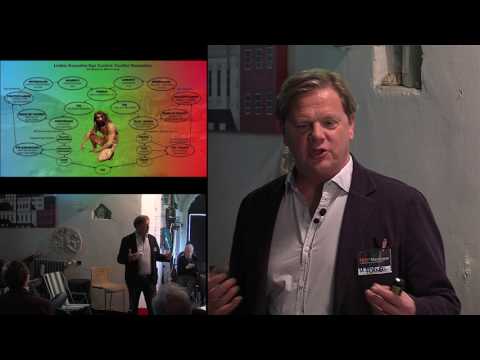
came up the idea that there are four
parts to our psyche and I think we can
all kind of identify with these four
parts of our psyche which are we have
depart the person who we really are
which perhaps corresponds to the human
needs aspect we have the person who we
we present to the world are kind of
social mask then we have a part of us
which is our what Freud called the
super-ego the one that kind of keeps us
under control and says no you mustn’t do
that you need to behave yourself and
then there’s a part of us that kind of
wants to do terrible things and perhaps
excessive things and we and we try and
keep these things in check so I came up
the idea I thought well if Maslow is
correct if we have this hierarchical
evolutionary set of needs that relate to
our ego then perhaps we have other
elements which relate to these other
parts of the psyche which interpret are
independent and to cut a long story
short basically we do and I researched
this over a period of time and came up
with what is our hierarchy of ideals
needs desires and our neuroses and this
is the framework for all human behavior
and in actual fact we’re all born
psychopaths we don’t become Psychopaths
we are born psychopaths and we either
stop being Psychopaths or will remain
Psychopaths
so if you think about that if we think
about childbirth when we’re born we are
we come out of the environment of the
womb where everything is warm and
comfortable we’re fed where we’re given
love and attention it’s quiet it’s
peaceful it’s it’s paradise and then all
of a sudden childbirth dis loving mother
who with all of her brutal force pushes
us out into the world and then they cut
the cord that ties us to her and with
there’s lights and there’s noise and
it’s horrendous and then we’re left to
fend for ourselves and occasionally
she’ll pick us up and and give us some
of her milk and occasionally should put
us down again and look at a telephone
and so it’s it’s it’s natural that we’re
born with the desire to get back to
where we where we came from we want to
get back in there but of course we can’t
do that so we learn through nurturing to
interact with the world and we develop
these other parts of our psyche so you
know the the the nurturing in love and
attention of our parents teaches us
self-control self-trust and so on and
these things are hierarchical so if you
look at any of these elements you can
see that the higher element enables the
lower element in the same way that that
the that it does with mouths loads
Maslow’s needs so for example if we look
at why we why we might people like take
drugs what people might become addicted
well because the pressures of the world
seemed too much and they want to give
into self abandon and they don’t have
the mechanisms to be able to keep that
under control so they said they give in
to it but in order to do that well you
must have doubt about your abilities to
affront life’s problems and in order to
have doubt above about your ability to
front life’s problems you must reject
your capabilities and in order to do
that you must negate your you’re
yourself you’re you’re you’re
your identity in some way and so these
things take us all the way up to the top
level which is kind of
self-transcendence transcendence
imminent and emancipation it’s about the
liberation of from the human condition
it’s a gem gone talk about this more
because it’s it’s it’s something that
words it’s worth discussing it very
length I think but in essence what life
is about is creating a balance of the
all of all of these elements and unless
we have that balance we kind of go off
in one direction so that kind of
explains why people might murder other
people is if we don’t find the balance
and we don’t have our ego needs
satisfied we find them elsewhere so this
enabled me to develop what is a map of
the human psyche and it kind of explains
all of the human motivation it explains
all of our the functions of our psyche
and their relationship to each other but
what it what it pretty much determines
is that emotions and all of our behavior
comes from us so everything that we do
is a reflection of who we are so even if
we think about if we think about how our
behavior towards other people that
simply our externalizing what’s inside
us and so if we look at the mechanism of
how that works on this right-hand side
you can see when and we think about this
in early human terms because our
dynamics are very different but the
mechanisms that we have are still the
same so when we’re faced with any kind
of threat or fear we have a choice where
we have a sub conscious choice as to
whether we can control where fear or not
and if we feel we can’t what do we try
and do well we have to we we immediately
get feelings of being weak and unable to
deal with the thing so that kind of
batters our ego somewhat
and then we have the fear and stress
mechanism which we causes us to either
freeze flee or fight and if we escape
from that well we have a mechanism the
parasympathetic nervous system we have
the sympathetic nervous system and the
parasympathetic nervous system so when
we get anxious the sympathetic nervous
system takes over them and prepares us
for these for these battles and then
when we get over it when we escape the
parasympathetic nervous system kicks in
and it causes us it triggers what they
call our instinctive feed and breed or
rest and repair so it causes us to want
to eat now I can identify with this I’m
a writer and if I’m if I’ve stuck for an
answer I’ve come across and I don’t
quite got the answer my immediate
reaction is to escape it and what I do
to escape it I’d go to the biscuit
cabinet or I have the urge to watch a
box set of television program justice to
escape so and that is so it’s within us
we are it’s with naturally programmed to
escape anything that’s difficult and and
we’re also pregnant to kind of wait
until we feel right about things and the
answer is we’re never going to feel
right about things and stress and
anxiety a part of life and it’s how we
deal with them that determine how we
behave with other people and we have
defense mechanisms in order to do that
we have a number of defense mechanisms
but the principal ones that determine
how we behave with other people our
projection and displacement so we either
project onto other people the people who
are you know attacking as we project
back on to them all we put it on to
somebody else so somebody might have
trouble with the boss at home and then
take out their anger on their spouse
when they get home so the problem with
that is if we think about I mean even if
you think about somebody who cuts you up
in traffic now we might react angrily
towards that person but in actual fact
all we’re doing is externalizing and it
at the emotion that we’re feeling in
that in
in relation to that incident so the
person might cut you up and actually
what that’s doing is damaging maybe your
self esteem you think this person is not
giving me respect he’s pulling out in
front of me and not giving me any
respect so what you do is then you
project that back on to them by shouting
or sounding the horn so by understanding
these mechanisms we can see that it’s
actually is that that create the world
we see we we tend to create our own
reality in a way by being able to
externalize these four parts of our
psyche and we look for people that we
can identify with that represent these
four parts of our psyche so we have our
kind of spiritual guides and our mentors
that that we look to to give us the you
know to control us and to build the
trust and acceptance and everything else
then we have our friends who we can
identify with as a kind of a mirror of
ourselves we are their heroes you know
the who provide us with with the escape
and fulfill our fantasies and give us
role models of who we would like to be
and then we have enemies who we can
discharge all of our negativity onto and
we look for these figures so in essence
we as individuals create the world
around us we create these people who
they are and then when we gather
together in communities we tend to do
the same now what’s interesting is if
you look at the way that societies ever
since the early earlier societies formed
they’ve always been divided into four
groups of people so if we look at the
Hindu caste system which is one of the
most ancient but there are lots of very
you know very similar civilizations
organized in just the same way you have
the the priesthood the nobility the
merchants and the laborers and that that
then evolved under the feudal system we
had priests nobilities commoners and
then search you know then we started to
kind of push people further and further
down and if we look at today well we
have the same thing we still have the
elite
we have a we have a reality that is is
actually an illusion and we’ve created
this illusion so we’ve created the
illusion that we have a government that
rules us and a democratic system but if
we look at the actual makeup of society
it’s the corporations that the governess
and the people who own those
corporations these 62 people or the the
one percent who have more than the rest
of the ninety-nine percent they are the
people who who govern and they’re above
government and so religion and the media
all support this kind of this this
network and this illusion that we use to
create our society so if you look at the
role of the media in this I mean this is
the British press they understand these
mechanisms may and they understand how
we respond to fear so they fill us with
fear so that and they give us an enemy
to point our aggression to and they give
us bread and circus that’s the the Roman
says exactly they give us the bread they
so they give us X Factor and and master
chef and television to lose yourself in
they give us an enemy and but but it’s
actually you know we think i hears me
talking about they do this it’s not they
who do it it’s we who allow them to do
so basically if we look at how we create
society we can actually change that by
ethically adapting reality so we can
create the reality that we want so by
withdrawing our support for the
mechanisms i mean if we think about for
example if we didn’t agree with the
catholic church the Catholic Church if
if we go to some peter’s square on a
sunday morning particularly at easter to
be full of people listening to to the
pope now if you took away the people
that’s an old man shouting from his
window you know but so it does that
create the reality and so what I’m
proposing is that we
we examine how we sustain the reality
that we disagree with and then just
withdraw our support for it and create
our own reality one that we believe in
one that we believe can come work we can
switch off our televisions stop reading
our newspapers if we want to be
interested in history then get
interested in history not what we get
told by the media and get back to as as
as Fernando was talking about ttc this
morning get back to nature spending time
with friends enjoying me to this company
and doing the things that actually we
can make a difference to and ignore the
stuff that we can’t make a difference to
thanks very much [Applause]