
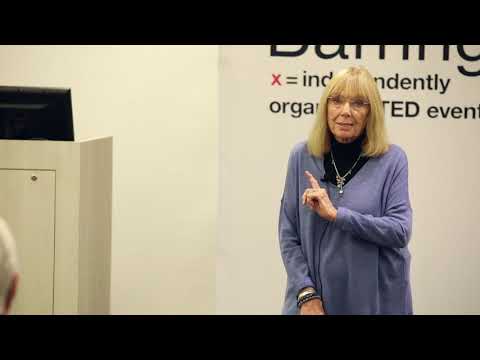
when I told my daughter who’s in media
that the library had asked me to do a
talk about conserving the environment
and the role of volunteers she said well
you know you’d have to be interesting so
I thought well I would love to sing the
praises of volunteers and I thought
about one of my favorite my favorite
quotes by Wendell Berry he said there
are moments when the heart is generous
and then it knows that for better or
worse
our lives are woven together here one
with another and with the place and all
the living things like many of you we
moved here because of the open space and
when we came I thought well it’s just
it’s always been like this and I didn’t
think there probably been any struggles
or any conflict about keeping it this
way and I thought it’ll always be this
way and soon after we arrived people
kept saying to us well you have to
attend the meetings to oppose the huge
housing development that’s being
proposed for here so I realized that
there were many things that I needed to
learn so what have I learned over these
years about protection restoration and
stewardship of land about conserving the
environment well I’ve learned several
things number one I’ve learned that it
takes not just a village it takes a
village an area and a region working
together I’ve learned that it isn’t for
couch potatoes I’ve learned that there
it takes all kinds of people committed
people and that there’s a job for
everyone
I’ve learned that there will be
disappointments but there will be
wonderful surprises and victories and
accomplishments and I’ve learned that
vision must be long-term we have had
wonderful wonderful history here the
Potawatomi Indians were here four
generations before before we ever came
of course they knew the tall grass
prairie
they knew the open Hickory savanna they
knew the waters they knew the bogs the
fins and they knew the streams and the
creeks they were here until the Treaty
of 1833 and at that time they were
forced to leave our lands here and move
west of the Mississippi when the
settlers in the east heard that this
land was available many of them started
the arduous journey here to this land of
rich Prairie soils and good water
supplies and so we became an area of
farms farms of many different sizes and
in fact our farmers here sent their milk
in the cans to the Chicago every day on
the train every day year-round well we
have had a wonderful history here and I
want to give you a bit more about what
happened right after we had the farms
and 1800’s the there were CEOs from
Chicago and the North Shore who began
buying up these individual farms for
large estates for their families this
was wonderful because as a historian
from that time says they saved the open
space they say their estates they say
the wooded hills they saved the wooded
spots and they saved the water
they fostered bird life so this was good
but fast-forward to the 1960s and this
area was under a great deal of pressure
metropolitan sprawl was coming this way
and we had all kinds of development
wanting to come in here so the visionary
leaders of that time and I do want to
stress visionary thought we must do
something we must do something so they
commissioned some studies of this area
and the main study the Barton Ashman
study in 1968 suggested the the
formation of two organizations would be
a Council of Governments the other would
be a citizen lead conservation
organization to protect the countryside
and so in 1970 Beck Hogg was organized
and in 1971 Citizens for conservation
was incorporated at that point we now
have a community-based volunteer driven
conservation ethic and action in this
community and over the years
international visitors have come here to
visit our restorations at Gregory
Prairie Village Vic Savannah and Spring
Creek Prairie people have also come here
to find out how we have this
conservation ethic within our community
in fact as the director of a major
conservation organization twenty-three
states came here recently to see how we
do this in our community and his big
takeaway from that was community-based
conservation is the wave of the future
which was interesting because that’s the
way we’ve been doing it since 1971 but
that was encouraging so here’s an
example of how we do this this picture
of a prescribed burn is interesting
because in a GILF there’s an attorney
a corporate executive a banker a retired
pro football player and a teacher every
one of these people are essential to the
work of conservation in this community
we have to do negotiations for
properties we have to visit Zoning Board
meetings and we have to do fundraising
there’s a lot of research and innovation
that goes on in our community with our
volunteers here they are taking a great
big artificial island into the pond at
Flint Creek Savannah they will plant
native plants in those holes and the
roots will filter the water on its way
to Flint Creek to Fox River and down the
Mississippi of course our wonderful
volunteers work all year long and in the
winter there are people doing brush
clearing but at the time people also
giving or attending very good programs
on the environment and planning for the
huge native plant sale in the spring we
have a big focus in our community on
educating our youth because they are few
they’re the future stewards of our
planet discovery it’s wonderful and if
we can’t have a big major emphasis on
water because the quality of our water
determines the quality of our life
there’s a great deal of cooperation with
our school district in their science
curriculum we aim always for
biodiversity and there’s a great deal of
rescue work that goes on this wonderful
oak was rescued from a whole bunch of
buckthorn and in fact there are people
in our community who do rescue work
every day of the year they come out with
their chainsaws and their loppers
instead of going to a health club
here’s an update on the floating islands
because in addition to the deep roots
it’s a great place for wildlife
biodiversity again we have found that
the property the proper way that we do
our habitat restoration leads to even
endangered species coming back here so
there is much to celebrate much to
celebrate
from single shooting stars to the
wonderful vista of the restored Spring
Creek Prairie and we’ve learned that if
you plant it they will come thank you so
much for those of you who are planting
milkweed for our monarchs yes so there
has been a lot of exciting things to
celebrate but I want to tell you about
the next big thing this is the
Barrington Greenway initiative you know
we’re thinking now in terms of
ecosystems healthy ecosystems provide so
many benefits to all of us
they provide biodiverse habitat health
you hear about the benefits of being in
nature flood and erosion you control
once again we use the deep deep roots
the far-left shows you the root system
that tiny little root system of Kentucky
bluegrass
so that’s compared to native to the
native plants so this leads to water
purity with the these wonderful other
benefits the air purity and the
pollination and here’s what’s happening
we have these six strategic
organizations that are working together
any Barrington’s are right in the middle
of that we’re linking 14,000 acres we
have current conservation areas but and
we’re linking others we have corridors
for migration and the certified habits
are what we can all do these are home
home gardens
any plans villages counties and
townships are working together over
boundaries because nature crosses
boundaries bunny horn who lived here for
many many years and was a wonderful
conservationist said we have to be
careful what we do to the land the fact
is we really don’t own the land
we’re only here is keepers of it our use
of the land is but for a moment in time
yet the alterations we make may affect
everything permanently I recently asked
a wonderful group of volunteers here in
our community just why they do it why
they keep up the great work and they all
had them different reason which was
quite quite interesting but one person
summed it up she said I’ve been doing
this for twenty years because it’s the
best thing I can do to save the world
and I want to end with the words of one
of our veteran volunteers when we ask
white people volunteer this is what one
veteran said Hank
he said we defy our aches and pains we
defy the aging process and we’re going
to keep going as long as we can so in a
symbolic way we create our own
immortality that I think is the ultimate
thing that brings us back to the earth
and feels a feeling of worthiness and
doing something that in a way is eternal thank you
Please follow and like us: