
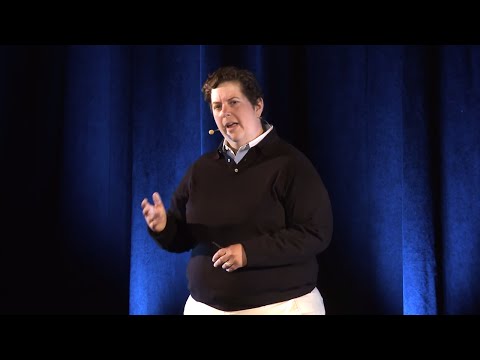
hi my name is biz and I am a passionate
advocate for equity diversity and
inclusion it’s my life’s work and I’m
not really sure how I got here there’s
three things you need to know about me
the first is that I am a lifelong Cubs
fan which means I am a die-hard optimist
fueled by never-ending hope I root for
the underdog and being a Cubs fan has
made it possible for me to give a
significant amount of my time towards
change I may never see come to fruition
in my lifetime the second thing you need
to know about me is that I grew up with
a great deal of privilege I belonged to
a country club I went to boarding school
which was small liberal arts college and
while I had many friends of color
throughout my childhood I was not aware
of how differently they had to navigate
those spaces how often their
belongingness was threatened and I
mistakenly universalized my experience
as their experience I didn’t have the
language then while my parents and older
siblings engaged in philanthropy and
volunteering my dinner table was not
where I learned to talk about systemic
racism power privilege equity or
microaggressions you know
microaggressions right those everyday
slights that make us feel shut out but
can I touch your hair and my hands
already in it that what are you do you
speak English are these kids real
siblings they’re these everyday
reminders that make us feel less than
the average middle school student of
color
here’s 291 microaggressions in 90 days
and the consequences are devastating
they leads eating disorders binge
drinking cutting suicide now that I’m a
parent I want to build fluency and my
children to understand the world around
them how many of you are parents how
many of you had parents that talked
about race gender LGBT issues folks that
are differently abled in a open and
positive way seems about right
look I’m a white parent raising white
children and I want to acknowledge that
parents of color have to navigate
these conversations with a different
lens and while my wife and I have been
together for 18 years which does give me
some insight as to what it’s like to
prepare my children for a world that
doesn’t always embrace them there’s a
lot of whiteness and privilege in my
world there’s an important statistic
over 50% of white parents have never
talked to their children about race over
half so for those of us that are talk
trying to talk about race and difference
with our children we’re trying to do
something we have never seen now that
third thing you need to know about me is
that I had awesome birthdays growing up
you’d be jealous about my bike parade
party my costume party the come as your
favorite Smurf party where all the girls
came a Smurfette and I came as hefty but
that’s an entirely different TED talk
right I now make a huge deal about my
kids birthdays and that is all my mother
that’s what’s in my archives but when it
comes to talking about race many of us
have nothing in our archives and the
fact that our archives are empty shapes
the way we talk or rather don’t talk to
our children about race
we shush our four-year-old when they
declare that all black men are garbage
men
and when our second grader says it’s
unfair that Billy gets extra math help
at school we don’t take that opportunity
to expand their understanding of
fairness and when our sixth grader we
refer to them as white and they tell us
we’re racist we just shake our heads and
walk away we do this because we are not
brave we’re afraid of leaving our
comfort zones we’re afraid we’re going
to see say the wrong thing as a parent
and an educator I have realized that we
have to build capacity in our young
children to navigate the topics of race
and difference in the world around them
but in order to do that
to raise kids that are color conscious
and color brave we adults need to be
brave but we need some tools so many of
us have decided we needed to upgrade the
knowledge from our parents and lots of
things when it comes to race most of us
are walking around with a pager at best
can we at least upgrade to a flip phone
people right and we got to cut ourselves
some slack we may not have everything
figured out I don’t have everything
figured out
but that is not permission to give up we
need to engage in these conversations
okay because we can only reject a
software update for so long before it
starts making our lives harder and
pretending you are colorblind and that
your kids are too young to talk about
race is a really old operating system
and it’s going to make all of our lives
harder in the long run
so what are some things that we need to
think about first up I would say bias
how many of you have heard someone say I
don’t have a biased bone in my body I’m
so sorry you have no bones
we all have bias it is the narrative we
fill in about all the people around us
but it so often goes unchallenged that
we don’t even notice it’s there I think
the best way to recognize bias in
ourselves is to pay attention to
surprise right you look at me lots of
words come to mind triathlete is
probably not one of them and yet I had
three kids under two years old I love my
kids but I did everything I could to run
away from them I did a sprint triathlon
I did a half marathon I did a 200 mile
relay race and I ran every block of
every street in my town but you look at
somebody in my body type and you may
think that I’m lazy or unathletic pay
attention to surprise it lets us know we
had some assumptions that aren’t
matching with people’s experience the
second thing we need to do when talking
to our children is separate our stuff
from our kids stuff when my son was 2 he
referred to every man he met as daddy my
friend who is visiting from college the
neighbor the landscaper down the street
everybody was called daddy and at first
we were concerned that because he had
two moms he was feeling left out for not
having a daddy and then we realized
every man he knew was somebody’s father
and he didn’t hear them referred to as
Jeff or Chris or John he heard them
called daddy
he wasn’t longing for a father figure he
just thought that was every dudes name
so when my daughter was 3 I’m driving
the car and she says mommy I love white
people because I just really love the
white man
and I’m thinking about how to have an
age-appropriate conversation with her
about this when it hits me so honey do
you mean the white guy that’s on the
street sign that says it’s okay for you
to cross the street she goes yep I love
that white guy this stuff is loaded for
us it is not loaded for them and we have
to understand the context and make sure
we understand the question the third
thing we do is we think our kids are too
young or that we want them to be
innocent of these things they aren’t
okay and I assure you that if you are
trying to keep your kids innocent of
racial inequality or systemic racism
you’re probably white kids of color are
not afforded that same opportunity to
wait to learn these lessons and they’re
often treated like they are much older
than they are we need to think about how
do we make sure we’re brave in every
moment and we have to be kind to
ourselves when we think that our kids
are too young I’ve worked in higher
education for a long time and at first I
was trying to understand why it was so
hard to talk about race indifference
with college students and I realized
it’s because they have to do so much
unpacking and unlearning for many of
them their worldview has never been
questioned and it can be traumatic
particularly for white students have
been have not been forced to do so
before and so after working at
universities for a long time I started
working with high schools and then I
started working with middle schools and
that I had a baby and 18 months later we
had twins and now I work with preschools
kids are never too young to develop
racial literacy so we need to get rid of
this failed experiment called
colorblindness we have decided as a
culture that noticing difference is a
huge problem noticing difference is
cognitively inevitable and it’s not the
noticing that’s the problem it’s the
ascribing meaning to that difference I
see your race and therefore I think you
are less than that’s what we need to
change we’ve spent way too much energy
on the wrong part of this equation let’s
talk about privilege a little bit if I
walk down a hallway that has nine open
doors
I’m unlikely to even realize I walked
through a door much less that there were
nine of them yet if a friend comes to me
and tells me that when they walk down
the hall for the doors were shut and two
of the doors were locked
I might struggle if I if my
understanding of privilege has me
universalizing my experience as the
experience when they start to tell me
what happened to them I said no no no
you just walked down the hall you must
be doing it wrong right I start to blame
that person for what the obstacles that
are in front of them or maybe I don’t
even believe them when they’re talking
about it maybe I think that everybody is
given the benefit of the doubt like I am
rather than wrestling with the reality
that some people are dealing with the
deficit of the doubt every day and what
happens with that is it has us all
thinking there’s one singular experience
that we’re all sitting around the table
looking at the same thing but based on
where you’re sitting some of us are
seeing an M some of us are seeing a W
some of us are seeing a3 and some of us
are seeing an E yet we’ll battle we’ll
say how dare you it’s so clearly an M
how can you think it’s a w we need to
have one singular truth and that idea
that we all have the same experience has
caused us to have some significant
systemic issues that we’re not dealing
with that are keeping us from being a
truly equitable free and just society
because it has me not questioning mass
incarceration and private prisons and
instead being comfortable with a system
that targets people of color and fills
our jails for profit our schools should
be a place where we have a positive and
sustained school climate where every
student feels safe and welcomed and
valued and respected rather than us
using punishment to push out kids of
color and wouldn’t it be great if
everybody could just be who they were
rather than us praising kids who are
consistent with gender expectations and
punishing and bullying the kids whose
gender identities and gender expression
do not fit our restrictive standards
maybe then we’d stop wasting energy
trying to keep transgender kids out of
the bathrooms where they feel safe and
the list goes on and on right Muslims
immigrants anytime a grue
starts to fight for their dignity for
their respect for equality we struggle
because we live in a hierarchical
culture and there is no such thing as
equal in hierarchy and so when a group
starts asking for the same things we
start seeing them as dominant and trying
to take over so let’s go back to those
earlier examples your 4 year old comes
and declares all black men are garbage
man what we need to do in that moment is
say no honey that black man is a garbage
man but there are garbage men that are
not black and there are black men that
are not garbage men and maybe we’ll use
some example examples like the principal
from their school to talk about it and
when our second grader comes and says
it’s unfair that Billy gets extra help
at math we need to help expand their
understanding of fairness that we’re not
look we’re looking at fairness of
outcome not sameness in process and then
if my child doesn’t get math help
because they’re already successful in
math and another kid gets what they need
nothing at all is being done to my child
it’s not pi there’s enough for everyone
and when our sixth grader comes to us
and we say that they’re white and they
refer to us as racist we need to help
them understand the difference between
bias and discrimination and racism and
talk about how racism requires
institutional power to enact
discriminatory and prejudiced beliefs we
need to explain that talking about
racism isn’t racist it’s vital and it’s
healthy but we think our kids are too
young so my wife and I went to see the
movie Selma and when we came home we
talked to our kids about the film and we
said you know when you don’t have rights
you have to fight for your rights and
when someone else doesn’t have rights
you need to stand with them and fight
for their rights and we talked about how
when they were born we didn’t have
marriage rights but our family and our
friends stood with us to make sure our
family would be protected and our kids
were four and five gotten this beautiful
discussion where my daughter turned to
my son and said I’d fight for your right
to suck your thumb and he said I spoke
to my wife to help myself to and then he
turned to her and said I’d fight for
your right to wear bowties and they
turned to their other sister and said
I’d fight for your right to wear
princess dresses they weren’t too young
they could understand what it meant
to be kind and to stand up for others
and it’s a few years later and we can
build on those conversations we have a
black lives matter sign in our yard and
my white children are not walking around
thinking my life doesn’t matter black
lives matter more we’ve been able to
give them examples of how black lives
are not treated equally and then they
can see why we need to stand up for
those things and if we don’t have those
conversations with our kids there will
be nothing in their archives so we need
some ground rules on how we do it the
first is to recognize that you all get
to be imperfect in this process my
eight-year-old should not be able to
understand race and difference at the
same level I do at forty one they’re
going to make some mistakes
do your best to navigate those
conversations but let everybody make
some mistakes in their learning the
second thing we want to do is teach our
kids to pay attention to surprise what a
vital tool it is for us to understand
our own bias the third we want to strive
for brave space I assure you that
somebody in this audience if not all of
you are going to have a teenager someday
that says the thing that you said or did
was racist sexist or homophobic
and they might be right and what you do
in that moment will speak volumes in
terms of how they should handle those
situations will you minimize and blame
and deny or will you be open to feedback
and critique and be willing to expand
the way you operate we spend too much
time focusing on the messenger in our
culture we lose the message I didn’t
like her tone I didn’t like her she was
too close to me her passion her tears
all of that stuff is irrelevant and it’s
a way to distract from responsibility we
need to teach our kids when somebody
comes to them and says you hurt me with
this microaggression that they listen
and apologize not tell that person that
they’re being oversensitive or that they
can’t take a joke we want to teach our
kids to be upstanders right let’s stand
up for people who are being targeted and
treat everyone with kindness and respect
we want to teach our kids that humor is
funniest when everybody’s in on the joke
not when it’s used to have somebody feel
left out or less than that’s not being
funny that’s being mean and we need to
call our kids into a conversation about
all these things not call them out for
their mistakes we want to teach our
children how to hold other people
accountable without demeaning them or
tearing them down you got to be patient
remember when we used to think the sex
talk was a one-time thing right that we
could cover all of healthy sexual
decision-making and consent and
reproductive choice and and sexuality
and all of these things just one time we
now know that that has to be a
developmentally appropriate ongoing
conversation and the same is true for
race and difference so I want you to
take a second and think about what would
it be like if we did this what kind of
changes what our world have if all of us
were building this competency in this
capacity in our children from the very
beginning if we skipped all that
unlearning and unpacking first of all I
think that the adults would be
transformed by this process it would
open us up in ways that we can’t
anticipate because we would be doing so
much learning along with our kids it
would not be a one-way street we’d be
learning from them and they would be
powerful teachers and I think that the
impact of having these conversations
with our children could be immeasurable
in terms of what it does for our world
imagine if we sent our kids to school
and didn’t just teach them to stop
bullying but taught them how to create
school where everyone felt safe and
could reach their fullest potential what
if our kids the ones we’re talking to
about these things and understand the
value of others and understand the
obstacles that some of their peers
experience based on their identity
infiltrated our workplaces and got rid
of diversity programs that were just
about optics and demanded a truly
inclusive workspace where everybody was
valued and focused on innovation and
positive morale and what if our kids
became corporate leaders and political
representatives
that refused to create policies that
target people for who they are but
instead created policies that all of us
would be comfortable being on either
side because they were policies that
were rooted in eliminating injustice
creating opportunity and harnessing the
great potential all of us have to impact
our communities in our world this is the
world I’m working towards I hope you’ll
join me all of our kids deserve better
we may not get there tomorrow but we
will never get there if all of us don’t
do everything in our power to make it a
reality now I warned you
Cubs fan diehard optimist fueled by
never-ending hope by the way the Cubs
won thank you [Applause]