
and together with Cary summers I am
co-founder of fashion revolution so many
many years ago I they were sitting at a
meeting discussing ethical fashion with
a group of very influential fashionistas
and one of them said oh but this saving
the planet thing is oh worthy It was as
if on Planet fashion worthy meant dull
uncool
thankfully things have changed
dramatically since then talk about
momentum today citizens are looking for
a fashion industry that leads combining
modern technology innovation to
durability and a very strong emotional
attachment we are looking for an
industry where the words aspirational
and democratic apply both to the end
product and its entire supply chain we
want to know who makes our clothes and
in what conditions because the impact of
the fashion industry on our everyday
lives and on the lives of the people who
make our clothes is enormous
we know it is the second most polluting
industry in the world and it directly
employs 75 million people
80% of garment workers are women often
working in exploitative conditions
underpaid abused invisible we also know
that we are producing a staggering 150
billion garments of clothing per year
and that a huge majority of them will be
worn unfrequently if a tool discarded
very quickly in fact our ready-to-wear
is turning into a ready to throw so a
while ago Karl Marx said that religion
is the opium of the masses
is to upgrade this into a modern
settings I would say that consumerism is
our crack cocaine the Rana Plaza
collapse in Bangladesh in 2013 when 1138
people were killed and 2500 were injured
was the turning point on that day
passion revolution was born for us
losing 1138 people from that planet in
one factory in one day that was too much
without it standing for something the
majority of the victims were young women
now in the 4 years since the tragedy
people from all over the world have come
together to demand change on the streets
on social media in schools in
government’s halls we want to uncover
the stories behind the clothes that we
wear because one way of lessening the
burden of such a huge problem is to
become an active part of its solution
fashion revolution is looking for a
cleaner a fairer a safer a more
transparent and more accountable fashion
industry we believe in an industry that
values people creativity profit and the
environment in equal measure we are here
to ensure that we can bring everybody
together to make this happen we are
designers academics writers leaders
policy makers brands retailers producers
makers workers fashion lovers we are the
industry and we are the consumers we are
world citizens we are you and we believe
that everything starts with transparency
and that transparency starts with one
simple question who made my clothes
traceability and accountability is the
next frontier but we need to look at a
fashion horizon that goes beyond just
loving a brand because it looks good but
trusting it because it does good in the
few years since we started our campaign
our impact has been significant so last
year the fashion revolution week 2016
70,000 people showed their label and
asked the brand’s who made my clothes we
had a total of 156 million impression of
our hashtag there were over 800 events
all over the world our media reach again
for April 2016 was amazing 22 billion
online media reach and in fact now at
the end of the year were close to 30
we’re seeing more and more brands
responding but most crucially and most
importantly we are beginning to hear and
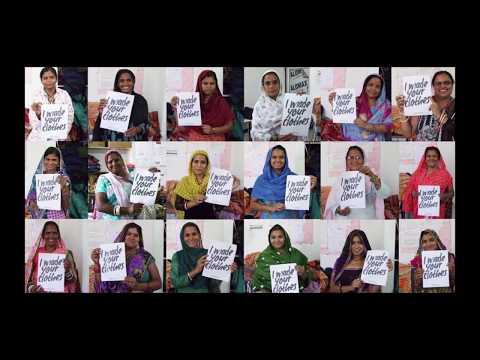
see from the producer who make our
clothes they’re using their own hashtag
which is I made your clothes we are in
schools all over the world and we’ve had
global instagramers and influencers
taking part in our alternative
initiatives which has now generated over
4 million views online check this film
if you can it’s a multi winning abort
film called the 2 euro t-shirt a social
experiment
this one’s been seen over 7 million
times on YouTube fashion revolution is a
global movement that works for a more
sustainable fashion industry campaigning
for a systemic reform of the industry
with a special focus on the need for
greater transparency in the fashion
supply chain we work all year round to
raise awareness to the fashion
industry’s more pressing issues we
advocate for positive change and we
celebrate those who are on a journey for
a fairer future for fashion we love
clothes but we don’t want our clothes to
come
the cost of people or planet
understanding where our clothes are
being made who is making them and under
what conditions is vital literally so
asking that brands disclose the
provenance of their clothing is a really
important first step
and by provenance we don’t necessarily
mean country of origin we wanted to know
the village the factory the Machine the
hands that made those clothes because
it’s not really just about made in the
UK made in China made in India we want
you to look out for clothes that are
made in dignity because this ethical
fashion this sustainable fashion that
complies to what fashion really is that
is born out of artistry and bravery and
skills and heritage
this is fashion it’s everything else
that isn’t but it’s not just the ethics
of the fashion industry that are coming
into question the aesthetic of the
mainstream is changing Photoshop is out
reality is in diverse is the new uniform
we still want to look good but we are
looking for a stronger sense of
meaningfulness that goes beyond our
mirror beyond the latest story on
Instagram and in a world where
connections are made so easy by a social
media and the internet we are looking at
individualism and individualism is often
made of small things
so what rings true right now is a return
to the handmade human values and human
signature imperfections the true beauty
of a genuinely artisanal product fashion
as a political statement clothes with
meaning clothes with history
clothes with a message with a unique
narrative sadly we are nowhere near an
industry that is free from environmental
and human exploitation which is why we
need to take every opportunity to raise
our voices to raise our concerns to push
for equality and push for change because
it isn’t enough just looking for quality
and the products we buy we must ensure
that there is quality in the lives of
the people who make them we need to look
for business models that will tackle
better the problems that we face
problems such as climate change human
right abuse gender inequality imbalances
of power so Coco Chanel said fashion is
not something that exists in dresses
only fashion is in the sky in the street
fashion has to do with ideas the way we
live what is happening I think today
she’d be saying fashion is in our
polluted water in our overflowing
landfills fashion has to do with the
people who make our clothes the way they
live what is happening to our planet the
role of designers is that of finding
solutions and the creative solutions of
tomorrow will be about redressing a
balance they will be about a different
understanding of our relationship with
fashion and the things that we choose to
wear let’s make fashion talk let’s take
this creativity and make it do great
things the fashion industry could lead
and should lead we are what we wear
clothes are are chosen skin so I would
like you to follow this new trend
transparency and you guessed it I am NOT
talking about
90s throwback nor am i suggesting you
should be showing your skin I’m asking
you to show your respect and please join
us for fashion revolution week starting
on the 24th of April this year and don’t
forget to ask who made my clothes thank you