
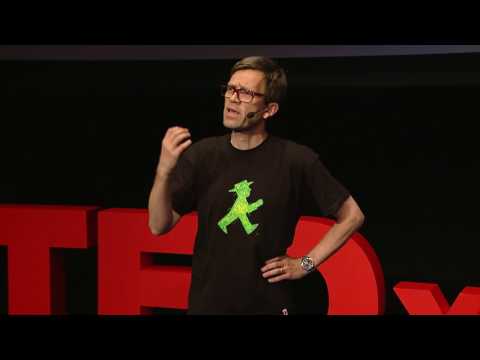
this ladies and gentlemen is what
failure looks like I am that failure
after having spoken lectured and rallied
at hundreds of meetings on the
incredibly important subject on how to
combat climate change in outdoor
meetings in conferences much like this
at the United Nations climate
negotiations I am very sad to say that
we have not succeeded
indeed climate change is actually worse
today than it was 20 years ago when
myself and many other climate
communicators starting dealing with this
issue so the obvious question that
you’re gonna ask yourself is why listen
to this guy why spend 900 of your
hard-earned seconds on me well the
obvious answer is that I contrary to
many of my friends colleagues or
partners in crime many of whom have won
much the same awards as myself most
important person in sustainability
issues future politician of the year
which just shows that predictions are
always hard especially about the future
contrary to them at least I admit my
mistakes and hope that probably you can
do better well you can’t do worse let me
tell you that let me start with where I
started number one lesson in
communication and marketing when we
reach out to people it’s important for
them to identify with us to wanna be US
or even better to feel that this is what
they’re aiming for that’s why we have
super models super nannies super heroes
so we climate change communicators what
did we come up with as a strong symbol
for you to identify with the fight
against climate change well remember I
told you we’re failures the
is what we came up with the polar bear
now unless you suffer from the very rare
disease clinical Yukon trophy sub-group
you lose Murray Thomas you will struggle
to identify strongly with a polar bear
most of you will only have seen a polar
bear on TV and in a zoo and if you were
to meet a polar bear you will find it
hard to communicate in a meaningful way
with this polar bear and my advice to
you would be to run quickly in the other
direction now some of us like to admit
our mistakes because even after behaving
stupidly it makes us look smart so some
of us admitted this was not a strong
communication tool onto something else
we found something we thought is even
stronger to communicate and let us all
feel that the fight for climate change
to stop climate change is everyone’s
fight we came up with future generations
we have not inherited this earth from
our ancestors we merely borrow it from
our grandchildren and their
grandchildren and their grandchildren’s
grandchildren now isn’t that just
beautiful it’s beautiful but really
frankly speaking
what have future generations ever done
for us
not much what are they even gonna look
like will I even get grandchildren’s
grandchildren and will I meet them in
short that’s way too many questions out
there for this to be a strong tool of
communication in the fight against
climate change so we went back to the
drawers and came up with some fun we
fought even better we came up with the
Pacific Islands of Tuvalu Vanuatu and
Kiribati it’s a terrible story these
islands are sinking well they’re not
actually really sinking it’s the ocean
levels that are rising thanks to a due
to climate change we need to fight
now most of us have never ever been to
these Pacific Islands if we have been it
was usually on a honeymoon and our minds
for probably somewhere else then in the
fight against climate change so again I
think we failed and don’t get me wrong
here don’t want to come out as a cynic I
think it’s great that we care about
people that we’ve never met that we care
about places where we never been it
shows that the fight against climate
change is a deep humanistic fight for
all of mankind but we also need to
realize that this was not a great way to
communicate that fight and get to us all
aboard I think that we need to change
our daily lives so then what well then
we came up with this simple tool a
thermometer remember when we went to
Paris to get the climate agreement in
2015 the agreement that’s going to shape
the future we winter to protect the
two-degree target that under no
circumstances should global warming
exceed 2 degrees Celsius compared to
pre-industrial times and in fact we won
we came back from Paris with an
agreement that’s a huge success
it says that we should not exceed the
two degrees and it even says that we
should aim to limit the global
temperature growth to just 1.5 degrees
of Celsius above pre-industrial average
that’s you wonderful gain but then we
need to get everybody on board to make
sure that actually happens and how
efficient is this tool to get us all
aboard well I think not very and I got
at least three reasons for that firstly
how warm a cold it was in pre-industrial
times most of us we don’t really know
and we a lot of us would suspect that
even in pre-industrial times the weather
the temperature probably changed
secondly maybe someone in here but it’s
unlikely suffers from the rare Wilson’s
syndrome
the Wilson syndrome will make you
hypersensitive to even very small
changes in temperature but unless you
have that tragic disease you will
struggle to notice the difference
between 1.5 and 2 degrees or even the 3
& 4 degrees that are disastrous we would
need a thermometer to notice the
difference and even when we were to
notice the difference we would not know
is this climate change or is it just a
warm day thirdly in large parts of the
world including Sweden all of northern
Europe North America northern Asia if we
were to tell people there’s a risk
that’s gonna become 2 degrees warmer
I hear the answer already here many
people will say that’s great yes please
they will say I heard that if I don’t
turn off the engine on my car if I eat
more red meat we might get 3 degrees now
it is possible can we all just agree on
that please so in short we realize that
this was not a strong driver either the
thermometer will leave that aside and
then some of us moved on to the next way
to communicate the fight against climate
change they went on to guilt and blame
they said it’s people like me a
middle-aged white man in a developing
countries with an income average above
average it’s my fault and your fault and
your fault and your fault statistically
that’s true or true ish at least but
realistically when you put the blame on
someone that’s not usually when they
change their behavior instead we defend
the behavior that we’re already having
so putting the blame is never going to
be very smart and it’s also a big risk
here when you talk to the behavioral
psychologists they say that many people
move directly from denial to despair
first during the denial phase climate
change is not really sure I heard that
it might be something with the Sun I
heard it might be the volcanoes there
was something wrong with the letters or
emails at the IPCC and then if we blame
them too hard or if you put too much
pressure on them they move directly to
despair that climate change thing it’s
so darn sure there’s nothing we can do
about it let’s just give up and focus on
something better that we could that we
did where we have a chance of success I
think you hear that I could easily go on
for hours about this and that’s actually
another mistake that we climate change
communicators often do but instead let
me try and move to a few lessons learned
and the first lesson learned I wanted to
share with you is that unfortunately
it’s tragic and it’s scary but
unfortunately and strictly from a
communication point of view its sheer
bliss and it’s something that we can use
climate change is no longer some other
time in the future somewhere else
someone else is gonna have to live with
it it’s here and it’s now we’ve all seen
that basement or cellar that’s flooded
we all know that place that used to be a
beach that is now under water we’ve all
seen those heavy freak storms those
thunder rains those pronounced droughts
we all know those mosquito-borne
diseases that are now in places of the
world where they never were before we
all know that as more climate-related
refugees than ever before in short when
we want to talk about climate change
there’s no reason for us to speak about
things that are not directly relevant to
you and I secondly I think we should
focus on being winners and I love it
this is gonna sound weird but I love it
when people lie about their behavior
because when they do that it shows
ambition
for instance in many elections people
are asked after the elections did you
vote and people say yes I voted and we
know that they did not but it shows
ambition they wanted to vote them for
some reason they didn’t but if we just
make it a little bit easier they’re
gonna vote next time and much the same
thing happens within climate change
people say I fly less
I take the train more no they didn’t
they say I cut down on the meat I eat
more veggies no they don’t they say I
only buy second-hand clothes no they
don’t but they are soon gonna do it as a
behavioural change just around the
corner if we just make sure that it’s a
winning issue because people want to be
winners and if they can’t be winners
they want to be seen as winners if they
can’t be seen as winners they want to be
seen with the winners so we just gotta
make sure that this is a winning issue
but we keep portraying it as a loser
issue no change is big enough no
agreement is good enough nothing that
you do is going to be good enough to
impress on me for instance the whole
symbol of the climate movement of doing
a change on your own was for a long time
getting a hybrid car now if we have the
climate savers the climate communicators
would see you in such a hybrid car we’d
immediately go why is your car not the
pure electric then you get that pure
electric car and we say why do you own a
car join the shared economy join a
carpool then you sit there in your
carpool and I go why are you sitting in
a car get out of the car use the public
transport and then I see you on the bus
and then I say why what are you doing in
a motorized transport get on the bike
and then I see you on the bike and I say
why are you wasting so much energy
transporting yourself when you could do
all the work just from your computer and
by then we are just a small group left
of self declared do-gooders and world
improvers and all the rest of you you
have long ago left us in disgust
I’m not done I’m not done I’m merely
coming to my third advice to all of us
and that’s to see the co-benefits we
need to face it we need to realize that
fighting climate change is not the top
of everyone’s agenda for instance the
the current US administration take a lot
of priorities that I think are more
important than saving humanity and the
planet and the EU well the EU is based
just trying to remain a European Union
so we’re looking more and more to other
countries like China and we see that
China is facing out cold
in record speed the introducing electric
mobility solar power wind power are
great or maybe not so great many of my
colleagues in climate communication say
they’re not doing that for the climate
they’re doing that for the air quality
not good enough or they even saying
they’re not even doing it for equality
they’re doing it for people to work
longer hours to not be sick so much so
that the king can increase the
productivity or they say they say the
Chinese are trying to trick the expats
people from other countries to want to
work in China we’re not coming unless
the air quality improves and in the
business sector it’s much the same thing
you notice a big Swedish furniture
company right this big Finland Swedish
furniture company is moving to a hundred
percent renewable energy it’s a
wonderful thing then you ask them why
are you doing this they don’t say
climate they say security of supply of
energy we go to the big car company
recently involved in an emission scandal
then now go all in for electric mobility
when asked why they don’t say climate
first they say shareholders expect it
they say we made a legal deal a
settlement in the US that demands this
and they say well if we want future
employees to come to our company we have
to and you know what I really think we
should embrace all those co benefits
because your Co benefit number one and
yours and yours and yours and mine may
be different so it gives us so many new
upper
Unity’s communication-wise and then I’m
thinking with all these examples maybe
let’s just give up
let’s not communicate climate change at
all how about just communicating a
better life take myself I used to have
several hundred CDs back home with my
favorite music now I got all the world’s
music with me all the time that’s a huge
climate benefit we never even think
about the climate benefit would just
think about having all the music with us
this is filled with such examples this
thing replaces the CD player the radio
the TV the GPS the phone book the
calculator again I could go on and on
and on it’s a huge climate benefit just
don’t mention it to anyone it works
better if we take it for other reasons I
love conspiracy theories and I’ve got
one of my own just for you I think that
the only plausible reason for us not to
have won the fight against climate
change of so many great minds so many
wonderful organizations fighting it for
such a long time is that we never really
wanted to because it’s actually quite
nice to be a fight and fight against
climate change everybody loves you
you’re like a modern-day Che Guevara or
donkey foot except that you’re not
fighting against the wheel mills you’re
fighting for the windmills the only
thing and I would love for this
conspiracy theory to be true
because then we would not be
communication failures but just be
selfish bastards but unfortunately it’s
not true when I meet the climate
communicators we are a bunch of
do-gooders who really for real care
about the polar bear for real care about
future generations that we will never
meet and people in other places that
will never go to and that is precisely
why you can’t trust us with fighting
climate change we need to put that power
in your hands and I am convinced that
you will succeed because in front of you
you have the Rawls best
collection of failures there’s no other
area that has such a wonderful book of
incredible failures so when it comes to
climate change I’m not worried I’m sure
you will fix it thank you
[Applause]
Please follow and like us: