
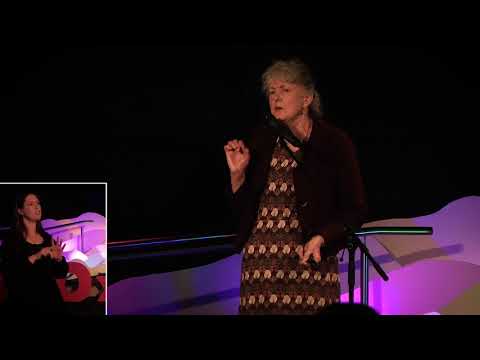
Quorra I’m Barbara Brooks can you hear
me now and I’m here to convince you that
knowing your history makes a difference
and I want you to think about the last
month in Charlottesville Virginia where
there was a riot over the removal of the
statue of Robert Ely and one person died
so we had two sides absolutely against
each other because of effect of history
and what was that fact in 1924 the
community of Charlottesville Virginia
thought they wanted to erect a statue to
a hero who had defended their state who
had defended slavery but in 2017 people
in Charlottesville West Virginia didn’t
want to defend their record of defending
slavery anymore because they felt that
black lives matter so history I want to
convince you is at the absolute crux of
current debates in our world and I want
to do that by taking you through some
historical events firstly history is
about understanding situations and in
order to do that we have to divest
ourselves of our current preoccupations
and our current understandings of the
world it’s a bit like being a traveler
and going into a foreign country and not
knowing what the rules and regulations
are so when I was a young person I did
my historical research my first project
in the mid-1970s on abortion this is an
image from the 1950s my research was
actually on the 1930s and I was a young
person of the pill taking generation in
1976 and I thought how interesting it
would be to find out why people were
concerned about abortion in the 1930s
and so I talked to women who had formed
a group in the 1930s called the C
hygiene and birth regulation society and
when their group advertised in the paper
the paper got it wrong and advertised
them as the sex hygiene and girth
regulation Society now I thought that I
knew about abortion abortion was a
surgical procedure but I found when I
talked to these women they didn’t use
that language and my language is
inadequate and I had to divest myself of
my current preoccupations so I learned
to say to them how many children did you
have and they’d say oh I had three or
four and I would say well how did you
manage that
and they would say oh well I brought on
my period so they had a very under
different understanding of what abortion
meant it meant those drugs they took or
it meant there instrumental interference
in pregnancy that they did but it wasn’t
a surgical procedure which I had in my
mind so what does this tell us about
change and about the past it tells us
that people will regulate their family
size according to socio-economic
circumstances the 1930s was a time of
depression people couldn’t afford
another child so even though they didn’t
have the recourse to the highly
effective contraception we might have
today they made sure they limited their
families so history is also about time
and my second foray into historical
research was into a very different time
and into a different country I worked on
the history of ideas in revolutionary
France in the late 18th century and in
that ferment of ideas where people were
excitedly discussing liberty equality
and fraternity wanting to overthrow
monarchy and cremate create democracy
I found the voice of a woman a woman
called a lump to goo
and she wrote that women should have the
same rights of citizenship as men they
should be able to vote they should be
citizens they should have a role in the
state and for those very radical ideas
she lost her life by the guillotine in
1793 this is actually Marie Antoinette
the Queen losing her head by the
guillotine which was invented in the
French Revolution so what did we learn
from this we learn about the power of
ideas her radical ideas led to her
losing her head so why was it that this
idea that women should have equality as
political citizens was so dangerous it
was such a dangerous idea that women in
France in fact did not receive the right
to vote until 1945 so that may cause us
to reflect why was it that women in New
Zealand got the right to vote in 1893
and why is it that women in Saudi Arabia
only got the right to vote in 2011 and
voted for the first time in 2015 my
third point I want to make about the
importance of understanding the past is
in fact understanding this project took
me into the history of mental health now
we all have ideas I think about
buildings like this
this is the Seacliff Asylum built in the
1880s a large imposing building it was
called the lunatic asylum and lunatic is
a word we would no longer use we would
no longer incarcerate people in
buildings like this so my question was
who went into this building in the 1880s
the 1890s and the 1910
and the answer to my question was that
they were people in great distress and
they were taken to this building by
their loved ones by husbands by wives by
children because they hoped that they
would receive some treatment in the
latest facility designed to deal with
sufferers from mental health there were
even some people who wrote to the
medical superintendent asking to be
taken in a young woman wrote from
Southland she was pregnant outside of
wedlock she said never had a girl been
treated so bad by her community and that
she wanted Frederick Truby King to take
her into the asylum so she could raise
her child because she knew that he was
the savior of mothers and babies so what
did I learn from this project I learned
that the medical superintendent spent
most of his days writing letters letters
to ask that the sewer pipes which were
broken under the building be repaired
litters requesting more than three baths
for hundreds of patients and litters
requesting that there be some form of
amusement for these patients so it was
not the medical superintendent who
created a grim and tragic asylum but it
was the government who didn’t want to
provide resources and it was taxpayers
like you and me who didn’t want to
contribute those resources and who
wanted to put mental health out on the
fringes of our society who failed those
who were mentally ill history is also
about the future so I want to think
about that unless we know the past we
cannot know the future so if we think
about abortion for example we might feel
very pleased that women no longer have
to resort to drugs
– knitting needles and one instance a
meat hook to restore their periods that
they now might have access to surgical
abortion on the other hand we can also
see that the tragedy of their situation
in the 1930s led them to organize they
develop the sex hygiene and birth
regulation Society which became the
forerunner of family planning in New
Zealand they also developed the abortion
law reform Association to agitate for
social change if we think about the
French Revolution we think about the
importance of ideas and we think about
ideas that we might want to fight for we
may now have the vote we may have some
form of equality but we also have other
problems in the world such as global
warming that we may want to make our
voices heard so the history of ideas
teaches us that people can create social
change and we can create a new future if
we think about mental illness we could
think and ponder on the word asylum
asylum meant a refuge a place of respite
and we might think that we might like to
provide a refuge and a place of respite
for people who are in great distress it
might suggest to us another mode of
treatment from the Train chains of drugs
which we now use to incarcerate the
mentally ill so history I think helps us
see new futures and history is also full
of surprises it’s easy to forget for
example that before 1986 homosexuality
was illegal what kind of society were we
in then before 1977 there was separate
advertisements and newspapers so if
you’re a man
there was the mail wanted column if
you’re a woman there was the female
wanted column what distinguished them
wages and the types of occupations in
nineteen in the 1950s when New Zealand
had a buoyant economy it was said that
the Minister of Labour knew the names of
the five unemployed people in the
country so knowing our history suggests
to us that things were once very
different and it opens us opens our
imaginations to think how the future
could be very different and that’s why I
think knowing your history makes a
difference thank you
[Applause]
you
Please follow and like us: