
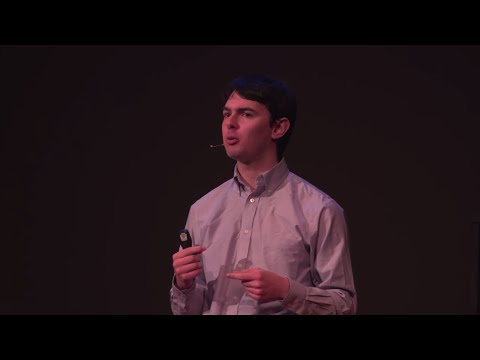
by the way I’m autistic I usually get
one of two reactions the first is what I
call polite surprise in the sense of I
wouldn’t have expected that that’s very
interesting the other kind is basically
denial in the sense of you mean you have
high-functioning Asperger’s or my
personal favorite but you seem so normal
very few people see it coming why is
that it’s because autism is more than a
medical term it has a cultural
connotation and a narrative built around
it a narrative that we’re going to
deconstruct so what is the traditional
autism narrative well you start with a
white middle-class heterosexual couple
yeah if I had to describe the narrative
in one word it would be tragedy autism
is the destroyer the thief in the night
the thing that’s scary and bad there’s
the idea that autism is completely
crippling except of course for that
Asperger’s thing that can’t possibly be
real autism from New Yorker writer
Steven Chapman just last year it’s a
searing experience to have a child whose
eyes are not windows to their souls but
black mirrors there’s the insinuation
that were not full human beings often
implicitly sometimes explicitly from the
late Autism Speaks co-founder Suzanne
Wright in 2013 if 3 million children in
America one day went missing
what would we as a country do these
families are not living so according to
her I’m not even a real person I’m just
the shadow of what could have been
there’s the idea in addition of autism
as a recent phenomenon with official US
estimates rising every five years from 1
in 166 in 2006 to 1 in 88 in 2012 245 in
2015 all of this feeds the notion of
autism as usurpation as something that
invaded a normal society that invaded a
normal
it culminates in the belief that the
only possible hope is to somehow find a
cure for autism or make us normal by the
way do you ever notice who’s telling the
story because it’s almost always parents
as I have a protagonist or the victims
with maybe some psychologists for
context it’s always the parents the
story is never about us so as you might
have guessed problems with this
narrative the traditional autism
narrative is deeply flawed very harmful
even outright dangerous every autistic
person is capable of living a content
and worthwhile life not just the ones
you get into toughs
not just the ones who can pass for
normal every autistic person I want to
talk about Fritz V Fritz was a young boy
growing up in the early 40s profiled in
the 1944 paper autistic psychopathy in
childhood written by one doctor Hans
Asperger now doctor at Fir lived in
Vienna in the shadow of the Third Reich
the Nazis are targeting the disabled and
he is terrified that his patients are
going to be next what do you do well
you’re not going to convince the Nazis
to stop by appealing to their humanity
but you might be able to convince them
that these sub humans are actually
superhumans and that’s exactly what he
did he begins by describing his patients
however with brutal honesty observing
stereotypic movements and habits that he
he fritz would lash out with anything he
could get a hold of never got on with
all the children and Asperger himself
wondered if he might never be able to
love anyone pretty nasty stuff right
makes what comes next all the more
powerful from a section called
the social value of the autistic
psychopathy autistic people have their
place in the organism of the social
community they fulfill their role well
perhaps better than anyone else could
he’s clearly pandering but Asperger
didn’t pull any punches
the good and the bad are intimately
connected we don’t know for sure if
there was a concerted effort against him
but Asperger’s patients were safe
regardless Asperger’s work first is
referenced in English in 1981 from there
his name becomes synonymous with a
milder form of autism now that’s not at
all what Asperger was describing but you
can see his positive philosophy being
reinterpreted Asperger’s syndrome is
then added to the diagnostic Statistical
Manual fourth edition in 1994 and that’s
when you really see Austin rates start
to skyrocket
now those rates can really sound like a
crisis if you know the context but we’ve
already seen the rise in rates is
correlated with a growing understanding
of the autism spectrum zni odds also
that autism can be a spectrum which
brings me to south korea in 2011
forgoing the normal looking through of
official records a yale led team went to
the city of go young and personally
tested get this over 55,000 children
whereas other studies reported rates of
about one in 150 they had a rate of one
in 38 but the real ps/2 resistance 2/3
of those kids were previously
undiagnosed awareness and understanding
are the real factors driving up
prevalence rates autistic people have do
and will continue to exist whether or
not you diagnose or notice us before we
continue I need to talk about language
you may have noticed that I’ve been
referring to autistic people as just
that with identity first medical
professionals on the other hand refer to
us as person with autism person first
because in their view it affirms that we
are people over our diagnoses but autism
is an identity it’s part of my identity
it’s part of my genetics my epigenetics
my neurological structure built from my
life experiences since the day I was
born
is that not who I am when you say person
with autism you’re saying there’s a
person and then there’s some autism you
talk about it like it’s a disease you
talk about it like they can and should
be separated for comparison think of the
phrase so I don’t know person with gay
it’s not very flattering is it so you
can imagine how I feel how we feel when
organizations call for a cure like
you’re – what exactly no seriously what
are you trying to cure autism is
genetics so are you going to try to
alter the DNA have every cell in my body
well that’s not feasible earlier what
about the non-genetic factors are you
really going to be taking such drastic
action based on a bitly assumption or
are you going to try to eliminate all
the outward signs of autism all the hand
flapping the avoidance of eye contact
the obsession with unusual topics yeah
all of this is an ethical atrocity
you’re saying that people like me should
not exist our society prides itself on
the individual we fear being forced to
conform but that’s exactly what men you
want to force onto autistics we don’t
want that we don’t want to be altered
for the pleasure society with no thought
given to our own well-being or respect
for our differences we aren’t perfect I
know that better than most but that
doesn’t excuse trying to cure us of our
core identities to match how you think a
person ought to think and act in various
situations this is an excerpt from the
essay don’t mourn for us by Jim Sinclair
in 1993 it’s considered the start of the
neurodiversity movement when parents say
I wish my child do not have autism what
they’re really saying is I wish the
autistic child I have did not exist and
I had a different non-autistic child
instead this is what we hear when you
mourn over our existence this is what we
hear when you pray for a cure this is
what we know when you tell us of your
fondest hopes and dreams for us that one
day we will cease to be and strangers
you can love we’ll move in behind our
this is a common argument against this
oh but you’re obviously so
high-functioning we don’t want to cure
you I know it’s hard to understand but
we were talking about other people with
autism who really suffer from it to
refute one we’ve seen earlier with dr.
Asperger why that dichotomy is a false
one a sumers Asperger’s patients were
incredibly gifted and they had seemingly
crippling difficulties second these
people act as if they know my entire
life story often from mere minutes of
contact if that third they say I’m oh so
functional but they also say I lack
empathy for their side a classic autism
stereotype so do they really mean what
they say do they really think of me as
anything close to an equal no this leads
me to the reflection of the cure
mentality which I like to call the
Newton fallacy now Isaac Newton is one
of those great geniuses who is often
thought to have been autistic in the
traditional autism mindset you’re either
the poor sad doom-and-gloom autism or
you have this Titanic revolutionary
potential that you better live up to
this is also wrong because you don’t
have to be if when you’re autistic you
don’t have to be a super genius in order
to be accepted by society you don’t have
to earn your right to exist indeed
that’s one of Jefferson’s self-evident
truths it took me a long time to
understand this but I don’t have to be
perfect in everything I do in order to
be a worthwhile person I was a junior in
high school when I found out I was
autistic emotionally and socially I
wasn’t doing well that year I started
questioning whether I belonged well
anywhere I didn’t feel like a real
person but then I found out and you know
what it was liberating for the first
time in my life I understood myself I
could be aware of the mitigate my
weaknesses while simultaneously
strengthening and building off of my
strengths a little redundant there but
to me finding out wasn’t a tragedy it
was an affirmation of
my humanity in the years have followed I
learned a lot I learned that we aren’t
alone that we’re a community I learned
about the difference lack thereof
between autism and Asperger syndrome I
replaced I have autism with I am
autistic I started taking pride in Who I
am most importantly I started speaking
up for those not yet able to do so like
I am now and like I hope you will too should the need present itself thank