
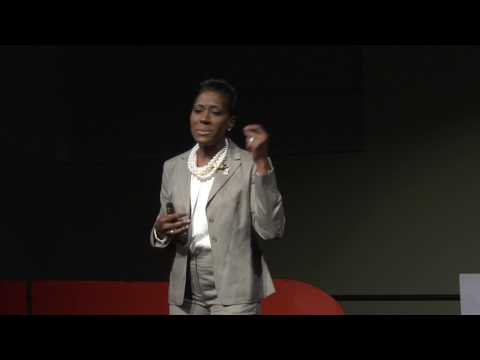
so I’m excited to be here this is a
historical event at our college and so
I’m just excited to be able to share my
thoughts on citizen journalism social
media and ethics so let’s begin so the
60s and the 70s were time in which we
saw a lot of challenges and a lot of
struggles we saw the fight for civil
rights and equality and we saw a
transformation from segregation to
desegregation and the revolution was
televised it was televised and what we
saw on TV was the truth it was valued
and the people who were delivering that
truth were news anchors who were pillars
of our communities so fast forward to
the 90s because if you look at the
picture the 80s weren’t really good for
me had a jheri curl was kind of awkward
but the 90s is when i had my mind and my
heart set on a career in journalism I
attended James Madison University I had
gone there for yearbook camps for two
summers and I was going to be the next
Barbara Walters I used to tell people
that all the time young people google
her I used to tell people I was going to
be the next Barbara Walters well the
Barbara Walters and the Dan Rather’s and
the Maureen bunions of the world have
been replaced by muckraker calm at anna
homes and by everyday people citizen
journalists who take to social media to
provide commentary about everything from
politics to education to parenting to
food to the bundle of hair that I’m
buying everything that you can imagine
is some of our fellow citizen
journalists do so without fact-checking
without a moral compass and without fair
and balanced reporting and so I’m not
here to you know put a label on citizen
journalism or put a label on social
media because there’s utility and both
but what I’m here to do is to kind of
shed some light on the need and the fact
that there has to be a threat of ethics
because so many people place value on
social media and the content that we
crave or that
get from social media and so citizen
journalism that term it came about as a
result of the democratization of the
digital media area and so what we see is
more access to being able to share and
communicate with folks the freedom to do
it over a medium that is designed for
entertainment purposes but when you
think about when you think about citizen
journalism you have to think like is it
something that’s just new or has it been
around and for me probably the most
significant or prominent instances of
citizen journalism was the videotapes
beating of rodney king so one person’s
video sent to mainstream media not only
changed California but it changed the
world forever so what does social media
due to that landscape well social media
gives everyday people the opportunity to
hide behind a veil to produce content
that has both local and national and
global significance but there’s no
credibility or there’s no sanctions
attached to what they’re doing whether
it’s factual right wrong good or bad and
so I think that when you look at the
landscape it’s important for us to ask
them questions journalists have a code
of ethics that they have to follow and
this code of ethics is not anything that
you sign off on contractually as a
journalist is something that you abide
by and for everyday people that are
producing news or that used social media
landscape to produce news like I said
there aren’t any sanctions but think
about some things I want to share some
stories so Jaison Blair was a rising
star in the world of journalism and in
2003 he was working for the York Times
and they launched an investigation and
found that out of 76 articles 33 of
those articles contain instances of
plagiarism fabrication or pure unethical
behavior and what about brian williams
who had to retract a story in which he
shared that he was in a helicopter that
was hit by enemy ground fire well he was
covering the news in iraq and it hasn’t
been a year since NBC severed ties with
billy bush as a result of some
inappropriate audio that was leaked to
the media so I share these examples to
drive home the point these three
journalists their careers were impacted
and probably one of the things that they
lost was their credibility your news
value as journalists but everyday
citizens like you and me we take to this
entertainment medium and we can talk
about anything that we want to we can
create threads of angry chatter we can
create a space for positive and healthy
discourse depending on what our
intentions are and so I think for
citizen journalists out there that
really want to do this and that really
want to have an impact I have three
points that I want you to consider the
first is to have good intentions so what
is your purpose behind posting behind
engaging on social media to begin with
is it to be controversial and if so do
your controversial actions have an
intended outcome that’s going to impact
the greater good in a positive way is
your goal to become the next social
media star I would have a problem with
that if I could be a million-dollar
social media star right now my TED talk
would be teaching you all how to do it
too but when you take to social media
and you’re using words that are so
powerful what impact does that have on
the traditional field of journalism it
has a significant impact so again what
are your intentions so one of the
movements that I think was directly
connected to social activism and citizen
journalism was that of the black lives
matter movement and I think that it
started with good intentions and it
still does have good intentions although
was impacted by outliers such as hatred
misunderstanding and a loss of momentum
at one point what’s what this is done
it’s moved from being a hashtag to being
a space in which citizen journalists are
now sharing the stories in which law
enforcement are coming together with
communities across the country to fix
what has been a long-standing fractured
relationship and I don’t think that we
would have as much attention on the
positives
if it weren’t for citizen journalists
everyday people like you and I who are
recounting these stories who are sharing
these stories their personal stories so
again what are your intentions the
second one is to be responsible for your
content how many of you went on social
media this morning and posted something
raise your hands I really can’t because
a lot of us so and sometimes you just
it’s based on how you feel you just type
and you know you hit Send or whatever
the button you sent you had you hit the
button and boom it’s gone and then if
you’re like me you go back and check
like every few minutes to see how many
likes you got if you got any shares but
you’re really not doing anything to harm
anyone because your content is not
designed that way it’s not designed to
do harm it’s designed just to share to
be your self expression but because
there’s so much fake news and because of
the rising fake news as people view it
through the lens of social media
practitioners some folks believe that
that social media needs to have a legal
context to it so that we can help to
flush out the fake news now fake news
didn’t just happen as a result of the
social media wave it’s been around for a
long time but I think when you have
something like a social media tool where
news can travel fast or seemingly than
the speed of light you have to be
concerned about the power of those words
that are being shared and so you have to
ask yourself am I putting out junk or
chatter or am I putting out real news
and how does what I create as a citizen
journalists impacts the field which
leads me to my last point value the
profession at heart I’m a journalist and
it’s really important for me to engage
in storytelling and one of the things
that I think about social media and
citizen journalism is it allows the real
story to be told everyday people who are
living and breathing in a situation are
telling their story they’re telling
their story unedited they don’t have to
worry about a word count for a print
medium they don’t have to worry about a
timeframe for a new story and here’s the
best part they’re doing it in an
environment that is not profit driven or
at least not yet so let’s hope we can
keep it that way
so it’s really important to have this
intersection of understanding between
traditional paid journalists and amateur
journalists who are passionate about
some things that they talk about on a
regular basis and who have developed a
really strong following of people who
share similar concerns and so I love
social media I am one of those 40 some
people who took over facebook from all
the young kids out there and i’m proud
to say thank you Mark Zuckerberg for
making it the mom and dad platform but
you will rarely see my journalistic
acumen come to life on social media
because there’s something that I value
about traditional news delivery and I’m
always amazed at my students who will at
the beginning of class because you can
never get away from a cell phone in a
class so if you can incorporate it in
your class you know the 90 minutes go by
a lot quicker so I always you know ask
kids what’s happening in the world tell
me what’s going on and the first thing
they do is go to social media they won’t
go to a c-span com or a CNN com or they
won’t pull up a you know New York Times
paper they’ll go to social media and
then they’ll go to another social media
platform to do their fact-checking so
the reality is we’re all looking for
shortcuts in terms of consuming news and
information it’s important we live in a
fast-paced world we’re always moving we
really don’t have time to do the hard
core research that we need to do that
being said all the more reason for an
ethical thread to be woven through this
process now the society of professional
journalism does have a series of points
in terms of their ethical code of
conduct and there may include but
they’re not limited to things like being
responsible for the accuracy of your
work making sure that you don’t take
shortcuts or oversimplify what you’re
putting out there staying away from
stereotypes and making sure that you
stick to the facts and in creating a
space in which we can engage in
discourse and accept an eval you dear
pinions of others even if we don’t like
the things that other people have to say
and so I think
ethical journalism matters it matters at
all levels whether you are a paid
trained professional whether you’re an
unpaid amateur journalists and so if
you’re a citizen journalists out there
continue the work if you’re a budding
citizen journalists start your career
with the foundation in ethics I think
the revolution will continue to be
televised maybe not in the same way but
we know that for the next four years
it’s going to be tweeted about you’re
going to see it on snapchat you’re going
to see it on Instagram thanks to my
students you’ll see it on Facebook live
but how will you be impacted the next
time you snap a picture record a video
read write or post thank
[Applause] you