
good morning everyone
a is to make you think about why
language diversity is something that we
should all care about India when it
became a republic in 1950 26 January
India adopted a constitution in which 14
languages were included under the eighth
schedule 14 languages with official
status four years later the Saheed
Academy the National Academy of letters
was established with the specific
purpose of promoting literature’s in all
these 14 different languages so the
moral of the story is very simple in
India plurality is not seen as a threat
in fact morality is seen as a strength
and diversity is promoted not suppressed
but that’s history what about today
where are we in terms of language
diversity in India I just want to raise
two or three questions one how many
languages does India have yeah and how
many have we lost and what can we do to
save languages from dying and why should
we care these are the questions that I
hope to raise and hope to make you think
about these questions I’ll try and
answer these one by one let me just give
you a glimpse of the language diversity
in India
as I said we have when the Constitution
was adopted in 1950 we had 14 languages
included in the eighth schedule after
that they will list kept increasing and
today we have 22 languages and please
remember that there are another 42 or 41
which are demanding to be included in
the H video and then we have you know
there is a general perception that the
Constitution prescribes in thee as a
national language it doesn’t know
whether in the Constitution is there a
mention of any national language all of
them are called official languages
including Hindi which is the official
language of the Union of India and
English is called the subsidiary
official language of India but
interestingly English is the subsidiary
official language of India but it is not
in the its schedule of the Constitution
and then we have as I said the site
Academy which gives annual prizes in 24
languages so on the one hand the
Constitution recognizes 22 as official
languages the National Academy of
letters gives prizes literary prizes
every year in 2014 with this that is
those 22 languages which are in the
eighth eighth schedule English plus
Rajasthani so 24 languages are
recognized by the site Academy and as
you all know when India became
independent in 1947 officially there
were five hundred and sixty five you
know states Kingler king kingdoms and
these five hundred and sixty-five later
in 1956 there was a major reorganization
of the boundaries and territories
and the entire map of India was
reorganized in terms of states and these
states were formed on the basis of
language boundaries and that’s why they
were called linguistic states right and
when it was originally reorganized India
had as I said here 14 states and five
union territories but today in 19 2014
we have the 29th state and there are now
seven Union and territories so what does
it tell us
you are you have 22 languages recognized
as official languages in the
Constitution 24 languages recognized by
society Academy and there are 29 states
which are supposed to be linguistic
states so ultimately how many languages
have official status because it what it
really means is that there are more
languages than the official languages
which are included in the Constitution
because there it is only 22 and we have
29 states but what is also interesting
is that there are any number of
languages in the official list which
don’t have a state of their own for
example English is a good example
English is supposed to be the subsidiary
official language of India but it is not
listed under the Eighth Schedule so
there are languages without States and
there are more States than languages so
then the linguistic map of India is a
very dynamic and varied I would I would
say very sometimes to outsiders it’s a
very confusing picture but what I’m
trying to show you here is that let us
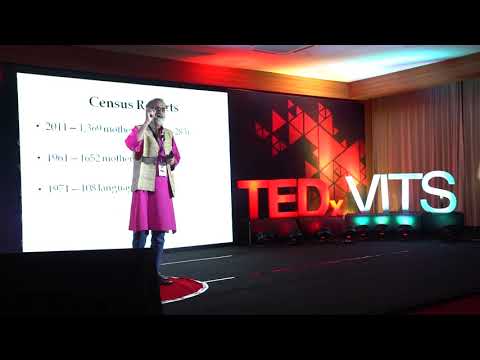
look at the official census reports the
latest census report that is available
with us is the 2011 census report in
arresting Lee the 2000 census results
were released seven years after the
survey they were released very recently
last month in 2018 and according to this
census report India is supposed to have
one thousand three hundred and sixteen
nine mother tongues somebody said 22
languages now look at this figure the
census report says that India has one
thousand three hundred and sixteen nine
mother tongues now this number has to be
seen in the context of an earlier census
report the the most important census
report a landmark in the study of
India’s linguistic diversity is the
census report of 1961 because the 1961
census for the first time listed the
names of sixteen hundred and fifty-two
mother tongues sixteen hundred and
thirty-two mother tongues which were
later after eliminating duplication zet
cetera which was later reduced to eleven
hundred but what is interesting is that
after the 1961 census the Government of
India took a very strange decision and
the decision is that any language which
has less than ten thousand speakers will
not be named in the census report which
means all those speakers all those
speakers of languages which have less
than ten thousand speakers their
language will not be mentioned at all
and all these languages will be simply
categorized under a label called others
and as a result in 1971 ten years after
this landmark census report in 1971 the
census rapport
what only says India has 108 languages
look at the contrast 1652 mother tongues
in 1961 ten years later the figure comes
down to 108 languages so what happened
to the remaining 1000 languages and
those were all simply you know
categorized under others which means the
speakers of those languages do not have
official status anymore so in a way the
these nearly 1000 languages suddenly
become non citizens in the republic of
languages that India has always been but
a language cannot be preserved without
preserving the people who speak it and
you cannot preserve a language without
preserving the worldview right in which
the the language consists of let me just
give you one example of how a language
is not just a means of communication
it’s a carrier of culture it carrier it
is it is a carrier of the values of a
society and it is a carrier of the
worldview of that society so different
languages not only have different
vocabularies but there are different
vocabularies precisely because there are
different value systems and there are
different world views so every language
is a repository of hundreds of years of
heritage but at the same time it also
has built into itself the worldview
which is unique to a particular speech
community so in order to preserve this
linguistic diversity the peoples
linguistic Survey of India launched a
survey in 2010 and in the next four
years by 2014 the
survey was done but remember the survey
was done in four years but the
preparatory work took 17 years and the
results of these 21 years of hard work
are now coming out it runs into
something like 35,000 pages and it is
coming out in 50 volumes containing 72
books I’ll just give you us you know
glimpse of that the ppl si volumes there
are 50 volumes like this and these 50
volumes cover the schedule languages the
22 languages the state languages the
coastal languages the nomadic languages
the tribal languages sign languages so
it covers the whole range of the
linguistic diversity which is still
available in India but as I said India
has already lost if you count from 1961
India has already lost 250 languages and
imagine what we have lost in those 250
languages because each language you know
consists of comprises probably the
Heritage the intangible heritage as the
UN says of thousands of years and we
have already lost two hundred and fifty
such languages so obviously linguistic
diversity is seen as something which can
move people very emotionally and
people’s linguistics our way of India in
its 21 years of hard work discovered
some very interesting facts and I’m
going to end with those facts what did
the pls I find out the pls I survey
please remember what I said that the pls
I survey
consists of 3,500 people of all kinds of
people
specialists linguists activists you know
social workers volunteers but most
importantly members of the speech
community and the pls I says very
clearly that whenever a community says
that this is my language it should be
recognized as a language right so the
people have a right to give an identity
to their own language it’s that’s why
please remember it’s called
people’s linguistic Survey of India and
not linguists Survey of India right
so the pls i found that today even today
india has a rich linguistic diversity we
have about 780 languages were identified
by pls ID assuming that pls I has missed
out another hundred languages we can
still say that India has about 880
languages what is also interesting is
that the pls I found that the
northeastern part of India which is
often described as backward less
developed etc has one of the you know
has the highest percentage of linguistic
density in the world the northeastern
part of India you know you know our
natural product for example you know
gave the result that it has 90 languages
so in terms of linguistic density the
northeastern part of India is one of the
richest although we very often dismiss
it as backward or underdeveloped
similarly the state with the largest
number of scripts you know was West
Bengal with nine different scripts and
so pls I is something which is historic
and it is probably the biggest the
just survey of languages anywhere in the
world right but it is not the first one
the very first linguistic Survey of
India was done by an Irishman called
grierson who in about 30 years of his
work he conducted the first linguistic
Survey of India and that’s about hundred
years ago you know he did that work
between 1898 to 1928 and in his 30 years
of work he found that India had 179
languages and 544 dialects this was 100
years ago
after independence the Indian government
started to other linguistic service the
first one was in 1984 1984 and it is
still going on and even today after so
many years less than or around 40% of
work has been completed a project that
was launched in 1984 still has managed
to complete only 40 percent of the work
second survey which was launched in 2007
and eight it was launched with a lot of
fanfare and it was launched with a huge
budget if I remember right something
like 280 crore budget 280 crore budget
and that survey you know was called the
new linguistic Survey of India you know
compared to the linguistic Survey of
India of grierson and this two hundred
two thousand seven and eight survey was
quietly you know abandoned in 2010
nobody knows you know what happened to
that survey and that whole huge budget
that was allotted to us the work did not
even start and quietly you know it was
given out
so even today Grierson’s
linguistic Survey of India remains the
only comprehensive survey linguistic
survey of India in the last hundred
years till pls I took up this work and
completed it in by 2014 in four years
and what is more important is that pls I
does not claim to be a substitute or a
supplement or a continuation of
Grierson’s linguistic Survey of India
what pls I is claiming is that it is
claiming to be a survey based on
people’s perception of language and what
is more remarkable is that this entire
pls I project has received no government
support it is all done without any
government support once again it proves
you know what has been wisely said Joe
Arthur Currie hota hai raahi a Sarkar
yata you understand that Joe Arthur
Currie hota hai raahi a circa Rioja so
pls I probably has succeeded not in
spite of but probably because no
government support was given to it thank you very much
Please follow and like us: