
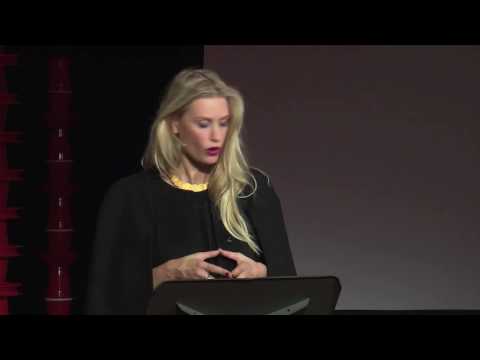
Columbia University trained public
health specialist focusing on mental
health what is mental health in a
nutshell mental health is the absence of
mental illness just as being healthy is
the opposite of being sick but in
physical health there is not just sick
and not sick you can be injured you can
be healing there aren’t really words
like that in mental health so today I
would like to introduce a new term and
that term is mental injury to explain
what mental injury is I would like you
to think of a woman in your life someone
picture this person next think of
somebody that you know is a veteran of
war maybe you don’t know one maybe
imagine your friend’s friend picture
them in your mind now picture this one
out of every three to five women will be
the victim of violence or sexual assault
in their lifetime
we are talking about more than one woman
per minute and in the US alone
one out of four veterans of war suffer
from post-traumatic stress syndrome and
every new day 22 of them committing
suicide now I ask you are these people
mentally ill were they before or did
they become so and if they became so
that is there a way that we can fix it I
by calling mental distress mental
illness we imply that these people are
broken and that it is partially because
many of the tools that we are using
simply didn’t work
what if most of what we knew was about
mental health was wrong when I think of
mental health I think about three things
that I think are going to change the
face of mental health of public health
actually blind spots neuroplasticity and
psychedelic science many years ago I
read a story that’s stuck with me in one
particular story was a woman called mrs.
s who was in her 60s and suffered a
massive stroke which impacted the
functioning of her right cerebral
hemisphere she could only see things
that happened to be on her left field of
vision
but mrs. s didn’t know she continued on
happily unaware that she was seeing
really only 50% of the world her mind
protected her from what she did not know
by pretending to know this is what I
call blind spots and the truth is that
we all to varying degrees have these
blind spots and science does too
what if we are all stuck with working
with 50% of the facts and we’re told
that that was the whole picture well
statistically mental illness mental
injury affects 1 in 4 people over the
courses of their lives and is projected
to account for more than half of the
global burden of disease and these
numbers are growing rapidly particularly
among youth because mental injury is not
just PTSD it is also depression anxiety
most people when they think of mental
health and the tools that the
psychiatric industry has made available
think of SSRIs they think a prozac
Zoloft paxil selective serotonin
reuptake inhibitors that are often
reused in these instances
but while these drugs all work on
changing the levels of neurotransmitters
none of them impact neuroplasticity and
this is key neuroplasticity is in the
brain’s ability to reorganize itself to
compensate for injury or loss an easy
example to yourself of neuroplasticity
is to dry try to brush your teeth with
your non-dominant hand for a week in the
beginning it will be hard but then
suddenly it will get easy because
neurons that fire together wire together
or the more you encourage axonal
sprouting around an activity the more
your brain will create pathways that
create make that activity faster and
easier neural pathways are there as
learned patterns to help us get through
life more easily and also to help us
with survival for example in PTSD neural
pathways are also altered your survival
mechanism is triggered and it goes into
fight-or-flight bypassing the prefrontal
cortex and going straight into the
primitive zone of the brain where the
amygdala is this is the limbic system
and the problem with this is that it’s
very hard to undo it is after all the
mechanism that was put in place to keep
you alive and one of the ones that gets
most hardwired the most quickly attempts
through the years to address this have
been largely unsuccessful cognitive
behavioral therapy exposure therapy and
SSRIs but these tools are woefully
inadequate to their task what we need in
this case as in the case of more mental
injuries is to harness the power of
neuroplasticity psychiatric medications
for the most part shackle the brain and
control the level of neurotransmitters
but don’t necessarily create a change in
behavior and don’t necessarily create a
change in the person neuroplasticity
changes that which takes me to my third
point psychedelic science
no psychedelic science is not a misnomer
it is a real science with real tools and
think about the idea that perhaps we
have spent the last 50 years solving for
only half of the equation
keeping the mentally ill alive but not
healing them so when I asked the
question what if most of what we
understand about mental health is is not
true I was also inferring what if we are
not admitting to what we don’t know what
if we have been forced to wear blinders
to not see the other half of the mental
health equation now just to be clear I
am NOT promoting the use of psychedelics
I am however promoting the use of
science for example if I told you that
there was a drug currently in trials
that in severely depressed treatment
resistant patients healed the patient in
3 to 4 sessions in sessions with a 72
percent success rate you would say
that’s crazy
that can’t possibly be true but it is
true and this is just one of the
psychedelic drugs that is currently in
trials and it is one of the many that
show real promise
specifically in treating depression and
PTSD but for a number of other things
involving the element of kid
neuroplasticity
major institutions such as John Hopkins
NYU in Imperial College London have
persisted in the in the face of huge
obstacles to progress this science and
groups such as the multidisciplinary
Association for psychedelic studies the
Berkeley Foundation and the Hefner
Institute are in my opinion heroes for
keeping the flame of this research alive
together we can solve the mental health
crisis together we can
to bring this science back into the
mainstream mental health is a human
right and these people the mentally
injured they deserve to heal – thank you [Applause]