
[Music]
it’s been great it’s been great being
here this morning and seeing some of the
great sessions the same ones that you’re
seeing and I couldn’t help as I’m
sitting in the chairs as well wondering
in any of our crafts in life what’s the
greatest challenge that were faced with
and when we go to meet those challenges
how are they best met by a single
individual exercising a single belief or
a single vision or by a group of people
coming together to solve problems now
before I get into that I should probably
explain how a jazz musician and a
teacher got onto the subject of
leadership so passionately and when I
reflect on it I guess I’ve been involved
in leadership my entire life in fact
when I was a toddler I think that’s
probably one of the biggest reasons why
I got into so much tension with my older
sibling in fact I don’t think she called
it leadership at that point in time but
I was at I was ahead of my time and as I
got older I started to realize that
there’s a significant gap in so many of
the resources that talk about leadership
matter of fact a lot of these books can
be found in a peculiar category online
and in bookstores it’s called the
self-help section but I started to
wonder where’s the group help section as
I started to look for new metaphors for
leadership suddenly my experience as a
jazz musician and a teacher started to
scream at me and I started to see the
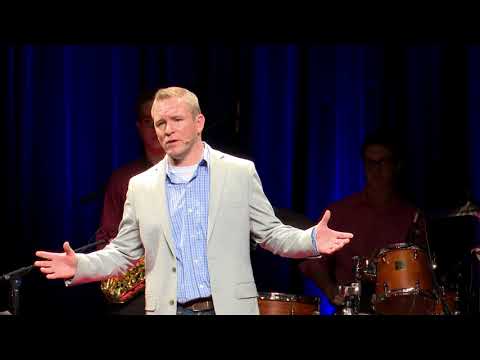
working jazz quintet like the group of
students behind me is actually the
perfect metaphor for the type of
leadership that our schools our
businesses our communities and I dare
say our government desperately need so I
want to talk about leadership this
morning obviously but I’m not interested
in the formal structures that may exist
what I’m actually interested in is the
conditions the habits the habits of
people as they come together and how
those habits allow for synergistic
initiative synergistic leadership to
take to take the stage and literally
today our metaphor becomes reality
because we have a jazz group just
waiting to play so I’ll go ahead and let
them do the music and then I’ll come
back and and we’ll talk about the habits
we see
[Music]
[Music]
[Music]
[Music]
[Music]
[Music]
[Music]
[Music]
I I would call that a success wouldn’t
you yeah so if we do who one who gets
the credit who is the leader
I mean before these guys get all cocky I
should probably point out that that I I
am the teacher right I mean I taught
them right except if I’m really honest I
did absolutely nothing I didn’t call the
tomb
I didn’t direct the solos I didn’t even
count it off heck I wasn’t even nice
enough to offer them transportation this
morning I did bring the drummer’s stick
bag though thank you you know and and
I’ll say this Ben clearly looks the part
of the conventional leader right he’s
playing the melodic voice in this group
he sold the longest but in reality Ben
is being supported by an all-star cast
and musicians behind him musicians that
are supporting his every note musicians
that are actually chiming in on his
ideas and giving him new material to
work with
suddenly Ben almost looks the part of
the follower there are habits there are
ways that these musicians interact that
I want to dissect a little bit and we
can learn a lot as we look at those
habits so here’s the first one every
musician on stage is simultaneously
creating and taking space they’re
creating space for others but they’re
taking space for themselves
now our soloists did not play the entire
time matter of fact they left gaps in
their playing for the other musicians to
chime in you see that interaction
between the soloist and the piano the
soloist and the drums and this is really
really important because it’s almost
serves as musical feedback a way for the
our musicians to tell each other when
they’re onto a good idea maybe a way to
redirect them or maybe a way to just
simply supply new material for the
soloist to work with so let’s see that
in action a little bit here let’s check
out our soloists and let’s see the
interaction between the piano and the
interaction between the drums
[Music]
[Music]
[Music]
yeah you notice that this is profound
leadership that’s taking place on this
stage okay we need we need people like
Jake in our lives we even need people
like Abe in our lives because what they
do is they actually confirm our ideas as
people they confirm those things and
when we look at our businesses when we
look at our organization we need those
those people around us to help the whole
thing move forward the second thing that
this group does is they embrace mistakes
now I’m not necessarily saying that
anything that the group did was was
wrong when they played a I’m not
defining a mistake that way I’m defining
mistake is just something that came up
that they hadn’t planned for they hadn’t
expected and notice that I didn’t use
the word accept or simply tolerate but
actually said is embrace these students
are actually looking for things that are
going to come up in their musical
performance that they hadn’t expected
that’s what jazz is and that’s what
makes this exciting for them as players
how are you running your organization
our mistakes stigmatized or are we
looking at those unplanned events as new
opportunities ways that we can expand
our reach potential that we hadn’t
thought about before rather than simply
disregarding it altogether let’s do
something fun we’re gonna improvise on
the Ted stage here Abe is gonna give
this group a curveball and let’s see how
they react and just simply embrace the
idea that Abe’s gonna throw out their
good luck
[Music]
as soon as as soon as these musicians
heard that Abe instead of doing a swing
groove he was gonna do a Latin groove
they completely changed their demeanor
altogether okay now imagine imagine if
for a second our bass player decided
that she liked the swing thing better
and Maddie was gonna keep playing swing
even though Abe kind of played off Latin
or same thing with emmerich in our
guitar it actually would have destroyed
the momentum of this of this group and
there would have been a musical
negotiation on stage and they would not
have been successful but instead all of
the musicians just simply said I will go
with that
and it makes for great music and
something that we hadn’t planned for
which is awesome this is not unlike
improvisational comedy
in fact those improvised comic troupes
have one main rule in any of the
scenarios that they are improvising
every actor must be completely accepting
of that otherwise in real time it just
destroys the momentum here’s the third
thing these musicians are guided by a
vision the same way whatever business or
organization that you happen to work for
probably has a vision statement and a
mission statement and a value statement
these guys are directed by vision as
well but the vision actually comes from
the music the tune that they play it all
praval is pretty common for jazz
musicians and in fact the chords that it
uses are even more common it’s the
12-bar blues
every single musician behind me has done
copious amounts of listening to the
blues but what’s unique about it is that
they all listen differently they all
listen to different things so as their
perspective is informed by their own
personal tastes the vision of the Blues
allows for every single one of those
perspectives to intermingle which makes
every jazz group that forms completely
and totally unique so what’s the vision
like in your organization’s what’s your
mission statement does your mission
statement allow for people with a
diverse experience perspectives to come
in work within that vision and actually
expand it or does it limit people these
musicians are not limited at all by the
vision that the Blues gives and in fact
as they bring in their own personal
experiences it just simply expands the
performance
the more players they play with we can
learn a ton about leadership by how
these musicians interact and in fact we
can view their performance as a version
of active leadership the outdated model
is that of a ladder where people attempt
to climb it and those that reach the top
are proclaimed our leaders simply
because they can see further than the
people beneath them that doesn’t work it
doesn’t work in our in our modern
society because our world is far too
chaos chaotic our problems are far too
complex and the solutions that we need
need to be more diverse than one person
simply standing on the top of a ladder
if we want the best for our kids if we
want the best for our communities we
need to find ways that we can bring in
as many different ideas as possible and
work with as many different leaders as
possible we need to lead like the
students here on stage we need to lead
simply put like jazz musicians thank you
[Applause]
Please follow and like us: