
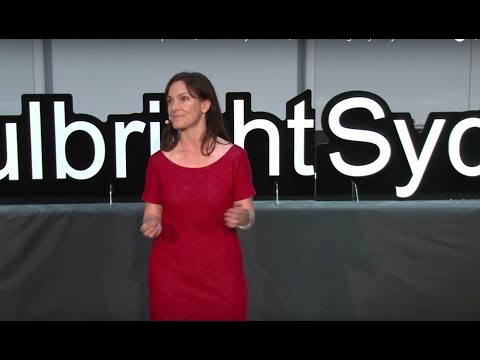
what does philanthropy mean to you do
you think of charity do you think of
giving do you think of the haves and the
have-nots do you think philanthropy is a
one-way transaction where wealthy
individuals like Bill and Melinda Gates
like Nikola and Andrew Forrest give
money to their charity or cause of
choice maybe you don’t really know what
philanthropy is that was me until a few
years ago I didn’t really know what
philanthropy was that didn’t stop me
having opinions about philanthropy I had
strong opinions and I was pretty cynical
I thought philanthropists were wealthy
individuals who hadn’t paid their fair
share of tax who made themselves feel
better about that by giving some of
their money to people in need and then I
spent time looking at philanthropy in
the US as part of a Fulbright
scholarship and I learned that one way
to think about philanthropy is improving
the welfare of others that might be
through generous financial giving but it
doesn’t have to be I really like that
approach to philanthropy because it
means that anyone can be a
philanthropist that we can all be
philanthropists I became interested in
how we might expand a culture of
philanthropy around that idea and I
started working more closely
particularly with corporate
philanthropists I would go to events put
on by corporate foundations talking
about the charities they were supporting
and along with everyone else in the room
I would be swept up by inspiring tales
of social impact of creative solutions
to deep problems and then invariably
there would be this moment where one
executive or another from the corporate
foundation would make a comment that I
have come to call business planing
explaining it’s like mansplaining but
it’s what businesses do to charities
and the more I watched businesses
business planning the more I realized it
came from a place where they didn’t
really understand what they were
supporting the more I understood
business planning was a barrier to
philanthropic effectiveness on one
occasion the head of philanthropy for a
major tech company was talking about a
water sanitation charity they were
supporting in a developing country the
charity only had two paid staff the rest
of its workforce were volunteers and
they were doing well they’d secured
clean water close to this community for
the first time but said the head of
foundation the charity is so underfunded
imagine if they had the resources to
scale up what they’re doing they could
really have an impact now if you’re a
global tech company you measure success
in terms of size and scale those
measures have dollar signs this
corporate foundation was applying the
same metrics to its interpretation of
the impact of a water sanitation charity
in a local community in a developing
country classic business planning
because what they’d missed was not only
had this charity achieved its intended
impact it had surpassed it that
volunteer workforce was not a cheap
labor supply they were members of the
community themselves learning the skills
to sustain clean water for their own
community beyond the life of a charities
funded project intended impact achieved
and achieved sustainably
that’s impact by anyone’s definition of
success but it wasn’t evident to the
corporate foundation that was supporting
that work on another occasion a group of
senior executives we’re talking about a
charity they were supporting that was
working with extremely vulnerable women
the execs were impressed that the
charity had managed to maintain the
trust of a group of women who were
usually extremely socially isolated but
the execs were concerned that the
charity had poor governance they’d had
an opportunity to observe one of the
charity’s board meetings and they said
it was just a bunch of women sitting
around a kitchen table
now if you’re a stock exchange listed
company your governance is a pretty
formal affair
you follow formal meeting procedure
motions are moved and seconded there’s a
lot of suits around your table and
there’s probably not a lot of women
these execs were taking the same
hallmarks of governance that they
understood and applying it to the
charity working with this group of women
classic business planning because what
they’d missed was that this bunch of
women sitting around a kitchen table
included the women who were using the
service the women who were delivering
the service and its funders this was a
pioneering example of consumer directed
care years before those became buzzwords
that we now see right across the social
policy landscape but again the
foundation supporting that work couldn’t
understand its impact now if I’m so
interested in expanding the culture of
philanthropy why am I giving corporate
foundations such a hard time well the
problem with explaining is not just that
it’s patronizing the problem with biz
splaining is that it’s a symptom of a
much deeper problem and that is when
philanthropy gives dollars but not
respect a one way gift of funding no
matter how generous is simply a donation
the promise of philanthropy is much more
than that
the promise of philanthropy is impact
but no transaction of funds no matter
how compassionately motivated is a
guarantee of impact so philanthropy to
be effective it needs to understand the
context to which it’s giving it needs to
recognize that it’s part of an ecosystem
and to respect the contribution of
others in that ecosystem the expertise
of charities that philanthropists give
to to achieve their mission the lived
experience of communities that
philanthropists and charities work in
work with for philanthropy to be
effective it needs to work in
partnership
I’ve worked with philanthropists who
approach their philanthropy through
partnership and I’ve seen how effective
it can be I’ve worked with
philanthropists who follow a financial
grant by asking what else do you need
who listen to our response and who then
explore what else they can do to help us
meet those needs it might be by giving
us access to the skills of their
employees it might be by connecting us
through their relationships with other
businesses it might be by introducing us
to organizations who share our values or
our mission far from be splaining these
are textbook examples of philanthropy
through partnership and they achieve
much more than a financial grant alone
of course the responsibility for these
kinds of these kinds of respectful
relationships is not only the burden of
philanthropists as charities we need to
invest in our relationships with the
philanthropic community to share our
values to talk about our work to explain
why we take one approach and not another
but the return on that investment is not
just a good relationship with our
philanthropic funders it is a
significantly increased impact in our
ability to meet our charitable our
charitable purpose which is the reason
we exist
in the first place in my own case
working with the charity startup it was
the grant from a foundation that got us
off the ground but it was the
opportunity for their employees to
engage with us as skilled volunteers to
share expertise about communications
about Web Design to connect us through
networks that we could never have
achieved ourselves
it was those contributions that helped
us saw effective philanthropy requires
philanthropists and charities to listen
to each other to learn from each other
not telling not business planning but
listening and learning when
philanthropists are willing to give and
to learn
when charities are willing to take and
to teach that is the recipe for
philanthropy through partnership the
recipe for truly effective philanthropy
thank you
[Applause]
Please follow and like us: