
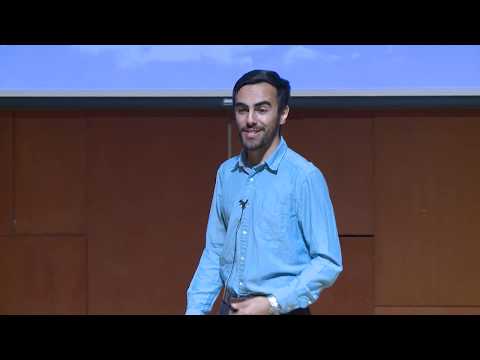
to tell you the truth I’m scared scared
about what’s happening to our planet
2016 was recently named the hottest year
on record making it the third
consecutive year to set a temperature
record global warming is more of a
problem than it’s ever been before the
more hottest years on record we have the
more will be threatened like things by
things like rising sea levels and
extreme weather events but I’m sure
you’ve heard all that before that’s old
news but as some new news we are taking
a step in the right direction last year
in Paris 195 nations agreed to cut their
carbon emissions showing that world
leaders really do recognize the dangers
associated with global warming and I
think it’s great that we’re taking
collective action but there is a problem
earlier this year the United States
government indicated that they want to
withdraw from the Paris agreement now
the United States is the world’s second
largest greenhouse gas emitter every
year we release around 6.6 billion
metric tons of co2 equivalents into the
air that’s 18 times as much as the
weight of corn we produce every year we
produce a lot of corn I know you all
know that and so continuing with these
astonishing emissions rates will have
long-lasting and perhaps irreversible
consequences so the question becomes
we’re forced to ask ourselves what if we
do get to a point where global warming
is getting out of control with the
recent climate change denial in inaction
in the US government now may be the time
to address the science and morality
behind new solutions to global warming
and for the past couple years I’ve been
studying one of these solution ideas
it’s something called geoengineering
which sounds complicated but it’s really
just an umbrella term for things and
methods to on a large scale cool the
climate as a response to global warming
now there are multiple ways you could go
about doing this large-scale cooling
but the one that I focused on is an idea
called marine cloud brightening so to
explain marine cloud brightening I’m
gonna give a quick crash course on
clouds who out there is seen a cloud
before yeah yeah I expected that I mean
everyone knows what a cloud is right but
actually what what the heck are clouds
well they’re really just collections of
many tiny water droplets and sometimes
ice crystals and when sunlight hits
these water droplets they let some of it
through but they also reflect some back
up into space and the clouds act kind of
like big soggy mirrors and that’s why
stormy clouds for example look so dark
from below they’re so thick that they’re
reflecting away almost all the sunlight
that hits them as you probably know from
walking here today in good old
Providence when clouds block sunlight it
can get cold so what if you could make
clouds more reflective well then the
Earth’s surface would cool down even
more and that’s exactly the goal behind
myrin cloud brightening you make the
clouds over the oceans more reflective
which would help to lower the planets
temperature so how do you make clouds
more reflective well you do that by
increasing the number of those droplets
in the cloud in the proposed way of
doing that would be to take these
funny-looking vessels which are actually
quite amazing feats of Engineering out
into the ocean where they’d spray a fine
mist of seawater into the air as this
mist rises it would come into contact
and mix with a type of low-level cloud
that covers 20% of the Earth’s oceans
called marine stratocumulus and so when
the salt crystals that were in this
salty seawater when they come into
contact with these clouds they become
what we call cloud condensation nuclei
they actually help water condense into
more droplets these more droplets are
better at reflecting sunlight making the
cloud quote-unquote brighter there you
have it marine cloud brightening making
clouds over the ocean more
collected and the interesting thing is
that modeling has actually shown that if
you can brighten enough of these clouds
which you can with a network
theoretically of of those vessels and
for a reasonable price you could
completely counteract the warming that
would be caused by doubling today’s
levels of co2 now
I’ve just given you a lot to chew on is
is everyone still awake
let’s take a step away from the cloud
physics for a bit
basically I’m telling you that there’s a
way to hack the planet to lessen the
effects of global warming now some of
you out there probably like that’s an
interesting idea but I wouldn’t be
surprised if a lot of you were like mmm
this guy’s crazy
filming machines to control the climate
sounds like a really really bad idea you
know I’ve seen the the YouTube comments
on the other Ted geoengineering videos
and they’re really not pretty but you
know I I do get it I mean geoengineering
seems like a counterintuitive thing to
be suggesting why on earth would we want
to meddle more with the climate
we’re obviously really bad at doing that
isn’t that what got us into this mess in
the first place but let me be clear I’m
not saying we should go out right now
and dump a bunch of salt water into the
air for one thing we need to do a lot
more work to assess what kind of
consequences that might have but right
now I’d like to focus less on the
specifics of those physical consequences
and more on whether we as humans have
the moral right to intentionally modify
the Earth’s climate the man who invented
the idea of marine cloud brightening his
name is dr. John Latham he used to be my
research supervisor and he once told me
that with this whole geoengineering
thing we’re essentially playing God and
that’s really not something to take
lightly I feel like the phrase playing
God gets thrown around a lot nowadays in
science but people don’t ever really
stop to think about what that entails
you know as humans we have the ability
to modify something as large as complex
as the Earth’s climate
if it’s global warming already we’re
starting to see unprecedented changes in
weather and climate everywhere not just
limited to a specific area with
geoengineering we’re talking about
making these kinds the scale of changes
intentionally so it sort of seems like
we’ve come to the point where our
actions might not just be human and
scale anymore
they may might be somewhere closer to
God like and then the question becomes
how do we use this power we’re here
today to talk about breaking barriers so
how do we break the barrier do we break
the barrier between acting like mere
mortals and acting like gods and I’ve
struggled a lot with this question you
know at the beginning I mentioned that
the idea of global warming has always
scared me but in the middle of high
school when I became introduced to this
idea of geoengineering started working
with dr. Latham my friend Nick out there
I was like wow you know this actually
might be a solvable problem you know we
can fix this but the more I’ve looked at
the sheer numbers of how much carbon
were emitting and the research that’s
out there the less sure I’ve become this
is something we want to put ourselves in
the position of having to do so I don’t
claim to have the answer but to help you
think about it I’ll present two
arguments in favor of geoengineering and
one against it
the first justification for
geoengineering looks something like this
we should geoengineers so we can
optimize the climate for human activity
now I’m an engineering student so in my
limited experience I’ve found that the
point of engineering is designing or
improving something for human benefit
and so with this climate engineering
thing we can cool the planet sure but
like why not increase rainfall to help
grow our crops or make certain regions
more temperate and comfortable to live
in but while it might be tempting to
turn the entire world into palm springs
we need to keep in mind that if we
approach geoengineering with this
mindset we’re implying that the earth is
just another thing that
humans have the right to dominate and
while we may act like gods we must
remember that our power is bounded by
our limitations our arrogance and the
gaps in our understanding among other
things so as a response to the last
argument here’s a compelling reason not
to Geoengineer we should not Geoengineer
because nature is complicated it’s
powerful and we’ve messed with it enough
in the first place attempting
geoengineering isn’t worth dealing with
the repercussions it would cause so real
quick if we we take a look at our track
record of modifying the climate let’s
see we’ve caused global warming and
that’s it I know that was technically
unintentional but it just goes to show
how bad we could be at predicting the
consequences of our actions and
truthfully with geoengineering we don’t
yet know enough about it to actually go
out and try it but then there’s the
problem of politics so say one day we do
decide to go out and try geoengineering
well then who would be responsible for
actually doing it you know the changes
brought on by geoengineering would
affect literally the entire world and we
don’t have a governing body or an
organization that represents the entire
world’s interests a common problem that
comes up when talking about this stuff
is who sets the thermostat what if one
country wants the temperature here and
another one sits somewhere else finally
the last argument for geoengineering
sort of combines the previous two okay
okay so I get that we shouldn’t be
meddling with nature because it’s
probably smarter than we are
and we shouldn’t be taking up the mantle
of God but don’t we have the moral
obligation to protect and fix the
problems we’ve created with global
warming and this argument keeps in mind
that geoengineering does have
limitations you know it might even be
the lesser of two evils something we’d
only want to do if absolutely necessary
but it also keeps in mind that is humans
we have a moral responsibility to
preserve the property
the rights the general well-being of our
species as a friend of mine once put it
what property is more common than air
and what right more fundamental than
breathing free we have the moral
obligation to preserve our environment
our earth even if it means dealing with
the consequences of geoengineering all
right so what are these arguments saying
what do we want well we want a climate
that is habitable and conducive to human
activity we don’t want to meddle with
the climate more than we already have
but we want to create a future we need
to create a future for the well-being of
humans and therefore of the earth we
call home is secure if we take a look at
these things that we want the solution
starts to become clearer we need to do
what we set out to do with the Paris
agreement we need to slow down our
emissions and mitigate our output of
carbon think about it developing and
implementing renewable energy technology
will help spur the advancement of
industry you know it’ll grow our
economies give back to our societies but
it will also help us work toward a more
habitable planet both for us and all the
living things that share it but you know
where where does that leave us I mean we
obviously have trouble following
agreements like Paris and that’s what’s
so scary and maybe I have even scared
you a little bit today but there is
still reason to have hope because we
might not yet be at that point of
no-return that point where we might meet
the Geoengineer just to survive
and there are things everyone in this
room can do to help turn off the lights
or at least buy a better bulb vote with
your dollar plant a tree and most
importantly get out there and shout
encourage the people around you to take
action as well I’m not kidding these
things really do add up I’d like to
leave you with a quote by Henry David
Thoreau he says
I love nature partly because she is not
man or to retreat from him non of his
institutions control or pervade her in
her midst I can be glad with an entire
gladness he is constraint
she is freedom to me he makes me wish
for another world
she makes me content with this let’s
preserve this nature this earth but stay
on the path we’ve headed done with the
Paris agreement and not deviate back to
our old dependencies on non-renewable
resources and I really do have
confidence that together we can avoid
creating a world where geoengineering is
our only course of action thank you
[Applause]
Please follow and like us: