
[Applause]
we all carry a backpack this backpack
has things in it that will shape who we
are whether their experiences items or
ideals in my backpack you will find a
picture of me and my mother and me and a
Pokemon shirt I love that shirt so this
is to signify the roots that I have in
being an immigrant I moved here at the
age of four from Puerto Rico and then
the time between May and September I had
to learn English to actually keep up
with school in my backpack
you will find a necklace with the Puerto
Rican flag this is to signify my Latino
culture and heritage it’s something that
has shaped me into the person I am now
and has also been a big way of how I
Traverse and navigate this world in my
backpack you will find a pin that I’m
currently wearing uh-huh this pin is
representative of the Rutgers University
crust this was given to me by one of my
mentees and it’s something that I very
much cherish I’m the first person in my
family to be able to go to university
and this pin is something that reminds
me of how passionate I want to be about
fighting for education and access for
all
[Applause]
in my backpack you will find a lucky
duck hat and this is something that I
get made fun of a lot
uh-hum this hat is probably one of my
most prized possessions on the top
picture that was the first time I ever
became a mentor to a group of students
and the bottom picture is when I was B
when I became an RA but that hat
represented how I learned how empathy is
such a powerful way of how when we put
ourselves in another person’s shoes that
is a form of leadership and lastly in my
backpack you will find a birthday letter
this birthday letter was also given to
me by one of my mentees during my fourth
year of school cuz I’m a non-traditional
student I was diagnosed with a
disability it was a form of panic
disorder and it almost cost me my shot
at actually finishing school it was very
difficult to understand and navigate
what this meant for me what this meant
for my professional my personal my
academic life but it was in finding
these resources and also the support
that I had around me that this letter
signifies the love that they gave me but
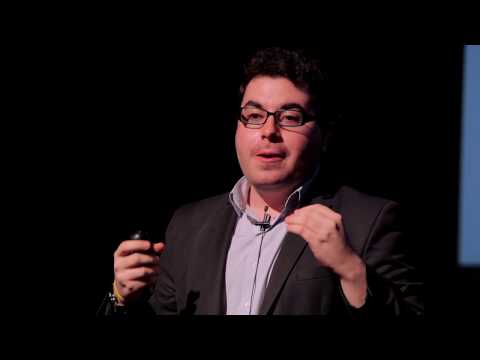
hello everyone my name is Luis Fernandez
and I’m a student here at Rutgers
University
I’m studying information technology and
informatics and my passion lies at the
intersection of human rights and
technology it’s a lot of the work that I
was able to do with Google and our work
looked at bridging the digital divide
that existed within our communities but
one of the things that I’ve learned
throughout my time at Rutgers and I’ve
had the opportunity to be an RA I’ve had
the opportunity to hold five national
fellowships I’ve had the opportunity to
attend hearings in the White House and
also the UN and I’m also very passionate
about making sure that there’s always
access and opportunities for those who
either look like me or have the same
background as me but what I took away
from all those experiences was that
empathy was one of the most profound
ways that we can make an impact in this
world so what I did in my first activity
was to unpack with empathy meant I
showed you what my metaphorical backpack
had and being vulnerable and being
vulnerable as part of what empathy means
and I think this is something that
sometimes we were afraid to do it’s
scary and trust me I know because I used
to now be really good with expressing my
feelings but I also learned that change
can happen on a on a personal scale as
well
with that being said today’s talk I want
to talk about how empathy can be a
blueprint for changing the world we all
want to change the world but change also
starts on a personal level it’s by
understanding how we can become the best
versions of ourselves that can lead to
how we can make macro-level change and
as for the theme of this conference I
wanted to really narrow in on what you
can all get out of this experience and
how empathy can be a way in a skill and
a strategy of how you can change the
world
first though I want to talk about these
two turns that I feel like are used
interchangeably
the first is sympathy and the second is
empathy
so sympathy is an acknowledgement of
someone’s feelings it’s not necessarily
deep you can see that someone’s sad you
can acknowledge that someone is sad but
empathy that’s where the work comes in
that’s a lot deeper that’s something
that you have to be able to dig deep
within yourself and it’s a shared
experience the reason I shared my doc
pack was because I want you to
understand what experiences have shaped
my life and to empathize being a two-way
street that is why I believe that
sympathy is expressed it’s something
that you give to someone but empathy is
shared and also realizing that empathy
to go deeper you have to be critical you
have to use analysis because to change
the world right it’s not easy but I do
believe that empathy again is that
blueprint for that but there are two
factors that I want you to keep in mind
as you navigate this one is someone’s
identity our identity is very important
these identities can be can be factors
such as our race or gender or class our
ability and also kimberlé crenshaw
who’s a famous black feminist who’s
paved the way for a lot of social
justice movements talked about this idea
of intersectionality that your
identities are compounded right you’re
not just so in this example I’m not just
Lewis an immigrant right I’m not just
Lewis a student I am a first-generation
student I’m also a person who identifies
with having a disability these things
are all compounded and my identity will
be very different than those of others
but there’s also power in your story and
your narrative
the second is context in history
understanding where someone lives their
background how they were raised their
circumstances whole myriad of other
factors can be very important in
understanding how you empathize when we
approach a lot of our work within CLP we
had to understand how is it that people
were using technology or not using
technology but we held saw but we also
had to understand what was the what was
the demographic of New Brunswick what
were people using what were they not
using what was their income level right
it was important to understand how these
contextual factors really were part of
how we empathize with those who we were
trying to best serve but I want to take
a step back and think of how empathy is
a strategy using this as a lens to
change the world and if you think about
it empathy is something that we use
every single day though we sometimes
don’t talk about it so empathy can be
used as a way of how are we making sure
that people who are being affected by
decisions are in that space so if
there’s an issue about women’s rights or
women in that space if there are I’ve
been to a lot of spaces where we’re
talking about disability rights but
there are people who were able body and
they weren’t having an insane
input from those who were who were
disabled so it’s interesting to realize
how empathy is not always necessarily a
negative thing but it’s understanding
how you can better design how you can
build representation and visibility and
I think this is important to see how
empathy is a strategy in the way that we
design spaces or even programs or even
help someone be their authentic self in
what they do one of the stories that I
have is when I was diagnosed with my
disability I almost filled out a school
it was a very hard time and I took time
off and I was trying to learn how to
navigate what it meant to have this this
panic disorder so I came across this
organization called lime lime works to
help students who identify with having a
disability have access to corporate
opportunities such as Google Facebook
Bloomberg call Marriott of companies but
what I love about lime is that they help
me understand that
my disability was not a form of
inability my disability became another
form of ability in the way that I really
traversed and navigated the world it
taught me that every day I have to make
decisions right and that’s something
that is strategy
have to understand how to pick apart
things and know exactly how to analyze
but what I realize is that by one having
a shared experience of how people know
that my identity is part of who I am and
also how I navigate the world that makes
my experiences my insights and my
identities valued in any space that I go
one of the things that I wanted to talk
about was the statistic of 1 in 4 & 1 &
18 so this week we had Joe Biden the
former vice president come to Rutgers
and and and one of the campaigns that
was currently happening this week was to
turn the campus purple campaign which is
looking at how all of us at Rutgers can
help combat the issue of sexual violence
and sexual assault last year when I did
my fellowship with Greg through one of
the issues that I was looking at is how
how is it that we can use empathy as a
way to disrupt and dismantle these
violent structures so the reason why
this number is important is because one
in four women will experience some form
of sexual violence before the time that
they graduate and one in 19 men will and
what I’ve realized is that by using
empathy and I don’t mean condoning I’m
talking about putting yourself in the
ways of how you can understand how these
systems of violence work because if you
can understand how a system works you
can dismantle it so that led me to start
a masculinity workshop within a Greek
life to actually talk about how er
these norms these ideas these behaviors
really inflicting violence within our
community and how is it that we can pick
apart that so we talked about
masculinity and all these things so I
want you to think of how is the thing
you can put yourself in the shoes of
those whether it’s a positive or
negative thing and learn how to pick
apart these violence structures or even
how we may cells be may be complicit
within that as well one of the things
that I’ve learned is that contrary to
what you may believe truth is not
objective it is subjective our
experiences will shape our realities and
our realities will shape our truth
everyone here has their own individual
truth
these can be framed by the way that our
politics and form our lives or ideals or
even our purpose but it’s important to
realize that everyone’s truth is valid
and what I see is that there’s a lot of
dismissiveness especially when we live
in a very hyper partisan age but I want
you to remember that everyone’s truth is
crafted by
they have felt and what they have
experienced and to understand how you
can connect your truth to theirs
and how is it that you can understand
how that has shaped their life what I’ve
learned is that there are two barriers
that I’ve seen usually that come in the
way of empathy these are the two P’s the
first P is privilege and the second P is
perspective everyone in this room was
brought up differently we have different
ways of how we navigate the world or how
we view the world but what I’ve realized
is that our perspective may sometimes be
a barrier in the way that we really
navigate this work so I’ll go back to
the example of a lot of our work within
New Brunswick to bridge the digital
divide we have access to technology
every day so even though we were trying
to do well in actually bridging that
divide our perspective came from being
able to know how this works so we have
to step back and say we need to make
sure that we have representation that we
send through those who were trying to
serve and make sure that their voices
are heard and that they’re part of this
process because our perspective may have
blinded us without us even realizing and
then the second was privileged
understanding how privileges are
relative to each other and understand
how we may sometimes be complicit in a
lot of these structures we even
understand how we can use our privilege
to leverage work and within even
movements or even just in everyday life
how is it that we can achieve liberation
for all this is something that I keep in
mind every single day and it’s something
that again it takes a lot of critical
analysis not just on other people but
within yourself we had this idea of the
other right that this person is
describing to this narrative right
we have biases and stereotypes that are
reinforced every single day by either
people that we’re surrounded with or
even media but it’s important to make
sure that which is something that leads
it to my next slide that we learn
unlearn and relearn learning we learn
every single day but what I actually
found myself doing more than ever is
unlearning how is it that the ways we
were taught how the world works how we
have stereotypes on you know certain
people how is it that those things can
be violent and detrimental to mental
health and even whole myriad of other
issues what I’ve learned is that
learning is the easy part
unlearning is understanding how you can
be critical of how you’ve learned and
unlearn those hateful things
empathy is a great way of doing that me
being an immigrant there’s always this
rhetoric there’s this bad immigrant who
always wants to take up XYZ but I wonder
how many of those people actually talk
with immigrants how many of it or how
many people have just heard these
stories and will and will just continue
to have their stereotypes and again we
talk about social change on this a macro
worldwide level but that all starts with
us as well and then the last is relearn
so you’re all at Ted today you’ve all
probably learned a lot I want you to
think of how you can apply these three
things what you’ve learned what you’re
unlearning and what you’re going to
relearn to help you in achieving this
world change and as I said I want you
all to think of what you’ve learned in
this space how is it that you can take
what you learned here and apply to these
small interactions that can lead on a
macro level because the hope is that we
are not the generation of tomorrow we
are the generation of the present we’re
building principled leaders that one day
make an impact in the lives of others
whether it’s in a small community level
or on a world level but I want to thank
you all for taking time to listen to my
talk and I hope that you can continue to
unpack what empathy means and make that
a shared process with those around you
thank you
[Applause]
you
[Applause]
Please follow and like us: