
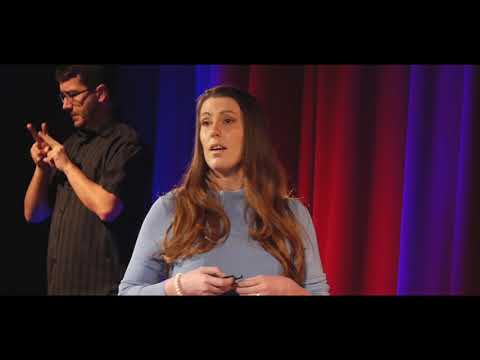
so thanks to the TEDx value for inviting
me to speak with you today about
something I’m very passionate about so
I’m a brain surgeon a researcher and a
mom and the two most common statements I
get from people when they hear this
about me is one you don’t really look
like a neurosurgeon I’m not really
certain what a neurosurgeons supposed to
look like but if I’m knocking down
stereotypes I think that’s a good thing
the other comment I get is how do you
have four kids and still be a
neurosurgeon and I think this is what
I’m passionate about when I was a
medical student at UBC my Dean actually
told me that women did not go into
neurosurgery that wasn’t a career for
people that wanted to have families and
so I stand here today for anybody who is
interested in a career where they think
that they cannot have a family and tell
you I have four kids two of them are who
are in the audience and I think they
would agree they enjoy having a mother
who’s a neurosurgeon so I’m going to
talk about what I do what some how I
deal with uncertainty and something that
I’m very passionate about and I think
passion is something you’ve heard a lot
today
uncertainty drives innovation in brain
tumors so these are words that I say
every week it doesn’t make me very
popular you have a malignant brain tumor
and I say this much too often and so
when I’m talking about a malignant brain
tumor I’m talking about this
glioblastoma multiforme II form a
unaffectionate Lee known as GBM this is
the tumor gordoni from the tragically
hip has so this is an MRI and that big
white ugly thing that’s brain cancer
unfortunately this is the most common
type of brain cancer in adults and it is
uniformly fatal the average life
expectancy is 12 to 14 months the 5-year
survival is less than 10% so why is that
what is it about this disease that makes
it so fatal you know this is a CT scan
of a body so unlike other cancers so if
you think about lung cancer breast
cancer that metastasized are go to other
organs in the body like the heart the
liver the kidneys the bones brain cancer
doesn’t do that it does something more
insidious it takes over who you are
it invades your brain like little
spiderwebs weaving tentacles throughout
your brain and I think that’s what makes
brain cancer so terrifying to people is
unlike other cancers it can take over
who you are and what your soul is how
invasive visit Walter dandy was one of
the Great’s of neuro surgery in the
nineteen 1900s when somebody had a brain
cancer on the right side of their brain
he took out the entire right hemisphere
and then tumor recurred on the other
side
now this is a medieval picture of
neurosurgeons I hope we’ve advanced a
bit from these days can see the surgeon
drilling a hole with a dunce cap on I
think the enesta s– is saying prayers
I’m not sure how that actually works and
I guess that’s the nurse with the book
hoping to learn something from osmosis
I’d like to say we’ve improved from this
so this is myself and dr. Pickett a
colleague operating at an operating
microscope that magnifies the brain we
have neuro navigation and that allows us
to see where we are in real time in
relation to important neurological
structures where the tumor is where the
arteries are everything that we need to
know so we can safely take out a tumor
so I apologize if anybody has an
aversion to blood don’t look at the next
slide so we can see really cool things
so this is a view under the microscope
of the internal carotid artery that’s
what feeds your brain the brain the
optic nerve and the optic chiasm which
help you see and the third nerve which
actually controls your eye movements so
these are the kind of cool pictures I
get to see every day I think it’s pretty
awesome
but GBM is more than just an MRI it is
more than just a tumor that I cut out
it’s more than just a subject of a TEDx
talk it’s about people so this is a
picture of a woman in her 20s in the
1940s she fought in the Second World War
in the Royal Canadian Air Force she got
accepted to University in the 40s at a
time when women didn’t go to university
she had seven children over 20
grandchildren and if she looks somewhat
similar to somebody who met on the stage
five minutes ago that would be correct
because this is my grandmother and she
died of a GBM
she had radiation she had surgery she
had chemotherapy and eventually as
always is the case this tumor came back
and herein lies my uncertainty and this
is what I struggle with every day
because at some point there’s no more to
say in medical school we learn how to
fix things how do you fix blood pressure
how do you fix high cholesterol how do
you fix a ruptured appendix how do you
fix a broken heart both figuratively and
literally we don’t learn what to say
when there’s nothing left to say what do
you do when you can’t fix it and how do
you look at somebody in the eyes and say
there’s nothing more I can do and this
is what I’m faced with on a daily basis
and so what I choose to do as a surgeon
is look that person straight in the face
and say although I can’t help you I’m
working on it and I might not help you
directly but I’m trying to find an
answer and so that’s why I work in the
lab so this is my laboratory at
Dalhousie it’s a basic science lab I
apologise because one of my students in
McQueen who’s my honor student she’s not
in this picture but basically in essence
we take brain tumors from the operating
room and then we try to kill them and we
try to find novel ways of making brain
tumors or our treatments more effective
so the first project I have is on RNA
stress granules and if you’re sitting
there looking at the slide going what’s
an RNA stress granule that’s exactly the
position I was in in 2011 when I was
doing my PhD and I’m walking down the
hallway of an unfamiliar developmental
biology lab muttering to myself what’s
an RNA stress granule because I had an
experiment that showed that there was
RNA stress granules and this is where
serendipity kind of takes over in your
life because another graduate student
came up to me and said why are you
talking about RNA stress granules that’s
a developmental thing I’m working on and
that started off a research
collaboration that I still do today so
what is a stress granule well tumor
cells some of them live on earth so it’s
a great environment there’s lots of
oxygen it’s norm nice cozy these tumor
cells are easy to treat and some tumor
cells live on Mars they live in a very
hostile environment there’s no oxygen
there’s radiation around there’s
chemotherapy and somehow
these cells have adapted so they can
survive this so they live in this
hostile environment easily in fact these
tumors are these tumor cells on Mars are
the hardest to kill and so RNA stress
granules are a way of that cell adapting
to living to the harsh environment of
Mars so these are what are any stress
granules look like so the lid there’s
for actual brain cancer cells here the
blue stain is the nucleus and those red
dots those are the RNA stress granules
so I’ve told you what a stress granule
is though it’s RNA and this is a
metaphor I’ve taken from Steve Jobs I
can’t take credit for this but if you
think of DNA as the CEO so the CEO wants
to direct a message to his workers the
protein right so how is he gonna get
that message as a CEO to his workers the
protein well he makes RNA so RNA is the
message that goes from the seats the
middle manager it’s the message that
goes from the DNA to the protein to tell
them what to do and so what a stress
granule does it it acts as kind of like
the external audit or auditor of the
company so if you think of these little
dots as messages in the cell that are
out to the cell to tell them what to do
and you apply a hostile environment what
the cell what this dress granule does is
says ok so these blue messages they’re
very important I want to keep them in my
stress granule I want to save them here
so that when I survive this stress I can
make them again and I can I can
reestablish myself these gray messages
here they’re not important they’re
garbage don’t want to make them gonna
degrade them don’t need them and these
yellow messages these messages are
important now these are the message that
are gonna make you survive and make you
live and adapt to this a hostile
environment so again the stress granules
are the external audit or a deterrence
company that allow the tumor cells to
live in this hostile environment and so
one of the key things my lab tries to do
is interfere with this process so if the
cells can’t live on Mars they can’t live
and the tumor dies and so that’s a lot
of the strategies that we’re trying to
do in my laboratory
the other strategy we’ve had is in
collaboration with dr. Jeremy brown
who’s an engineer at Dalhousie and dr.
Jim Fossett he’s a developmental
biologist and dr. Jeremy Browns invented
this tiny tiny little ultrasound probe
and when you applied into SMO
spaces while you’re operating it uses
ultrasonic waves to ablate a brain tumor
deep but leave this other surrounding
tissue undisturbed and so we’re testing
this ultrasound probe in the awara
and and to see whether or not we can
ablate brain tumors with actually having
to come without having to actually cut
into the brain and so these are just two
projects that are going on in my
laboratory but in the research worldwide
there’s people using vaccines using
viruses using electromagnetic waves all
an ability to try to deal with this
devastating tumor but ultimately I’d
like to acknowledge my patients and
their families because they’re the ones
that gave me the drive and the courage
to do what I do to see the courage that
they face and adversity gives me
strength and I love this quote from
Winston Churchill success is not final
failure is not fatal it is the courage
to continue that counts so thank you
very much for listening to me today
[Applause]
Please follow and like us: