
we live in an era that places the utmost
value on the notion of efficiency
efficiency is defined as the state of
achieving maximum productivity with
minimal wasted effort or expense in the
home energy efficient appliances help us
save power and protect the environment
and high-intensity interval training is
an efficient way to squeeze in a good
workout when you’re in a time crunch
efficient communication technologies
such as voice-to-text allow us to
communicate quickly and while on the
move but when it comes to communication
I argue that efficiency isn’t always
helpful and I’ll explain what I mean as
more and more modes of communication
technology develop we can see that an
emphasis on efficiency is actually
changing the way that we communicate
with one another less and less people
make phone calls and more people rely on
efficient modes of technology such as
text messaging or instant messages well
any way that you look at it when we see
our communication get more efficient
there is almost always a significant
sacrifice of details and it is these
details that frequently provide us with
contextual cues that when lost can
negatively impact the effectiveness of
our messages when we interact we use
labels in order to make sense of who we
are in relation to other people this is
pretty normal human behavior we are
wired this way now these labels are the
foundations for building blocks of
identities that we construct for other
people and they typically will reference
what we perceive to be the most
significant or obvious characteristics
that a person may have while labels may
be an efficient way of summing up who
the world is or who the people are in
the world around us
it isn’t helpful
and often can cause problems here’s why
social psych psychologists and
communication scholars interested in how
the brain processes information have
identified what is known as the click
whirr response click whirr is
essentially an automated process in the
brain that is put in motion by a
particular trigger these triggers are
frequently words in the form of labels
and the images that we associate with
particular labels now like I said human
beings are already pretty efficient we
are wired to recognize patterns and
quickly categorize information for
future retrieval but when we get caught
up in a click word type response we
don’t have the opportunity to question
why we are responding in the way that we
do we are essentially on autopilot now
as a rhetorical scholar I’m interested
in how things like identity labels and
the images associated with those labels
can function as triggers that put in
motion responses that then lead to the
creation of and maintenance of social
problems such as social divisions this
work is grounded in the assumption that
the meanings that we attach to these
labels are socially constructed this
means that we come to understand the
world around us by our everyday
communication whether it be interacting
with our family and our friends
conversations that we have in school
during lecture are textbooks social
media streaming services films you go
see in the theatre etc all of these
sources of information teach us what
certain labels mean now we also have
labels that we use to describe ourselves
the function of these labels is to
project an identity outward with the
goal of creating what rhetorical scholar
Kenneth Burke called identification
identification is the process by which
you actually form a connection with
another person you see yourself as
somehow similar to them in some way
these labels will typically reference
our various social roles are dominant
attitudes beliefs and values as well as
how we spend most of our spare time so
for example some labels that I
used to describe myself our educator
scholar cyclist empath daughter sister
partner dog mom and smartass and anyone
that knows me can vouch for the fact now
anyone that has access to my social
media platforms could probably construct
a fairly well-rounded identity for me
based on the things that I put out there
for the world to see and would probably
use labels similar to those that I just
listed you listed for you to describe me
to other people but what happens when a
particular identity label functions to
not create a connection with another
person and to promote communication with
other people but rather functions to
stop it dead in its tracks and prevent
us from connecting with others I’ll give
you another example the state of Texas
has labeled me a felon now the word
felon technically means someone who at
some point in their life has been
convicted of a serious crime deemed a
felony in the Penal Code and yes several
years ago I was convicted of a serious
crime I was sentenced to prison I went
to prison I did my time and then I came
home ready to move forward with my life
and it was that moment that I realized
the power that the label behind me has
and the role that efficency played when
people would judge me based purely on
that identity label attached to my
identity my my name because of well like
many people coming home from prison I
immediately went to look for a job and
in that process one by one I was quickly
turned away from every employer that I
sought hiring from this was before I had
the opportunity to give any information
beyond my name my address and the fact
that I had been convicted of a felony
crime and so I didn’t have the
opportunity to explain how I ended up
being labeled that way or even offer any
of the credentials that I brought with
me to the position that I was applying
for so in this circumstance the label
felon acted as a trigger that stopped
communication from progressing any
further no employer wanted to take the
time to hear my story or to see how Paul
I may have been for those positions that
I was applying for because of the label
felon
I’ve been called everything from a
liability to and I quote the scum of the
earth it has not only hindered my
ability to get a job and an apartment
but it has also created a sense of shame
for myself and my family because when
people hear the word felon and they
associate that label with your identity
they immediately think of the absolute
worst that humanity can produce they
think at times that I’m not even human
the assumption is of course that anyone
convicted of a felony crime or anyone
capable of committing a felony crime
must be inherently untrustworthy
irredeemably unethical and generally
little to no value to the betterment of
society well it is certainly efficient
to think that way and it’s certainly to
think that way about a large population
of people just like myself in this
country unfortunately it’s simply not
accurate nor is it an effective way of
communicating since I came home from
prison and thank you to my large support
system some of whom are here today but
as well as multiple layers of privilege
I’ve been able to earn two college
degrees and will complete my doctorate
degree next year at the University of
Texas
[Music]
thank you I’ve also been published in
scholarly and creative outlets I have
won a state Cycling Championship I have
adopted three dogs I’ve fallen in love I
have dedicated most of my free time
which as a graduate student you won’t
have much but most of my free time to
volunteer organizations spending
countless hours at countless
organizations that I can start to list
today and yet because of the felon label
people fixate on the image behind me
they don’t take the time to find out
anything else about me or what I’ve been
doing for the last eight years and in in
doing that the felon label acts as a
trigger it is often these people who are
basing their judgments of me on the
assumptions that many people make about
people labeled a felon and that is
largely based on the worst stereotypes
that you could see represented either in
the most high-profile crime stories
really sensationalized news coverage or
any one of the many entertainment
sources that we have that claim to
represent what the criminal justice
system is like and what types of people
belong there so let’s take a break from
staring at this glamour shot behind me
and start to think about some other
identity labels that we encounter on a
fairly regular basis that you may not
have direct experience with the
populations they’re associated with and
think about what comes to mind when you
hear things like someone is of the
Muslim faith or when you say when you
hear someone identify as queer or trans
or perhaps even if someone says that
they are a combat veteran what types of
assumptions come to mind about the
populations of people with whom you
might have limited first-hand experience
but yet you hear about and see regularly
in the media and use those rhetorical
tropes in political debates now when I
tell my story I typically get a couple
of responses the first is shock you
prison no way what
do and then the second is closely
related it’s confusion oh wow that’s
crazy like you don’t look like somebody
who’d be in prison well I have to ask
what am I supposed to look like and
where do we get these assumptions about
what a formerly incarcerated person is
supposed to supposed to be and what
they’re capable of and what color their
skin is supposed to be and what their
education level is supposed to supposed
to have been these are the reasons that
the meme that I’m about to explain to
you also makes sense so everyone knows
who snoop d-o-double-g is and Martha
Stewart and I can’t show you the image
that I’m gonna reference for copyright
purposes but let’s do a little thought
exercise imagine if you will an image of
snoop and Martha cooking dinner in a
kitchen together and if you aren’t aware
they actually do have a cooking show
together and it’s phenomenal they’re
quite the pair but I was browsing memes
on the internet like we all do because
means her life and I came across an
image of Martha and snoop cooking and a
caption for the meme red a convicted
felon cooks dinner with a famous
celebrity hmm why does that make us
laugh what is the assumption underlying
what it means to be a convicted felon
that makes the two of these people one
having to be a felon and one having to
be the celebrity funny to us well it’s
the assumptions that we make about what
it means to be labeled a black man and a
white woman in this country and like
black men and white women have very
different experiences both in and
outside of the prison system but it’s
the expectation that we have for when we
look at someone who looks like Snoop Dog
and look at someone who is known for
baking pies and making phenomenal
centerpieces for Thanksgiving that leads
need to ask you to start interrogating
why we anticipate who the felon is here
and why we laugh when we see things like
and why orange is the new black is on
season 100 or whatever it is at this
point why is it entertaining for a white
woman of a height or upper level class
to go to prison and to be the fish out
of water but yet we have no problem with
incarcerated three out of five black men
at some point in their lives so
something to keep in mind we are not
always in control of the biases that we
carry with us and the assumptions that
we make
like I mentioned much of the information
that we gather about people with whom we
have limited experience comes from
social constructions you probably aren’t
going to meet every particular type of
person with every particular identity
label you know in your adult life and so
we do the best that we can but sometimes
we don’t do enough to try to counteract
the effects of these repetitive
stereotypes that we see in the media and
the types of things that we hear
repeated over and over and over again by
political candidates and so when I think
about what it means to be reduced to the
label felon I think it doesn’t represent
Who I am and I would largely argue that
reducing anyone to a single label
doesn’t represent who they are either
labels are often temporary as well in my
case in particular I have a difficult
time with anyone labeling me something
from almost a decade ago when I have
done so much with my time since then we
are evolving creatures the the phrase
live and learn didn’t come from nowhere
and so that’s something to always keep
in mind when we use labels to
efficiently sum up who we think somebody
is or when we lean a little too heavily
on those assumptions that we connect to
those labels
so before I offer a suggestion to our
efficiency debacle
I want to make a really quick disclaimer
this talk is not an attempt to force
anyone here to think or speak in a way
that you do not want to
I am NOT the thought police I’m not the
language police and I know that people
have a hard time with what they perceive
as politically correct language the
point is however that sometimes we allow
language to get in our way of actually
communicating I know that sounds funny
right and sometimes we also allow labels
to hinder us from connecting with other
members of our community who we might
not typically the current state of where
we are in this country is largely based
on division and division comes when we
equate difference with not being
compatible in a community and so if you
are interested in working with other
members of your community who you might
not typically be motivated to for
whatever reason or just simply expanding
beyond your rather homogeneous
Friendship bubble that you may already
have I have a few ideas for what you can
do so first and foremost check your
biases and check your priveledge now a
lot of people get up in arms over the
phrase privilege but everyone has some
degree of this the fact that you’re all
sitting in this audience today is a
degree of privilege and so there’s
nothing wrong with acknowledging it and
realizing that once you acknowledge your
own privileges then you are better
equipped to be empathetic towards people
less privileged than yourself secondly
check out what your biases are these are
things that are not always readily
available to you at your conscious level
and so Harvard actually has what they
call the implicit bias project and
there’s an exam that you can go to the
Harvard edu website and it actually
tests you for implicit social cognition
which means these unconscious things
that tend to guide us in treating people
differently use the results from that
when you are practicing reflexivity
reflexivity is actively challenging your
judgments as you make them this is
something that unless you get into the
practice of doing it regularly it’s
really difficult to do 90% of the time
we’re on autopilot these
folks and so to try to challenge every
judgment that you make as you make them
it takes a great deal of effort but
without effort we don’t see improvement
so always remember to check your
judgments third seek identification
this means locating people in your
community to connect with who you
wouldn’t normally this is not about
tokenism this is about appreciating the
value in people being different from
yourself so read a memoir written by
someone who is of a different gender
identity or a different ethnic
background go volunteer and a part of
your community that you haven’t yet or
you wouldn’t normally use these
opportunities to form connections and
bridges with people where otherwise you
would perceive difference and remember
that at the end of the day difference
need not equate division difference is
super valuable and it enriches our
communities and sometimes it’s just a
little bit too easy to write people off
who are different rather than to seek
identification with them I know that if
everyone over the last eight years of my
life treated me as efficiently as job in
apartment applications I would probably
have a considerably different circle of
friends and I may not have the fortune
of finishing my graduate career next
year and prior to my experience with
being labeled a felon and with being
ostracized by a lot of members of my
community I didn’t pay much attention to
the experiences of people that I
perceived as different or the people who
are less privileged than myself and so
that’s why I’m grateful to be standing
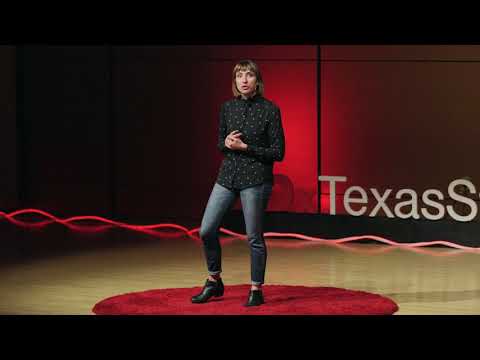
on this red dot today and to share my
idea that I think is worth sharing what
can happen when we look beyond labels
and seek identification with people who
we typically wouldn’t and so in closing
allow me to introduce myself again my
name is Susie Bannon it is an honor to
be here and I might be labeled a felon
but I am a hell of a lot more than that
thank you
[Applause]
[Music]
[Applause]
Please follow and like us: