
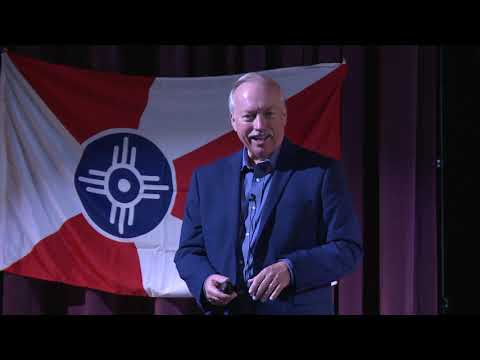
good morning how are you it is good to
be with people who want to learn to me
this morning we’re going to talk about
trends kind of what’s been going on in
the past and now and in the future with
brain technology do you have a brain did
you bring it with you this morning you
know it’s really always with you it’s
involved in everything that you do
everything that you think everything
that you feel everything that you say
everything that you sense perceive
imagine fear is in your brain some
people say it would be in your mind
some people say that the brain is an
architecture a framework that underpins
the mind today we will mostly be
speaking about the organ that is your
brain but make no mistake about it your
mind is close by now I’m pretty excited
to talk about brain technology and I
think when we think about the brain and
we think about technology there’s an
intersection there it’s pretty
intriguing don’t you think but it’s also
very complex the brain in fact is a
complex adaptive system so is technology
especially when it is connected to
things like the internet or some
intelligent background that’s running it
so when we have to complex adaptive
systems we have a lot of complexity and
that complexity is very difficult to
know in fact I I think it’s important
for us to keep that in mind as we
discuss this topic sometimes we can
speak about it as if we’re confident in
it but man has a habit of being
confident in his ignorance and repeating
that over and over there’s nothing wrong
with that as long as we use those
periods to learn so we have a
to lay out in front of us about what we
know about the brain and about what we
know about technology now this
complexity can be daunting but it
doesn’t have to overwhelm us it doesn’t
have to overwhelm us at all in fact if
we think about that complexity in and of
itself then we will be overwhelmed but
if we think about deeper things things
that are really not technical we can get
clarity things like friends having
people with you
things like faith knowing what you
believe in and what the principles of
life really are for you knowing what it
is that is valuable is critical if you
don’t recognize value it’s very hard for
your brain to make a decision how can
technology assist your brain if there is
no value structure by what rules by what
premise would you make decisions it’s
critical that is we face the very
difficult questions that will come to us
because of brain technology that we
consider faith that we consider friends
the people with us how we’re connected
to them and what that means for our
future
now we can deal with some of that
complexity through these questions of
faith really having a good feel for our
faith a good grounding standing on the
rock if you will but I’d like to start
today in dealing with that complexity
with you who are you what are you does
anybody here have maybe some metal that
has been implanted in your body to help
your spine or another part you have a
pacemaker maybe you have a deep brain
stimulator maybe you’ll have a patch
that’s giving you some medication maybe
you have medication surging through your
blood making its way into your tissues
and into your brain and affecting your
thoughts so are you all you entirely you
or are you a mix of Technology and you
it’s a great question don’t you think
now maybe it could be more obvious for
us that we’re a mix between technology
and ourselves but I want to push on some
notions today and and hopefully kind of
expand our thinking about what
technology is what bring technology
really is some people say that it is an
underlying architecture for learning a
kind of map but I’d like to push on that
a little there’s really biotechnology
some interface between an inanimate
machine some computation and us neuro
technology to deal with our our brain
and nanotechnology particles smaller
than an atom hmm I don’t know if you’ve
seen neuro-link
I don’t know if you’ve seen neuro dust
something called sim dust very tiny
particles that can be placed in your
body floating your body target an area
of your body and be signaled from
outside your body and when they are
signaled they then influence things like
neurons brain cells to cause changes in
your brain so it could be obvious like
the picture that you see but it could be
less obvious
that’s the one I want to push on today
and to do so I’d like to to go to some
work by Kevin Warwick dr. Warwick is at
the University of Reading in England and
I just like to look at a little bit of
the work that he’s done and let this
extend our thinking today well here at
the University of Reading what we’ve
created is a robot with a biological
brain this is a brain where the neurons
are cultured I grow
laboratory conditions so that the only
control of a physical robot is this
biological brain that we have grown did
you catch that
he said the the brain that they have
grown now you’re growing a brain today
in fact your experience is altering the
connections within your brain and we’ll
talk more about that later but he has
grown a brain and this has been done in
other labs as well but not exactly in
the same way and what they have done is
to culture brain cells today as we speak
they’re teaching that culture of brain
cells and it is learning now that’s
brain technology and it’s something that
could evolve into a connection between
that brain tissue and a robot and that’s
what you see playing in front of you a
robot with a grown biological brain
operating it it has sensors it can learn
which way to go
it can learn a path this is an essence a
cyborg it’s not something that is far
into the future it’s not something that
is coming it’s here you just saw it and
guess what this is not brand new there
are other people who’ve built upon this
work and so when we ask that question
about who you are and what you are it’s
a deep question we cannot deal with
brain technology without dealing with
these deeper questions and we cannot
answer those deeper questions without
having an idea a connection to other
people friends and a connection within
ourselves it’s also connected to God
through our faith it is only through
that connection that we can answer what
we are who we are what we should do what
should we do with this brain technology
that is advancing faster than we know
what to do with it sometimes we develop
technology and sometimes we do
that intentionally for a purpose we see
a need and we developed the technology
and at other times what we’re really
doing is taking the technology that’s
been developed and figuring out is there
if there is a need for it and it’s okay
to be in either mode but both of those
things are driving us forward with great
speed if you took all of the information
all of the data all of the the printed
word all of the knowledge I’ll use that
word all of the knowledge that the world
had up until about 2010 we’ll call that
X X knowledge between 2010 and about
2012 we had 2x information knowledge
technology is bringing a speed and
volume and so not only is the speed of
Technology and the speed of the amount
of information increasing but the speed
of thought must increase in order to
process that information
choosing which information to use and
where to use it requires a good
connection to a set of values BrainGate
gave us a an insight into the brain in
about 2005 and you see that on your left
kind of invasive don’t you think and
that technology allowed us to have a
brain-computer interface a brain machine
interface human machine interface bad
interface in 2015 looked like the
picture on the right was much smaller
and actually does about the same thing
maybe a little better in terms of
reading the brain and sensing the brain
does the technology have to be wired to
you and connected to you to be enya to
affect you there is this natural
attraction in a child’s brain for the
speed and the allure of Technology
maybe the seduction of Technology
affects all of us I simply want you to
ask when you are seduced by
or when you are repulsed by technology
and both may occur in any given day for
you I want to ask how are you deciding
if that technology that is connected to
your brain is it actually giving you
value how you decide that without
knowing what your set of principles for
decision-making really is now this is an
incredible piece of technology itself or
is it real what do you think is it a
real eye that we were looking at or is
it something as artificial google’s
deepmind use an algorithm called began
to develop a number of images and then
they asked people if they thought they
were real or not and most people
couldn’t tell the difference you see
technology has a tendency to blur what’s
real and what’s not who we are and who
we are not it has a tendency to blend
things together to blur them at a high
rate of speed and with great volume and
that can be hard for us to manage we
must have an idea of how to move forward
in our future using this technology to
bring value to us and we must have an
idea to do that that is for good so it
really is in this connection with
friends and with faith that we’re able
to make the best decisions about
bringing technology I want you to know
that brain technology is going to be
pushing on us with greater speed and
greater pressure than ever before and
the blurring of lines is going to occur
at a rate that we have never seen before
recently three brains were connected
they could not see each other they could
not speak with one another and those
three people were connected in this case
by a wire using electro encephalogram
and then a transcranial stimulator
magnetic stimulator and the loop that
was
between those technologies was able to
transfer thought from one brain to
another brain to another brain now it’s
a short step from wired to wireless the
wireless transmission of thought is an
incredibly exciting thing it’s also an
incredibly horrifying thing because I
can see I really don’t want to know what
some of you are thinking on the other
hand there are some of you that I would
think about the implications of that for
communication and connectedness between
friends in our communities this
diffusion tensor imaging at now is
really highlighting the connections
within the brain these are very poorly
understood we see some of these as
literally feet long and the colors that
you see represent different orientation
of those fibers and we sell will this is
a brain and it looks like other brains
no remember I said a little while ago
that your experience changes the
connections in your brain every
experience you have and remember
experiences comprised of your thinking
and what you do and what you say and how
you feel most of your experience happens
within you not outside of you and that
experience changes your brain and it
changes it almost instantly by changing
the connections in your brain this is a
picture of what some of the the white
matter some of the longer connections in
the brain look like but they’re very
complex at the same time that we are
doing this we are concentrating in a
very precise way on the brain in fact
today neural arrays can sense one neuron
and in your brain there are maybe a
hundred billion neurons each of them
connected to thousands of other neurons
for
a total of about and the guys still in
the bathroom counting but it looks like
around 160 trillion but a lot of
connections and remember that those
connections are changing moment by
moment and they’re exactly unique to you
there has only been one of you and there
will never be another one of you and
that is true of your brain it is a
one-of-a-kind
a great gift now I want you to think
about what we want from technology then
what is the experience that we’re
looking for from technology brain
technology what are we looking for it to
do for us because the experience that it
gives us will be a part of what it ends
up impacting us as in terms of the
outcome that technology has to be looked
at in terms of the experience it’s
giving us is it
augmented reality virtual reality
reality reality what is it that we want
in terms of the experience from the
brain technology we must answer that
question we’re gonna go to our last
slide now because it’s very very
important and the last slide gives us
the answer to the complexity of the
brain and how to use the brain
technology that is flowing over us at a
great speed and with great volume but
I’m going to tell you that instead of a
baby crawling up on a keyboard if we see
more babies doing this more children
doing this will have a better idea about
how to make decisions that connect us to
friends that build our faith and that
allow us to use brain technology to build a better future for us thank you
Please follow and like us: