
drinking featly contaminated water 1.8
billion about 800,000 children under the
age of five are dying every year from
diarrhea related diseases that’s 2,200 a
day or about one every 40 seconds and
about 90% of these deaths are caused by
lack of clean water lack of clean water
for hygiene and lack of proper
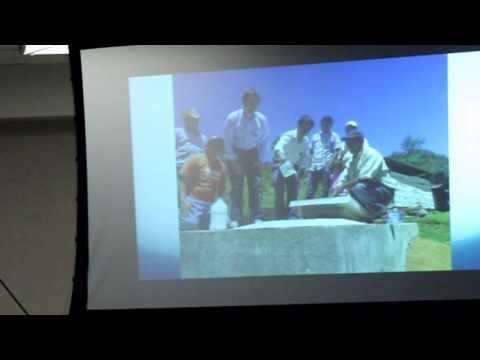
this is a water source for a village in
a remote area of Guatemala for the
northern highlands upper about 12,000
feet elevation this is the only water
source the only water source for the
village the water from here goes down
the hill about 12 miles through a small
pipe and then feeds the whole village
what really caught my eye here is the
sign that they posted above this water
source since please don’t contaminate
the water it’s for the village of el
where the water comes out this girl was
drinking it this is the only place she
can get water there’s no other whether I
walked all over the place in these
villagers there’s no other source of
water visiting me wonder all the people
in this village have diarrhea they’re
what really shocked me is we can send a
robot to Mars and drive around and we
still have people here drinking
contaminated water so you may ask what
are you doing in this remote village I’m
actually an engineer from Minnesota I
got started in this working in medical
clinics and refugee camps I was involved
in triage and translation so when people
would come in they would tell me what
they had and I would be able to send
them to the correct doctor what I’d
noticed with this work is a lot of these
illnesses were coming from bad water
unsafe drinking water
one day we had a family show up with
their small child it’s about 12 years
old about three and a half feet tall
maybe 45 pounds and they were concerned
that he wasn’t growing fast enough I
said well what what her his problems are
is he having health problems I finally
got out of them he had diarrhea Mike
well how long has he had that two two
years two years of diarrhea I cannot
even imagine that that just becomes a
normal aspect of life at the end of one
of our trips in 2014 we were approached
by a government group in Guatemala the
PNR was their name it’s a reparations
group for genocide from the Civil War
they were mandated to go to these
villages and help and they found out
that I was an engineer to dealt with
water and said hey will you come take a
look at this village we have a village
way up in the mountains all these people
have you coli we’re not sure what’s
wrong we think it’s from the water it
really was one of those opportunities
after about four hours in the back of a
Toyota bumping up the side of a mountain
we came to a very very remote mountain
village it’s called an away vas / onza
when we got to that village I realized I
was in way over my head the people there
didn’t speak Spanish misspoke TJ is a
so after a couple hours of talking
through english to spanish the ki jai
translation and back we finally figured
out that they had a water source it was
a long ways away and i was thoroughly
confused so we we looked and we found a
school with a whiteboard and we started
drawing it out because pictures are
really the universal language and what
we found is there water was a little
over two miles away and had a PVC pipe
running all the way and she have PVC
pipe running two miles I didn’t believe
it until I actually walked it they love
PVC pipe and then it ran to this
enormous tank knit tanks over here in
tanks over there and ran down to another
village like why do you guys have such a
huge tank about 30,000 gallons for a
village of 400 people I said well you
know like major October we have a real
high mouths of rainfall it’s really
rainy and then the rest of year we
sometimes don’t get water at all so I’ve
had this huge tanks we have water this
buzz is a enormous problem because you
have this stagnant water tank all kinds
of stuff starts growing in there I said
well I don’t have a way of fixing this
right now but I will go back to the US
and I will figure out something for you
guys but I’d really like to have you
guys chlorinate your tank so after about
another hour of talking we convince the
elder Don Pedro here that you should
chlorinate his tank this was truly
incredible because there’s no trust in
these villages they’re still recovering
from the war it wasn’t that long ago
they don’t trust outsiders coming in and
say hey you should do this I was
thoroughly shocked that they would let
me come in and say hey you should put
this chemical in there I’m an engineer
from the US you should do this I was
ecstatic said this will only help for a
couple weeks but I will come back with
the solution the standard solution
everybody comes up with is water filters
everybody has a filter a bucket of straw
problem of those is they’re expensive
and they don’t last that long
after year good luck the biggest problem
mr. waters on they claim when it comes
out of that filter the standard in most
of these developing countries is you
take your dishes to the river of the
stream and you wash them you put
everything in the river of the stream
your waste goes in the stream everything
garbage you wash your dishes and that
may come back dirty you go take it to
your filtered water it’s not clean
anymore it’s full of all kinds of
pathogens she need some sort of
disinfectant in the u.s. we use chlorine
most developed nations in the world will
use chlorine as a disinfectant Roy but
what we have the technology out there
right now really doesn’t work on
stagnant water tanks the most common
technology that I’ve seen in the
developed countries are either erosion
feeders or peristaltic pumps this one on
the left here is a standard erosion
feeder what that does is it has these
really concentrated chlorine pucks in
there they’re super dangerous this
system actually lasted a total of seven
days before it failed they require a
non-stop maintenance and they require
steady flow rates and steady steady
water quality the other system with
these pumps they’re wonderful if you
have a well that has electricity every
time the well runs it’ll run some
chlorine in there if your water quality
is constant that’s great but in a way of
esperanza we didn’t have either of these
there’s no electricity no well they have
a spring and a tank with flow sometimes
sometimes there’s a lot of flow so i
went home and turned our dining room
into a workshop i started building water
systems and i finally came up with a
design that i thought would work what it
does that utilizes a computer a small
computer and a sensor
and we can actually put a sensor in this
tank and since how much killing power
our disinfectant will have have you come
up with a source of disinfectant I said
let’s use household bleach you can find
household bleach anywhere I’ve never
been to one of these villages where they
don’t have access to household bleach
everybody does laundry it’s relatively
safe and it’s universally recognized as
a great way to disinfect water sighs
that let’s use bleach let’s use this
sensor and we can sense how much killing
power this bleach has in the water and
then we can just put more in if we need
it this way we can adapt a system to any
type of water tank you can put this on a
water tower you can put it on a cistern
doesn’t matter as long as you have a
tank in a place we can put a sensor what
this really lets us do is a couple
things lets us change the chlorine or a
bleach concentration based off of how
dirty the water is coming in and the
rainy season when that first slug of
water comes through everybody always
gets sick it’s because there’s a lot of
bacteria and pathogens in the water this
system will actually detect that and
increase the levels then when the water
gets clean it’s not going to use as much
what this allows us to do is use just
the right amount of our chlorine that
gives us two things it’s cheaper and it
doesn’t give you the flavors that you
get from massive amounts of chlorine in
these countries people don’t like the
taste of coin they’re not used to it
here everybody has a year used to it you
might not like it but you know it’s safe
there when they have a chemical flavor
they’re not sure if it’s actually safe
so after five months from our initial
visit I returned to know if Esperanza
and install the systems this is the
first system it’s incredibly crude but
very effective most of the parts are
from the big-box stores with a car
battery and solar panel and then
underneath that little white box there’s
a windshield wiper motor out of an 87
Jeep
that’s hooked up to a dishwasher pump
head to dose the household bleach out of
this five-gallon bucket this system here
with this five-gallon bucket will treat
over 100,000 gallons of water we don’t
just install these systems that we work
with the villagers we train them so they
take ownership of these systems we train
them how to test their own water and how
to maintain systems this way they really
take pride in it it makes the system
sustainable because they’ve this is
their job now I test the water in this
village by doing that we can really make
sure these systems last we also work
with sanitation and hygiene because a
lot of the illnesses and deaths come
from lack of hygiene and sanitation so
when we’re installing the system in the
way of Esperanza I said hey as long as
we’re digging a line let’s put a line
over to your latrine they looked at me
like what is this guy’s problem I would
you want water at a latrine nuts sit
let’s put a line over to the school too
so we put a line over there and we run
one down to their church then we install
the sinks they’ve never seen things
it’s hard enough in the United States to
get a kid to wash their hands you tried
doing that in a developing country where
they haven’t even seen a sink and with a
language barrier not exactly easy but we
give it our best shot we weren’t sure if
it was going to work but we did
everything we could at the end of our
installation this man shows up he’s the
president of the PNR group and Guatemala
the reparations group he’s actually
missing his leg he lost it in Civil War
about a mile from here he grew up in
this area and was very concerned he knew
everybody in this village was sick daddy
coli the water was bad and he wanted to
see if we’d fix the water they said hey
did it work nope let’s drink some water
so I hand him a cup of water and he
looks at me he’s like uh uh no no no you
first buddy hey okay I tested it that’s
what I do for a living his death water
so I do it was a if I drank it then he
looked at drank his assumes he swallowed
I said good luck buddy everybody started
laughing it was great but at that moment
was like a switch was flipped in the
village villagers saw this man he’s very
important his armed guards he has a
convoy if he’s drinking this water it’s
safe it’s got to be good and from then
on they just accepted the water and
started drinking it was wonderful is the
best situation I could have imagined
over the past two and a half years I’ve
been back this village about a half
dozen times and it has truly been
transformed i’m proud to say there’s no
but the children love the water they
bring their cups to school to come drink
it is really incredible this girl walks
a couple miles every day to come to this
village to get water she knows the water
safe so she makes the trek over the
mountain on our last trip I was truly
shocked the village had got together and
built their own community of the trans
but the real cool thing they bought a
sink and put it in these people don’t
have money their subsistence farmers
didn’t I know a couple hundred dollars a
year but they knew it was important
enough to put in their own sanitation
systems now that’s what I know the
transformation here was really complete
we haven’t stopped with that village
we’ve spread to many other villages and
actually this system here is that of a
la lupita put them on it treated 4.3
million gallons of water with three
hundred dollars of bleach came out to
about 40 cents a person a year so it’s
incredibly cheap we’re working with the
Rochester Minnesota rotary and Rotary
International to install 16 more of
these systems this year it should bring
just think if those 800,000 children
that die every year wouldn’t have to and
those 1.8 billion people who are
drinking contaminated water would not
have to worry about becoming ill if we
work together and apply this technology
we can make that a reality thank you [Applause]