
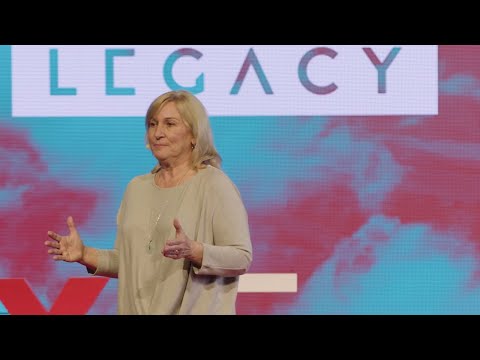
as a scientist I made lots of trips to
communities to talk about the impacts of
climate change and how to adapt to them
and I’d like to share one memorable
experience I guess I had while I was on
the road it was the year 2000 and I was
at a workshop for Canadian and US
professionals from the Great Lakes basin
my presentation was why adapt and my
goal was to motivate these people to
rethink to plan and take action or adapt
to climate change
I used maps graphs tables with lots of
numbers you know the things that we
scientists love to use but I also talked
about the impacts and the economic costs
and the implications for people’s
quality of life I thought I had done a
bang-up job laying out the scientific
case for climate change adaptation and I
actually hoped that I might inspire them
to take some action when the floor
opened for questions
a rather agitated participant was the
first to stand up ma’am ma’am you’re
talking about changes in the future
20 20 s 20 50 s that’s a long way away
plus those impacts that you’re talking
about there are only projections we’re
well prepared so I don’t think we’ll be
able in my community plus if changes
start to happen we’ll have enough time
to react plus ma’am you’re advising us
to adapt to climate change
why should we listen why should we act
besides how certain are you of your
climate change science would you be
willing to offer up your firstborn child
I went whoo I’ve never had a question
quite like that and I thought oh my
goodness
you know we scientists we like facts so
I was expecting to get you know the
nitty-gritty technical details so I was
really taken aback I was no longer
allowed to be the rational
by-the-numbers scientist I had to be
think and feel like a mother this
gentleman was making it personal stopped
and thought but you know it is personal
now no mother wants to offer up their
child as a sacrifice but my children and
food future generations motivate my
research in a sense I can see potential
futures not like a soothsayer but with
the tools of my trade hard scientific
tools climate models climate projections
and impact assessments they help me
diagnose threats opportunities and where
action would be prudent the evidence is
overwhelming the neat climate adaptation
is necessary and urgent and didn’t this
guy get it him
so also didn’t he understand that he was
a participant in climate change
adaptation whether he wanted it or not
paused and thought you know my case is
really strong
so I said yes to him and I offered up
not one but both my children Patrick and
Alison now many of you here
believe climate change and believe in
climate change and that something has to
be done about it
but I suspect that you may still hold a
few preconceptions about the nature of
climate change and how to do adaptation
in my experience I’d like to sort of get
at three myths and slash them myth
number one climate change will happen
sometime in the distant future
myth number two climate change will
happen to someone else and not me
myth number three it will be easy to
adapt to climate change so myth number
one climate change will happen in the
way distant future actually we are now
in the midst of a climate transformation
we just don’t know it statistics would
tell us that but how many of us collect
data and all the statistics of our air
temperature slowly unfolding changes
just creep up on you you know the fabled
freshman 15 weight gain or worse white
hair and wrinkles magically appearing
and doesn’t it seem then you first
notice those changes that they seem to
accelerate and you’re getting older
faster and there’s no going back
well that’s what’s happening with
climate change so if we’re in the midst
of a climate transformation how do we
know it so we scientists we’re on it
since 1990 we’ve tabled or present
five climate change assessment reports
to the governments of the world I
participated in most of them and I tell
you you have to be on the top of your
game to participate it is a rigorous
demanding process our assessments use
the highest caliber research we use
millions of observations from around the
world taken over hundreds of years and
that is the foundation for us making
statements on the state of the climate
system I’d like to share some of those
statements with you and I’d like you to
listen very carefully to the words they
were chosen with painstaking care by the
scientists and approved unanimously by
over 150 countries of the world I’d say
that’s a pretty awesome accomplishment
we’ve done it five times so what’s the
statements in 1995 we were detecting a
human influence on the climate system in
2001 there was a discernible human
influence on the climate system in the
2013 report warming of the climate
system is unequivocal and human activity
is the dominant cause of warming since
the 1950s
so when international scientists and
world governments use the word like
unequivocal they mean it in a literal
sense leave no doubt so if we’re in the
midst of a climate transformation and we
can measure it what are the consequences
let me take you to Houston
taxes which was recently hit by
hurricane Harvey some client some
scientists say that climate change may
have what made Harvey worse how is this
so well we know warming heats the ocean
which feeds hurricanes warming also
heats the atmosphere and it lets
hurricanes hold more moisture or water
that can fall as rain but that’s only
one example what really really really
concerns me is that warming fuels
extreme events that’s not just
hurricanes
that’s heat waves that’s droughts floods
and wildflower fires all becoming
stronger lasting longer and becoming
more frequent that is climate change now
miss myth number two is climate change
will happen to someone else and not me
and it’s really interesting I have
observed that most people feel that the
worst impacts will happen to someone
else they deflect but climate change is
going to happen to you and it is going
to affect you directly and it will also
affect your families your communities
your cities your natural areas your
regions and it will also affect you by
what happens in some other some of the
other countries around the world let me
use sea level rise as an example
Bangladesh has all often been identified
as a place where with a that’s a
humanitarian crisis in the making
Bangladesh sits just a little above sea
level it’s at the mouth of three huge
rivers and it’s exposed to at two
tropical cyclones and there’s very
little protection
about 10% of Bangladesh’s population may
be displaced by sea level rise caused by
climate change
that’s 18 million environmental refugees
or about half of Canada’s population and
that’s not just the end of it Bangladesh
is only one of many other countries in
coastal areas that are going to
experience sea-level rise flooding and
displaced people it becomes a world
problem I’d also like to draw your
attention to the fact that climate
change will also affect you closer to
home and use Vancouver British Columbia
as an example coastal communities in
British Columbia are already planning
for sea level rise because of climate
change
50 centimetres by 2050 100 centimetres
by 2100 and 200 centimetres by 2200
there’s also been neighborhoods that
have been identified as potential future
flooding hotspots their names you’ll
recognise an English Bay hit Kitsilano
Beach gas town in the Downtown Eastside
for example now imagine that you’re a
business owner or a resident here your
neighborhood is in transformation you
will be experiencing likely to
experience more flooding and risk to
displacement emerge-ii evacuation loss
of income and property will also be an
increasing risk to you so what can you
do how can you adapt these are the
difficult questions this leads me to
addressing myth number 3
it’ll be easy to adapt to a changing
climate you know change is difficult
think about losing weight the first five
pounds okay they come off relatively
easily but the next ten or twenty or
thirty pounds require planning
commitment and effort and also may
require a transformation in your diet
and your lifestyle that’s the same thing
with climate change let me take you back
to the example of sea-level rise on
Vancouver in the early stages of
adaptation the climate threat is
increased flooding during storms so our
goal is to protect health and safety and
the built environment I call it the
sandbags and dikes face that means that
the adaptation is traditional and
incremental what we do is that we do
risk assessments for example we look at
who’s vulnerable what’s at risk and
where and we think about retrofitting
existing dikes and building new ones but
if you take the longer view you’re going
to recognize as the climate system
transitions we are likely to tip into
uncharted extremes that means our plans
will no longer function as they should
or maybe we won’t be able to afford them
anymore
the adaptation gets
really messy think again to those
hotspot neighborhoods that are hotspots
for flooding at what point would the
community decide that the flooding risk
is too great that they would relinquish
the land abandon their homes and
businesses and retreat from rising sea
levels can you imagine how difficult
that conversation or conversations would
be and how difficult those choices might
be that’s the challenge of adaptation
now dare I also talk about innovative
out-of-the-box adaptations planners
architects and engineers are reimagining
the coasts the relationship between land
and water along the coast and they’re
designing amphibious subdivisions now
that’s a transformative adaptation my
talk i’ve dispelled three myths i’ve
going to replace them with the three
realities of human-caused climate change
it’s happening it’s going to affect you
and it’s going to require
transformational adaptation now I don’t
want you to be discouraged I’m not and
I’ve been working on the climate change
issue for over 30 years
and I am hopeful and I am certain that
we can and will meet this adaptation
challenge remember how I said that we
are all
this adaptation journey whether we want
to be or not I’d like you to think about
how you can trick and contribute what
roles you can play
we need thinkers people who can look at
a problem in a new way and find
innovative transformative solutions
things that we hadn’t thought of before
we need doers people who can Shepherd
these innovative ideas through the
natural controversies and inevitable
barriers when you bounce up against the
status quo we also need supporters
supporters are fundamental to enabling
good thinkers and the doers and we also
can’t discount when when supporters use
their voices like voting to build social
and political support for those
innovative and transfers
transformational ideas I offered up my
children Patrick and Alison for climate
change it wasn’t a joke I was serious I
was going at that guy I was serious
about my science and I was serious about
the need to adapt and if we all don’t
act we will be offering up our children
to climate change so looking forward to
the challenges of adaptation let’s not
offer up our children grandchildren and
future generations let’s think
transformational adaptation let’s be
innovative energetic and brave and let’s
build a better future thank you
you
communities to talk about the impacts of
climate change and how to adapt to them
and I’d like to share one memorable
experience I guess I had while I was on
the road it was the year 2000 and I was
at a workshop for Canadian and US
professionals from the Great Lakes basin
my presentation was why adapt and my
goal was to motivate these people to
rethink to plan and take action or adapt
to climate change
I used maps graphs tables with lots of
numbers you know the things that we
scientists love to use but I also talked
about the impacts and the economic costs
and the implications for people’s
quality of life I thought I had done a
bang-up job laying out the scientific
case for climate change adaptation and I
actually hoped that I might inspire them
to take some action when the floor
opened for questions
a rather agitated participant was the
first to stand up ma’am ma’am you’re
talking about changes in the future
20 20 s 20 50 s that’s a long way away
plus those impacts that you’re talking
about there are only projections we’re
well prepared so I don’t think we’ll be
able in my community plus if changes
start to happen we’ll have enough time
to react plus ma’am you’re advising us
to adapt to climate change
why should we listen why should we act
besides how certain are you of your
climate change science would you be
willing to offer up your firstborn child
I went whoo I’ve never had a question
quite like that and I thought oh my
goodness
you know we scientists we like facts so
I was expecting to get you know the
nitty-gritty technical details so I was
really taken aback I was no longer
allowed to be the rational
by-the-numbers scientist I had to be
think and feel like a mother this
gentleman was making it personal stopped
and thought but you know it is personal
now no mother wants to offer up their
child as a sacrifice but my children and
food future generations motivate my
research in a sense I can see potential
futures not like a soothsayer but with
the tools of my trade hard scientific
tools climate models climate projections
and impact assessments they help me
diagnose threats opportunities and where
action would be prudent the evidence is
overwhelming the neat climate adaptation
is necessary and urgent and didn’t this
guy get it him
so also didn’t he understand that he was
a participant in climate change
adaptation whether he wanted it or not
paused and thought you know my case is
really strong
so I said yes to him and I offered up
not one but both my children Patrick and
Alison now many of you here
believe climate change and believe in
climate change and that something has to
be done about it
but I suspect that you may still hold a
few preconceptions about the nature of
climate change and how to do adaptation
in my experience I’d like to sort of get
at three myths and slash them myth
number one climate change will happen
sometime in the distant future
myth number two climate change will
happen to someone else and not me
myth number three it will be easy to
adapt to climate change so myth number
one climate change will happen in the
way distant future actually we are now
in the midst of a climate transformation
we just don’t know it statistics would
tell us that but how many of us collect
data and all the statistics of our air
temperature slowly unfolding changes
just creep up on you you know the fabled
freshman 15 weight gain or worse white
hair and wrinkles magically appearing
and doesn’t it seem then you first
notice those changes that they seem to
accelerate and you’re getting older
faster and there’s no going back
well that’s what’s happening with
climate change so if we’re in the midst
of a climate transformation how do we
know it so we scientists we’re on it
since 1990 we’ve tabled or present
five climate change assessment reports
to the governments of the world I
participated in most of them and I tell
you you have to be on the top of your
game to participate it is a rigorous
demanding process our assessments use
the highest caliber research we use
millions of observations from around the
world taken over hundreds of years and
that is the foundation for us making
statements on the state of the climate
system I’d like to share some of those
statements with you and I’d like you to
listen very carefully to the words they
were chosen with painstaking care by the
scientists and approved unanimously by
over 150 countries of the world I’d say
that’s a pretty awesome accomplishment
we’ve done it five times so what’s the
statements in 1995 we were detecting a
human influence on the climate system in
2001 there was a discernible human
influence on the climate system in the
2013 report warming of the climate
system is unequivocal and human activity
is the dominant cause of warming since
the 1950s
so when international scientists and
world governments use the word like
unequivocal they mean it in a literal
sense leave no doubt so if we’re in the
midst of a climate transformation and we
can measure it what are the consequences
let me take you to Houston
taxes which was recently hit by
hurricane Harvey some client some
scientists say that climate change may
have what made Harvey worse how is this
so well we know warming heats the ocean
which feeds hurricanes warming also
heats the atmosphere and it lets
hurricanes hold more moisture or water
that can fall as rain but that’s only
one example what really really really
concerns me is that warming fuels
extreme events that’s not just
hurricanes
that’s heat waves that’s droughts floods
and wildflower fires all becoming
stronger lasting longer and becoming
more frequent that is climate change now
miss myth number two is climate change
will happen to someone else and not me
and it’s really interesting I have
observed that most people feel that the
worst impacts will happen to someone
else they deflect but climate change is
going to happen to you and it is going
to affect you directly and it will also
affect your families your communities
your cities your natural areas your
regions and it will also affect you by
what happens in some other some of the
other countries around the world let me
use sea level rise as an example
Bangladesh has all often been identified
as a place where with a that’s a
humanitarian crisis in the making
Bangladesh sits just a little above sea
level it’s at the mouth of three huge
rivers and it’s exposed to at two
tropical cyclones and there’s very
little protection
about 10% of Bangladesh’s population may
be displaced by sea level rise caused by
climate change
that’s 18 million environmental refugees
or about half of Canada’s population and
that’s not just the end of it Bangladesh
is only one of many other countries in
coastal areas that are going to
experience sea-level rise flooding and
displaced people it becomes a world
problem I’d also like to draw your
attention to the fact that climate
change will also affect you closer to
home and use Vancouver British Columbia
as an example coastal communities in
British Columbia are already planning
for sea level rise because of climate
change
50 centimetres by 2050 100 centimetres
by 2100 and 200 centimetres by 2200
there’s also been neighborhoods that
have been identified as potential future
flooding hotspots their names you’ll
recognise an English Bay hit Kitsilano
Beach gas town in the Downtown Eastside
for example now imagine that you’re a
business owner or a resident here your
neighborhood is in transformation you
will be experiencing likely to
experience more flooding and risk to
displacement emerge-ii evacuation loss
of income and property will also be an
increasing risk to you so what can you
do how can you adapt these are the
difficult questions this leads me to
addressing myth number 3
it’ll be easy to adapt to a changing
climate you know change is difficult
think about losing weight the first five
pounds okay they come off relatively
easily but the next ten or twenty or
thirty pounds require planning
commitment and effort and also may
require a transformation in your diet
and your lifestyle that’s the same thing
with climate change let me take you back
to the example of sea-level rise on
Vancouver in the early stages of
adaptation the climate threat is
increased flooding during storms so our
goal is to protect health and safety and
the built environment I call it the
sandbags and dikes face that means that
the adaptation is traditional and
incremental what we do is that we do
risk assessments for example we look at
who’s vulnerable what’s at risk and
where and we think about retrofitting
existing dikes and building new ones but
if you take the longer view you’re going
to recognize as the climate system
transitions we are likely to tip into
uncharted extremes that means our plans
will no longer function as they should
or maybe we won’t be able to afford them
anymore
the adaptation gets
really messy think again to those
hotspot neighborhoods that are hotspots
for flooding at what point would the
community decide that the flooding risk
is too great that they would relinquish
the land abandon their homes and
businesses and retreat from rising sea
levels can you imagine how difficult
that conversation or conversations would
be and how difficult those choices might
be that’s the challenge of adaptation
now dare I also talk about innovative
out-of-the-box adaptations planners
architects and engineers are reimagining
the coasts the relationship between land
and water along the coast and they’re
designing amphibious subdivisions now
that’s a transformative adaptation my
talk i’ve dispelled three myths i’ve
going to replace them with the three
realities of human-caused climate change
it’s happening it’s going to affect you
and it’s going to require
transformational adaptation now I don’t
want you to be discouraged I’m not and
I’ve been working on the climate change
issue for over 30 years
and I am hopeful and I am certain that
we can and will meet this adaptation
challenge remember how I said that we
are all
this adaptation journey whether we want
to be or not I’d like you to think about
how you can trick and contribute what
roles you can play
we need thinkers people who can look at
a problem in a new way and find
innovative transformative solutions
things that we hadn’t thought of before
we need doers people who can Shepherd
these innovative ideas through the
natural controversies and inevitable
barriers when you bounce up against the
status quo we also need supporters
supporters are fundamental to enabling
good thinkers and the doers and we also
can’t discount when when supporters use
their voices like voting to build social
and political support for those
innovative and transfers
transformational ideas I offered up my
children Patrick and Alison for climate
change it wasn’t a joke I was serious I
was going at that guy I was serious
about my science and I was serious about
the need to adapt and if we all don’t
act we will be offering up our children
to climate change so looking forward to
the challenges of adaptation let’s not
offer up our children grandchildren and
future generations let’s think
transformational adaptation let’s be
innovative energetic and brave and let’s
build a better future thank you
you
Please follow and like us: