
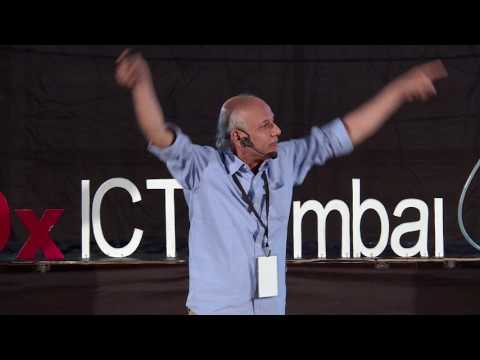
alright I’ll tell you about the stars
and black holes and the universe as a
whole
this is the story of black hole it’s a
fascinating tale of Education evolution
of our knowledge on universe how the
things change how things evolve how we
you know as we go on observing the
universe which way we keep revising our
ideas on the cosmos that’s the whole
game we are all here very busy doing our
day to day course every studies life
family so on and so forth so many things
we have to attend every day but then we
have to realize we are part of a vast
universe we are not you know alone we
are part of an entirety and then as you
look out there in the cosmos
you see what we call galaxies this are
you see the galaxies that you see from
the Hubble telescope there are billions
of galaxies that you see in the universe
and each of that like this one consists
of some 400 to 500 billions of stars
billions of stars and then our own Sun
and that Sun is just a one tiny dot even
if this one tiny dot contains hundreds
of stars so big is one single galaxy
this Sun is as small as this one but
there are stars this big in the universe
thousands
10 times the Sun 20 times the Sun or
even you know 100 times the mass of the
Sun big big stars are there in the
universe what happens to them when they
exist they’re internal nuclear fuel as
you know probably the hydrogen atoms
fused together in the Sun to produce
energy and then at some day the hydrogen
is going to get or even within the Sun
the Sun has lived some 5 billion years
in the past but never mind it is going
to live another 5 billion years so you
can have many more TED Talks here and
you know many more degrees and your
usually your carriers to make your
financial planning to do your families
to make your children the important
point is the life cycle of Sun is very
different from life cycles of massive
stars when the stars are more massive
say 10 or 20 times the mass of the Sun
then they burn much much faster their
life cycle is their internal burning is
much faster their fuel will get over
very soon and then what is the final
fate of such massive stars that is the
you know beginning of the story of the
black hole which is I think everyone has
probably read somewhere or the other in
the newspapers so
to find out that particular you know
answer you need the theory of relativity
of Einstein because what happens is
really this star is governing at the you
know is governed by the internal nuclear
fuel as I said cycle and then what
happens then is the gravity takes over
it is the entire game of gravity that is
what counts in 1939 Oppenheim ER and
Schneider the famous you know physicist
Robert Oppenheimer and his student they
worked out the using Einstein’s
equations what will happen to you know a
massive star and they found out that the
entire star which is thousands of
kilometers in radius it will collapse to
one single dot like the one in IE
english IE you put on the top that dot
smaller than that size and within a
matter of few minutes tens of seconds
the star which lived millions of years
will you know collapse like that and
that kind of a dot is really the
spacetime singularity in the same year
1939 as Oppenheim arranged neither did
their work immediately
Einstein was very displeased and unhappy
with their work he straight away sake
know nothing doing a star cannot do it
how can a star columns like this and
become a point like that and then
everyone was quiet
Einstein has spoken you see so there
were the total silence in the field but
only in 1960s what happened was that
amazing you know phenomena were
discovered in the universe
the quasars the radio galaxies and so
much energy was produced over there that
no usual known laws of physics would
explain it
and then people thought ha there was
this Oppenheim where there was the
Snyder act there was this concept of
singularity concept of singularity
hidden within the horizon of gravity and
then big development started in nineteen
sixties and seventies on black holes
stiffen Hawking Roger Penrose John
Miller Kip Thorne big big names you see
and the huge development took place in
the game so this is you know a kind of
artist conception of black hole you
can’t just see it like a star out there
because by definition the black hole
doesn’t allow you know any light to
escape so it is known only through its a
you know effect on its environment but
then physicists applied in a very big
way the hole of the black hole theory
but there was one very important catch
in the entire game and the catch was
that people remembered you know the
Oppenheimer Schneider work and people
you know brought everything in but they
had to you know show in general that
every star will become only a black hole
every massive star when it died it will
become a black hole only this had to be
proved because the open how much neither
model was very simple so the scientists
had not proved really that every massive
star will you know go to a black hole
only in the past many decades what has
happened is that many many models have
been worked out including you know the
Indian groups also and what turned out
is that the singularity I was talking
about this star collapsed is collapsing
to a singularity you know very very
dense region sometimes it can be hidden
within a black hole but at other times
it can be visible also so then the
hypothesis was given by Penrose fifty
years ago exactly about 50 years ago
that singularities must be hidden so he
gave a more dramatic word no naked
singularities and we must have a cosmic
sensor hiding all singularities
singularities are not so bad actually
you don’t have to hide them but anyway
in order to develop the black hole
physics somehow scientists assumed this
and the conclusion was both black holes
invisible naked singularities develop as
collapse final states lots of groups
worked out all this results over past
you know at two three decades including
our one a group also the important point
here is that
to tell you in pictures this earlier
scientists thought that sun-like stars
will become white dwarfs but more
massive stars will necessarily become
black holes but now the difference is
the sun-like star will become white
dwarfs but massive stars either they can
become black hole or they can explode
like a fireball the point is that either
it can become black hole or it can
explode so that became a big emotional
upheaval you see scientists also have
emotions obviously I mean we generally
have the you know impression of
scientists like you know mathematics and
you know writing formally so scientists
I didn’t assist so much but there is an
emotional you know upheaval but there’s
the first page article in New York Times
Stephen Hawking accepted that in fact a
singularities without horizons and do
happen our one work
happened over here in past many years
they invited me to write an article I
wrote one there is a Hollywood star also
who was interested in stars and final
fate of stars and she was very excited I
want to be a rebel star I don’t want to
a black hole you know agree I would like
to sort of explored away so we had
wonderful conversation and so on but of
course despite being in Mumbai for such
a long time I have not been able to you
know attract any Bollywood star in the
discussion of you know there there goes
there go there goes you see the
Hollywood then there goes the Bollywood
the recent developments have been
astronomers have never been asking
because many groups have worked on these
things and well so black holes are there
and naked visible singularities are
there what are we going to see out there
can you observe something so there have
been lot of developments on that much
more interestingly the recent papers
have come in fact in past few weeks and
months from places like Cambridge and
Princeton and you know top places in the
world confirming that in fact
singularities without horizons also do
occur so that’s very interesting and
satisfied you know whether I mean
whatever happens whether they cite you
where if they don’t cite you all those
things things are fine but you know our
work is well into discussion for quite
some time because of the monographs the
the Cambridge and Oxford and others have
published but more so because of you
know the Scientific American and Angela
and Shelton like you know episodes but
the sort of fade is intrigue Ewing why
all these things are so important
just a word on that you see when you are
close to a singularity such high
densities what happens is that the
gravity forces and the quantum forces
come together they work in unison
otherwise we don’t have today a good
theory describing the quantum gravity
effects in you know unified manner in a
satisfactory manner so if you can see
the signals you see coming from this
very dense regions or the singularities
then you know you have a real hope of
finding out we have string theories we
have loop quantum gravity s but not
really telling us too much so it is the
unification of physics as a whole that
is creating or making this as a really
frontier problem it’s really like a mini
Big Bang Big Bang singularity the origin
universe origin of the universe you all
have heard so if anacott singularity
occurred then there would be a you know
a blast like many Big Bang whenever a
massive star collapsed purely under the
pull of its own gravity and now you see
this is the event horizon telescope
which is going to see the center of our
own galaxy the Milky Way so they are you
know really trying to make the
experiments observational missions the
real you know quest is to understand the
cosmos and here are the LIGO you know
telescope arrays and gravitational waves
could bring to us some of this signals
here is you know a recent book that I
wrote which describes many of this
developments in quite some detail it’s
it grew really out of the Scientific
American article discussions doing
frontier science in India how’s that
like and I must say you know a couple of
words here
recently you know when key Ram Krishna
has said Indian Science Congress is a
circus and this is you see printed out
there in a Hindu article and he was not
afraid to you know say this in public
is this all correct well there are a few
good places you see in India where you
can do some work so down good facilities
and so on but really speaking barring
you know few good places few places you
can count on your fingers really ever
you know universities are in Chambal
sort of you know in a bad shape and we
have to do something about it
looking at our work own work objectively
and effort you know it’s an effort to
work at the frontier of knowledge they I
must say that we have you know basic
infrastructure problems so you run into
those you have to take care of that I a
need not go into nitty-gritty you know
for the moment but we what we really
need today is to solve this issue this
is so many young people aspiring young
people are there they are no less
intelligent than anybody in the world am
and I have gone to few countries several
countries and you know then they deserve
opportunities what is needed is
attention on education and research and
this is sorely missing the education is
suffering in this country we need to do
something really really drastic do you
know revive and through it is your
children your generation so it is for
you really to take up you know all the
responsibilities and do something about
it you cannot say that oh we are all you
know us-bound target audience well
certainly you know some change may be
there you know some President may come
who we all know stay in your country so
what are you going to do thank you
you
Please follow and like us: