
surprise our nation’s most prominent
Aboriginal leaders or advocates and
today I simply invite you to pay close
attention to your own reaction when you
learn of the following Australia has
created a multi-billion dollar industry
also back of Aboriginal disadvantaged
and if that sounds alarmist I ask you to
pay attention to your reaction when I
share this in just one year 5.9 billion
dollars of our money was spent in the
portfolio of Aboriginal Affairs I say
the portfolio of Aboriginal Affairs
because it’s important to remember that
this money was not directed into
communities and the people who have the
most need as a taxpayer I ask you this
do you have confidence knowing that this
multi-billion dollar industry is using
money in a way that is misdirected do
you feel like this 5.9 billion dollar
industry should be held accountable for
not delivering the outcomes that are
required would you be surprised to learn
that very few of their schemes are
evaluated properly take for example the
federal government’s initiative on
indigenous homeownership
it’s designed to increase homeownership
amongst indigenous population what if I
told you that in one year 75 loans were
administered could you guess how many
people were employed to administer those
75 loans 75 incredible right so when we
ask ourselves the question how is this
model effective what answers are we left
to consider would your answer change if
you knew that half of those loans that
were approved could actually be
delivered by US mainstream mortgage
lender so when we think about the
numbers all of a sudden seventy-five
people employed to administer
seventy-five loans becomes 75 people
employed to administer about 36 lanes
there are thousands of programs designed
in Australia under the purpose and with
the intention of addressing some form of
Aboriginal disadvantaged unfortunately
just one hundred out of every 1000
programs are actually evaluated against
those stated purposes if that’s the case
how can we be sure that they’re working
and what can we do as Australians to
make sure that the decision-makers who
are directing this money and let’s face
it paternalistic policies how can we
make them accountable
why are we so compliant and so ok with
maintaining the status quo of a
multi-billion dollar industry that
continues to benefit on the back of
Aboriginal disadvantaged I’m going to
suggest that the mistake we made is also
one that I’ve made in my speech so far
we have seen the issue from a very
top-down perspective some may call this
paternalistic when we do this what we
fail to remember is that we also ignore
people’s stories and in failing to
acknowledge people’s stories we also
fail to acknowledge their needs
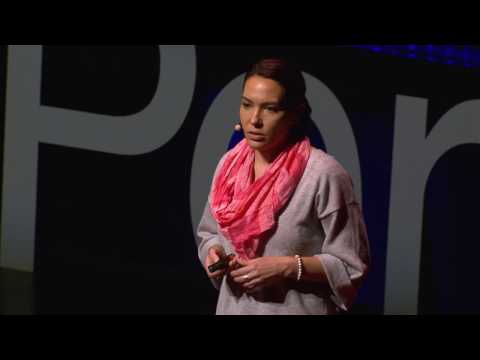
my name is Kia Dell and I’m a passionate
advocate for addressing issues that
negatively impact indigenous communities
we do this in our work by looking at the
complex business and social challenges
that face our communities every day we
work with top business leaders from ASX
listed companies to NGOs
and we work to partner with indigenous
communities to co-create locally
relevant solutions that meet their needs
and the challenges that they face every
day now I feel like I also need to
clarify that I identify as an Australian
and as a woman who is also Aboriginal
from the gidget people of what one
community in the East Kimberley region
of Western Australia I’m also equally
proud of my father’s heritage from
Scotland and England
if you’re wondering why I felt it was
necessary to clarify that it’s probably
got something to do with people saying
things like you don’t look like a real
original person or you’re not black
enough to be a real Aboriginal person
and my favorite or you’re one of the
good ones whatever that means
you see those statements are symptoms of
a much larger economic issue not a race
issue and when you reflect on what they
contribute to for starters they actually
focus on our deficit they focus on the
deficit of people and communities we
also see other symptoms image
symptoms such as generations of
individuals who fail to recognize how
wonderfully incredible they are
resilient individuals notice that I’m
using individuals as opposed to labels
I’ve had the privilege of working with
over 500 incredible human beings most
who are Aboriginal and Torres Strait
Islander people these individuals not
only want to lead positive social change
in their communities and our country but
they want to be part of implementing it
unfortunately we do consistently see an
epidemic of deeply embedded destructive
beliefs when you think about the average
age of participants in our programs
we’re talking about 18 year olds now if
you were to take your mind back to when
you were 18 and all the experiences that
created and shaped who you are today I
want you to consider just for a moment
the life of the 18 year olds we work
with and the past that they have bought
a number of these young people our
children and grandchildren of members of
the stolen generation and yes I know
there’s many people in Australia if you
want us to get over it
believe me no one wants that more than
we do no one wants to be born into a
cycle of welfare dependency no child is
born saying hey pick me so that I can
you know have issues my whole life no we
want to resolve in
to generational drama but we need to be
able to do it as a collective a number
of these young people are also reminders
of the potential that we can become the
wonderful thing about this story with
these young people is at the end of the
program image this incredible question
our question I believe is very relevant
for us today one that I want each and
every one of you to reflect on in
denying parts of who you are
are you also denying parts of your
parents grandparents and ancestors who
paved this very privileged path for you
to be in this room today this is a
question that I believe resonates with
all of us not just as human beings but
as a collective group of people who are
capable of creating the change that we
need to happen now and I want you to
consider your role in contributing to
Australia’s very public discomfort with
investing directly in Aboriginal people
rather than policies we must reframe how
we invest in people and we must tip the
model of investment in Aboriginal
Affairs on its head but this is where
the issue begins and I can’t help but
wonder if this system is why this six
billion dollar a year industry continues
to flourish is there any reason why you
wouldn’t want to resolve this economic
issue how much more effective could we
be if we were just to take a moment and
say the solutions lay with the people
after working with over 70 organizations
all around Australia every role that’s
funded to help Aboriginal people comes
with a long long list of reasons why
communities are at fault when results
are not achieved shifting the blame
disempowers everyone and when decisions
are based on assumptions about the
capability of communities rather than
the decision-maker themselves then we’re
heading into very very deep waters with
nothing left to hold on to what I have
found is that the results that are
achieved when Aboriginal people and
communities are at the table as partners
rather than recipients fast track
outcomes more than ever
if you’re sitting here wondering what
you can do to get answers and results
out of this multi-billion dollar
industry I want you to consider some of
these questions if you’re a leader or
decision maker in government NGO or
corporate circles I want you to ask
yourself how capable your team really is
when it comes to creating solutions with
communities rather than for them and if
you’re an Aboriginal person I want you
to ask yourself what role you’re playing
to demonstrate that our capability is
the key to our success rather than what
we’re seeing now which is a sense of
entitlement as human beings we must stop
and hold a mirror up to ourselves and
ask what kind of future we’re creating
for our children and grandchildren do we
want a country that’s known for its
ignorance and intolerance or do we want
to create innovative intelligent and
practical solutions do we want to lead
and impact our children based on our own
personal biases or do we want them to
celebrate knowing the wonderful benefits
of diversity I leave you with this
question as leaders today and decision
makers today what purpose does it serve
to continue benefiting from Aboriginal
disadvantaged and who will change begin
with if not for us thank you
[Applause] [Music]