
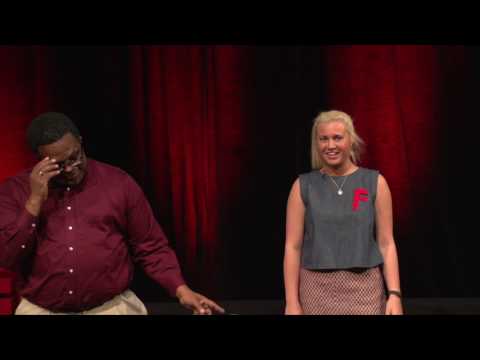
quick hey Julie how you doing I’m good
scarlet letter written by Nathaniel
Hawthorne yeah it’s actually one of my
favorite books okay so you know the
story behind it
it’s about a woman named Hester Prynne
who has a child after engaging in an
adulterous affair as punishment Prynne
was made to publicly wear a scarlet
letter aid to represent her adultery yes
but what’s so interesting about this
novel is that Hawthorne focuses more on
the aftermath of the affair rather than
the affair itself Hawthorne explores the
themes of judgment guilt isolation and
free will but what’s so intriguing is
that whenever you’re reading it you
initially don’t understand the
importance of these themes and the
themes are affecting multiple characters
in the book at the same time just
internally through internal judgment
internal guilt internal isolation and
they’re affecting multiple characters in
the book at the same time yeah it’s all
based on this it’s kind of like you know
what I’m kind of starting to get what
you’re talking about I think if you’re
talking about the fact that I mean this
is like this is this is criminology
though and so I’m not exactly getting
your point can you like what’s your
connection okay so think about it
Hester Prynne the sinful woman who made
a horrible mistake in society’s
standards she served her time and she
was able to forgive herself yet society
continued to see her as a sinner and
they continue to shame her I mean does
this sound familiar yeah it kind of does
it sounds like the people who come in at
jails and prisons and the people that we
call returning citizens exactly that’s
the point the Scarlet Letter was such a
taboo subject during its time period
just as prison reentry is a taboo
subject now being a convicted felon is
the current Scarlet Letter just instead
of an a for an adultery it’s an F for
felon the themes that Hawthorne explores
in the scarlet letter are almost
identical to those that we see in
modern-day prison reentry judgment from
society along with self judgment guilt
of the convicted isolation from society
after being contained for X amount of
years and the loss of free will
whether that be with voting rights
trying to get a job
for financial aid or applying for a loan
all of these if not completely are
partially hindered because of one
conviction Wow
you know what that’s a pretty accurate
comparison you know I’m actually sitting
here thinking you know you got to be
thinking a little bit because like mass
incarceration seems to be threatening
our democracy mm-hmm and some of my
thoughts are kind of like you know if we
what would happen if we focused on
helping people come out of chosen
prisons and instead of focusing on the
act that got them arrested or
incarcerated in the first place okay
right and then another one kind of going
along with what in the manual Hawthorne
said or wrote about was basically what
happens if we focus on the aftermath of
the conviction instead of and you know
looking at like people’s futures and
their lives after jails and prisons as
opposed to what happened for the get to
the initial conviction in itself right
is it along the lines of what you’re
thinking yes exactly I I’m not sure how
many people we could influence but I’m
sure if we were able to give exact
numbers and exact percentages we can
really hit home with people and connect
I see so basically you came to me for
some numbers right thank you okay so
like one in 99 was like the scarlet
letter F that you’re talking about
affects one in 99 in our country I think
you talked about the people like who
basically have one in 99 people have
felony records so one a 99 people have
to start a letter F right and and then
you also talk about the fact that 2.3
million people are locked up in our
prisons and you know you’ve been talking
about jails parole and probation right
so we estimate about five million people
are actually in the system itself which
is really crazy if you think about it
and then there’s no numbers like this
one like the u.s. actually has five
percent of the world’s population and at
the same time it has 25% of the world’s
incarcerated population you’re joking
I’m it not at all it’s freaking crazy
right that’s insane
then we also know they had one added
three people like well that got her
three years that 67% of the people who
are coming out actually get locked back
up again and often just for minor
infractions I mean these kind of numbers
you’re talking about I mean yeah but I
know there’s so many more that we can
give to people I mean there’s always so
much more I think about it all you got
to do is hit the books right the
research trail and so you start doing
that you just like the class we had
Corrections where we looked at the new
Jim Crow by Michelle Alexander that’s
been talking about mass incarceration
and it damaged it’s been doing to our
country I remember that book I’m glad
you remember that book better remember
that book and then I also remember like
Jeremy Travis and Dave a pager and Bruce
Western and John Peter cell yeah and
others are basically putting in motion
at the mark of the criminal record
basically has this whole I think it has
an impact on jobs and the fact that
people can’t you know live anywhere and
the fact that there’s all these uh you
know social barriers and obstacles that
people have to face and encounter and
it’s just kind of like crazy but I mean
do you like The Scarlet Letter idea I
kind of do like The Scarlet Letter idea
and you know what I like the Scarlet
Letter idea it’s because it’s really
simple and I think people can relate to
it and I think they can easily
understand it and just like the other
information that we had up there I think
it’s a brilliant idea and I like the
fact that it’s yours oh thank you dr.
Singh and I really appreciate that but I
do want to bother you with another
problem that I had you never bothered me
okay so you know how society is
constantly telling us that crime rates
have been decreasing since the 90s I
know right well as true as that is one
fact that they haven’t been telling us
is that incarceration rates for
nonviolent drug offenders have been
skyrocketing yeah so crime rates are
decreasing yet the number of people
being locked up is increasing crazy does
that make any sense not at all it’s nice
I mean wouldn’t these people be much
better off in drug treatment facilities
other than being in prison for their
mental health illness I mean I guess if
human dignity doesn’t mean anything to
you maybe the fact that it costs a lot
less than the $30,000 per inmate that
we’re spending annually I like where
you’re going Julie because you got to go
to the money you got to follow the money
now 2.3 million people coming out of
prison times 30,000 per inmate per year
I mean like we gotten like add that we
can look at that how much do you think
that would actually equal I’m not a math
major I’m not good at math but I know
it’s more than 2.3 million yes a little
bit more than 2.3 million okay um let’s
say around 6 billion that’s a big number
it is a big number but I think it’s
still under it I think I think we need
to go to the board boom I think so yeah
let’s go to the board so 2.3 million
inmates right times 30,000 per inmate
per year right I mean it’s got to come
to about 20 thousand 20 billion that
what whoa what where does ah hello and
that’s like every year that’s crazy that
explains a lot about why the system
might be so hard to change somebody’s
profiting off of that I don’t think it’s
inmates I may be wrong but wouldn’t that
be as if a person was living off of a
million dollars a year consecutively for
69 thousand years oh my god thank you
yeah that’s crazy
and what anyone’s talking about jails
not so wrong yeah our society seems to
be an unforgiving one that won’t give
these people a break once they’re
released if we can help those people who
are released and help them transition
back into society then they can become
productive citizens you know citizens
who pay taxes to pay the taxes to house
the other inmates yeah yeah I mean I
don’t think I want to pay those taxes I
don’t and I don’t know we pay taxes yeah
Wow Hey look at you yeah I gotta pay
them with April so Wow so I’m thinking
that this isn’t exactly how things are
working right now and that what usually
happens right now is that we have people
who do the crime and do their time and
then that call that the first sentencing
because what happens is then they get
out and we basically have them go
through these lifelong lasting like
consequences which I call the second
sentence because we really don’t give
break in terms of finding housing and
having a place to live or having a job
their place you know like voting rights
or any other social obstacles or
barriers or stigma that they have to
face like a scarlet letter F right and
so you’re just like you know what do you
do with the situation and it kind of
leads me to thinking about a couple
different values like there was one
story I can tell you and it’s when I was
a student right and so when I was a
student at UNC Graduate School in Chapel
Hill go Tar Heels okay go Tardos sure
that you know I was sitting there
listening to I was volunteering at a
minimum security prison mm-hmm with the
superintendent warden named Mike Tom and
he was just like look you got to
concentrate on the cream of the crop and
I was like what does that mean right
that’s strange
I know and then he said well the people
that are in prison already who are
trying to focus on making their lives
better mm-hmm like they’re in drug
treatment you know they’re in education
classes they’re doing all these other
classes that were actually improving
their laws while they’re inside and his
whole thing was look if they’re
motivated like that while they’re inside
that if we set up structures and things
for them when they came outside that
actually be just as motivated and would
probably come productive taxpaying
citizens okay and so like that’s one
kind of value and we’ll approach right
but the other one that really bugs me I
mean you know is that there’s people
that seem to be profiting like making
money out of this misery and added a
situation and you know my thing is you
know when you value profits over people
it just kind of irks me you know I’m
saying and I’m thinking about these
private prisons who go into these
low-income neighborhoods like the kind
of neighborhood that I was from right
Oakland no Quinn got that and and so you
basically have these you know people
come in and they start scouring for like
third grade reading scores wait really
yeah really
and if they’re like low enough you know
like coaching we can buy we can build a
prison right here Wow
crazy right me I go into the low-income
neighborhood like that and there’s poor
reading grade scores and I’m thinking
wow build something right but I’m
thinking build a mentor program seems
and yeah like this whole value profits
over people thing it’s crazy it’s kind
of like they were trying to take the
high school to Prison Pipeline and start
it with third graders I don’t really
like it what do you think about you
think that’s the right thing to do I
mean I guess business-wise that’s pretty
TJ but I mean morally no it’s out of the
question that’s completely wrong but I
mean people do it watch sorry yeah all
right I’m just saying yeah but you know
yeah I’m gonna go ahead and talk about
probably language Danny how Shane how we
need to talk about change we need to
start with language yeah I think so we
need to look at the fact that when do
you have who wants to be known as an X
right you have a number of years in
which you’re gonna be an X you know I
don’t want to be known as an ex-husband
do you want to be known as an ex
girlfriend no not really
do you want to be known as an
ex-employee you know I’m just saying we
got to look at things and really put
them in perspective if we’re using the
words like ex-con and ex offender we
really need to rethink what we’re doing
and we need to kind of go back and look
at the human dignity of each of these
people that are coming out they’ve
served their time and we need to start
calling them like people with criminal
records or formerly incarcerated or
returning citizens you know I completely
agree with you doctor s language is the
core of communication and communication
is the key to connecting with and
understanding others I believe by
slapping on these labels and titles we
are unknowingly acknowledging a
distinction between ourselves and from
whom we are talking about but who are we
to judge one another we all make
mistakes just most of us don’t get
caught for them right so let me give you
an example and you guys how many of you
have ever taken a prescription pain pill
that wasn’t prescribed to you maybe
you’re an athlete and your back was
hurting so you borrowed a lortab from
your mom or your friend maybe it was
finals week and you needed a few extra
hours of studying so you bought or you
sold an adderall or vyvanse
well did you know that under Alabama’s
drug possession laws mere possession of
just one of these medications unlawfully
is considered a class C felony class C
felony
yeah a felony that would apply to like
most of my students that would apply to
like ninety percent of the whole college
population that’s crazy so this mass
incarceration of nonviolent drug
offenders is really having a major
impact in our society it’s really
destroying the lives of men and women
impacting our families this is sounds
like something we actually need to do
something about like we actually need to
address this problem
so with convicted felons how can we get
people to focus on the future potential
rather than holding on to this stigma
that all criminals are bad because I
mean if you look at the numbers 97% of
all convicted felons never even went to
trial they settled for plea bargains
either because they didn’t have enough
money to try their case in court or they
just had a really bad lawyer so would
you rather shun someone who has the
potential to benefit society or
encourage that said person well you know
me I’d rather encourage the said person
right I mean you know I think that every
that human that everyone has human
dignity and everyone has Worth and we
need to protect that no one can take
that away and I think that everyone is
valuable and that life is sacred so I
think we should inform people that your
past does not define who you are
tomorrow our civil society is not always
civil nor is it forgiving just as Hester
Prynne’s Puritan society in the scarlet
letter
which is why we need to start with
society itself and break this stereotype
of criminals they’re not all bad and
they do deserve a second chance that’s
why I’m wearing this scarlet letter F to
show that there is no difference between
me and a convicted felon we all have the
ability to commit a crime
most of us unknowingly do with the
Lord’s have in the vyvanse so who are we
to say that someone doesn’t deserve a
second chance yeah and don’t get me
wrong I mean I think that that everyone
has a chance to change right but not
everybody wants to change and so we have
to be very careful about we have to be
very careful how who’s being seen in our
society and let me think about this for
a minute
well I’m wondering what we can start
from this I mean what can we start you
know what what I’m thinking about is the
fact that we actually need the race and
public awareness that’s true I think we
probably need to start with the students
mm-hmm because you know every time we
have social change in social movements
they’re always led by students so it’s
time that we take a stand to inform
people and show them the struggle that
this group faces so will you join
me and wearing a Scarlet Letter F to
stand in solidarity oops sorry
for those who are constantly shamed long
after they’ve done their time those who
cannot get a job because of their
conviction those who have lost all their
family members because of that
conviction are you willing to understand
their self judgment their guilt their
internal isolation and they’re not so
free free will you know Julie I’m not
only I’m willing to understand I’m
willing to step up and just like Hester
Prynne and The Scarlet Letter
I’m willing to wear my letter F with
pride and I think actually that you know
if we talk to other students they’ll
probably want to do it and there’s
social media thing that y’all do I think
that you know we could probably start a
movement old man
yeah I think we could probably start a
movement like and actually there’s a
perfect time for it because the second
week in April last year was declared
national reentry week
oh I remember that we went last year we
daily went to the Civic Center and we
had a rien tree simulation where we were
trying to inform people judges and
lawyers and everybody else in students
like what it was like to be coming out
of jails and prisons and what that was
like right and we had a Attorney General
Loretta Lynch right thinking I am about
that pretty big deal and so she came in
and I think that it was important to
basically understand that that that that
is a perfect time so when the second
week in April comes up in its natural
reentry week again then we can actually
have people build with the social media
movement and we can actually have them
wear the scarlet letter F and we can
visibly wear the mark of a criminal record