
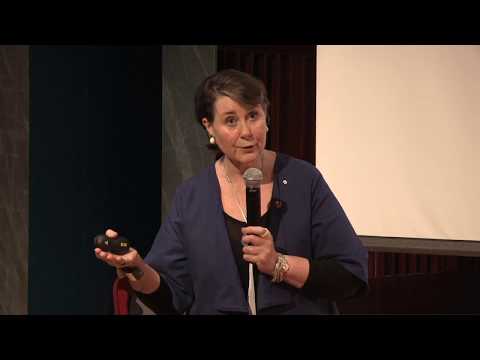
so tonight it’s really a senator’s
report
after just a few months in this new job
to be able to speak with you about some
of my experiences some of my thoughts to
ask a few questions on the theme of
youth peace and power and the way in
which I come at this is the notion of
global citizenship but I often get the
question at the beginning certainly of
discussions or classes where students
will say is this a sham like is there
such a thing as being a global citizen
and in this world that we’re sharing
right now you know the fact that youth
leaders are leaders for today so often I
hear people address young people young
leaders and say you are the leaders of
tomorrow no you are the leaders of today
and in decades we have never had as big
a question mark hanging over the human
race about how many tomorrow’s we may
have to share with each other and so
part of my question to all of us tonight
is about the degree to which and the
ways in which youth leaders make a
difference I have no doubt whatsoever
that the answer to the question is yes
but it’s the how and with some specific
examples what you see here are recent
pictures that have been taken they’ve
been taken in Ottawa and the one to your
far right was taken here in Winnipeg and
they relate to the fact that when I
accepted the appointment as a senator
one of my primary reasons for going to
Ottawa was to bring more of the Senate
to youth and more youth to the Senate
and as a result of that my team which is
also very young in their early twenties
that what we’ve been focusing on is all
the various ways in which we can
facilitate coming and connecting with
the Senate of Canada on the eve of July
1st Canada Day we had a hundred and
fifty high school students that we
hosted on Parliament Hill to meet with
and talk with senators and have some
open discussion and again on your far
right what you see is one of the youth
circles when I come back to Winnipeg or
when I’m invited to other parts of
Canada usually there is an open youth
circle and that’s a time when it is a
circle and it is a time for me to listen
one of the questions that I ask quite
consistently is how youth leaders feel
about the broken promise on electoral
reform and one of the other questions
that I ask is what about lowering the
age of the vote to 16 is that not
something that makes sense for us as
such a young country a demographic that
has so many young people coming into
responsibility think about that I’m
actually seriously looking at
introducing a bill look at this question
of lowering the voting age to 16 and
here you have just this week I sit on
the Aboriginal peoples Standing
Committee at the Senate and we hosted
you have a combination of youth from
Nunavut
with the Senators on the Aboriginal
peoples committee and let me see if I
can get the laser to work there is our
very own Senator Sinclair and we have
the chair of our committee is Senator
dick from Saskatchewan and this is
Senator Denis Patterson from Nunavut and
you can see that the youth leaders that
joined us are wearing their traditional
clothing and in addition to that Senator
Charlie wah – is here along with elder
turk from from Nunavut both addressed
the youth and Anoop – took and and were
able to conduct themselves in
conversation in an OOP – – which by the
way is not usually allowed in the House
of Commons and so when we ask ourselves
about what youth leaders can do and what
intergenerational cooperation can be
about I want to bring to your
and those of you that perhaps haven’t
looked closely at the relatively new
sustainable development goals they’re
supposed to be a 30-year plan here and
of these sustainable development goals I
wanted to highlight this evening 16 I
could as easily have looked at 5 which
is the standalone sustainable
development goal or SDG for gender
equality because the failure of the
Millennium Development Goals which ran
from 2000 to 2015 was largely attributed
to the fact that there wasn’t a gender
based analysis or an approach that
understood that the living of Rights the
ways in which war and calamities
disasters just about everything that
happens to us as humans does not happen
in the same way to women and girls as it
happens to men and boys and that doesn’t
even get us into the the discussion
about what happens for us when we live
in such an intensely gendered society
was so little flexibility for those who
are non-binary so when we ask ourselves
though what does it take to actually
have sustainable development in a world
where we have the bellicosity for
example of the leaders of North Korea
and the United States engaged in very
dangerous sandbox language that the
implications of trying to mobilize our
communities our countries and to work in
a form of global governance it actually
builds peace raises the question of how
and one of the single most important
aspects of this for sustainable
development of peace for our world is
access to justice and not just in the
formal way we have to look at outcomes
we have to look at not just the
articulation of Rights but the living of
Rights and in order to do that although
very often we use the adjective
institutional as though it is something
that’s negative the fact of the matter
is worldwide functioning
Krissi’s need their institutions and
they need their institutions to be
accountable and transparent and
responsive and this has a lot to do
potentially with the kind of
accountability that is defined by youth
leaders from a very inclusive framework
when we’re looking at the whole notion
of building peace what does this really
mean one of the single most influential
Security Council resolutions is 1325 one
three to five there’s nothing special
about that number other than the
Security Council passes its resolution
in chronological order and so this 1325
was actually adopted in the year 2000
and since then we have a suite of
Security Council resolutions that have
built up around 1325 and generally are
known as the women peace and security
agenda I chose this because there are
very few women blue helmets in the UN
peacekeeper forces there are they are
growing in number and the some of the
work that’s been done here at the
University of Winnipeg has actually
focused on supporting the women blue
helmets and the nature of what they do
when they are building peace and what
and trying to bring greater security but
one of the other really important
aspects of 1325 and it’s important when
we’re looking at whether or not we’re
building community peace or whether
we’re building we’re trying to
contribute to international peace the
simple fact is that there’s only one
Security Council resolution that was
actually drafted in the words and with
the concepts directly from those
affected in other words women and in the
case of 1325 most of the language most
of the drafting was done by women in the
South who bear the brunt of conflict to
a much greater degree than those of us
who live in in northern part of the
world this is actually a picture that I
took here on campus just down just down
the hall from here and this was taken
when we had about 30 women Bluebird
here in Winnipeg for a police conference
and used that opportunity to do UN
training with them on a new policy that
had just been developed in response to
what was happening in the field these
blue beret women came from conflict
zones where they are actively serving to
Winnipeg for the workshop and they then
left here and returned back to those
conflict zones the focus of the policy
was responding to sexualized violence in
conflict and that is often referred to
as rape as a weapon of war one of the
things that happened in the confidential
sessions that we held where women were
able to talk about what it means for
them to be peacekeepers and the fact
that they themselves deal with
sexualized violence within their own
work environments very often or as a
number of them said when they arrived
for their assignment they were told by
the commanding officer to make tea for
everyone so the nature of this kind of
work and the way in which whether it’s
within the family or the community or an
international assignment gender equality
is a is a key and core issue for being
able to move ahead what we have in a
more recent move from the Security
Council is a Security Council resolution
that in addition to the women peace and
security agenda has now broadened that
to a youth peace and security agenda
here you have students from Global
College you will probably recognize the
sculpture in the background the massive
gun which has its barrel twisted as a
symbol of stopping violence something
that we’ve obviously done very badly at
as you as a world community and the tall
gentleman in the middle is the first
secretary to the Canadian mission to the
UN this picture was taken as part of a
course that I used to teach here called
the UN study tour and here you have a
more recent picture taken on the very
first occasion when Prime Minister
Justin Trudeau spoke at the United
Nations and described himself to the
world as a feminist and these are
students again from University of
Winnipeg I just have to say that we’re
halfway through the mandate of the
current government and there are lots of
questions that need to be asked and I’m
very grateful as an independent senator
that I get to ask many of those
questions and I wanted to invite people
with concerns or suggestions to please
open up communication with my office I
would really welcome hearing from them
but part of the point I wanted to make
was it the broad smile at least on my
face in this picture is because I’ve
been taking students to the United
Nations for more than 20 years and I
gotta tell you the 10 years under Prime
Minister Harper were rough they were
really rough because it wasn’t a time to
feel particularly proud of our leaders
or to feel particularly proud of our
country there was so much retrenchment
there were so many things that we used
to lead on that had to do with focusing
on human rights and building of peace
that we just basically stopped doing as
a country although I must say that in
many ways the focus on and maternal
health was a strong aspect of of the
Harper years and so what we’re now
looking at what we’re on the cusp of I
think is this meshing of the idea of
youth leadership and the women peace and
security agenda so that what we are
looking at is creating alliances
alliances across age across culture
across geography across gender with a
focus on the intersection between peace
and security peace being possible
through the living of human rights this
is an example of local action which
ended up having quite a strong
international
impact what you’re seeing is a postcard
that was generated out of artwork done
by a local Winnipeg artist take a look
at some of the symbols it’s it comes out
of something called the feminist toolkit
on peacebuilding and this was initially
developed with the Girl Guides here in
Winnipeg to be used to build awareness
at a very young age around the peace and
security agenda and resolution 1325 but
now where it’s broadly used is actually
in projects in conflict zones with girls
who are learning to read and write but
the actual module is an adaptation of
what was doubt developed here in
Winnipeg with the Girl Guides so that
the literacy is not on see dick CJ in a
c-spot but rather it’s using the
conceptualization of youth leadership
and girls empowerment as part of what is
possible to do even in the midst of a
conflict zone and what you see here are
pictures this is the program called the
girl ambassadors for peace we have some
direct relationships for example with
the South Sudanese diaspora here in
Winnipeg that is connected to the work
of the girl ambassadors for Peace
program in South Sudan which even though
the program was was forced to flee and
they’re all in refugee camps they’re
still continuing to do the literacy work
and using the materials in the refugee
camp so where does that leave us well
even more recently September 21st and
22nd last week we had some additional
responses at the upper level and one of
the things I want to be clear about with
you is I’m not here talking about the
Security Council in the United Nations
because I think it’s perfect or because
I think it’s the only place where we can
build a more peaceful world but the
truth is that we are global citizens and
the truth is that we do have a form of
global governance that has lasted more
than seven
and it was created to focus on peace and
human rights and although we have a lot
to be deeply deeply concerned about and
scared about actually the notion that we
can have an articulation at the world
level at the global level as we did last
week in acknowledging the genocide
directed at the yzi D people’s and in
addition to that acknowledging using the
formal terminology of crimes against
humanity and genocide and acknowledging
the impact of the sexual enslavement of
young of Yazidi women and so the way in
which we’re seeing this is another
example of this linkage between the
youth peace and security agenda the
women peace and security agenda and
again last week on your right is someone
you may already be familiar with Nadia
Murat a young Yazidi woman who has who
was sexually enslaved who was able to
escape and in spite of tremendous
difficulties in being having to relive
and beery traumatized she has been an
advocate and an activist on this issue
for years now and has over the last two
years had the direct assistance of the
human rights lawyer Amal Clooney who has
seen beside her in this picture this
ties into the fact that there is a new
Security Council resolution that
actually acknowledges the extent to
which the crimes against humanity are
happening in our focused on women we had
a number of emergency meetings in Ottawa
on Parliament Hill this week they were
directed to the rajendra refugees that
have been forced out of Myanmar also
known as Burma and just a really quick
historical note on this for over a
thousand years
there were Inca people who are
predominantly Muslim but not exclusively
so they have a mix of cultures and
religions within the Rohingya people and
in the rocking region of Myanmar that
what we are seeing
is in just about a month’s time almost
half approximately four hundred and
thirty thousand Rohingya have been
forced out of Myanmar and the majority
of those forced out in just the last
four and a half weeks are women and
children
and of them seventy thousand women are
pregnant many of them pregnant as a
result of rape as a weapon of
intimidation coercion in this case of
forced migration the photograph you see
here is of a young Rohan WA boy what
he’s actually trying to shelter under is
the tarp that has been made available to
the families to try and protect
themselves as their shelter they get a
few sticks of bamboo they get the tarp
and that’s about it
and what is clear is that although the
level of awareness has broken through
because this didn’t start happening just
a couple of months ago but the scale of
it and the focus of it and the fact that
a Nobel laureate is the state councillor
for Myanmar and thus far has actually
referred to quote fake news about the
massive exodus from the country forced
exodus from the country and even used a
term such as fake rapes so we haven’t as
an international community begun to
respond in many cases to respond at all
and when we have been trying to respond
not responding at the level of the scale
of what has now been clearly defined as
a genocide and so you have one of our
already most impoverished most
overpopulated countries that faces more
disasters than many other natural
disasters in many other countries
Bangladesh is now where these four
hundred thousand-plus rahega are trying
to survive it’s a dire situation and it
is something that the word
old needs to have a coordinated response
and Canada needs to step up and do more
nobody really disagrees with that the
discussion that’s going on in the hill
right now is what will that look like
this last photograph is taken again in
New York at the United Nations and this
is part of a dramatization about the
threat of nuclear war now when this
dramatization took place that was not it
was before we had missiles passing over
Japan a clear demonstration that they
could as easily be landing in Canada or
the United States this is the closest we
are to nuclear war in over 70 years and
the picture I chose because it really I
think for many people it’s a sense of
what what could we possibly do but I
need to remind you of something in July
of this year more than a hundred and
twenty countries were at the United
Nations in New York and committed
themselves to a new nuclear
non-proliferation treaty Canada was not
even in the room
this is an engagement this is a
communication these are questions that
need to be asked of your elected
representatives this is an area of
leadership for youth leaders and for
leaders across the age spectrum to
become engaged in because this is about
whether we have tomorrow’s my last point
is just a picture from travels that I
think conveys a sense of tranquility and
I want to close by asking you to
consider something I’m not telling you
to do something I’m asking you to
consider doing something this is
something that I’m very grateful to have
learned from indigenous elders in Africa
as well as here in Canada when I’ve
talked with them because I’ve worked
with a lot of women in different places
who’ve been under tremendous pressure
and violence and when I asked them how
they continue
how it is that they continue to have the
courage and the tenacity to be activists
in the face of such terrible violence
and threats of violence and in their own
way
what elders have said is that we’re
human and we have to find ways to
nourish ourselves in order to continue
in order to keep working to make a more
peaceful world that is actually grounded
in the living of human rights and part
of what I’ve learned from them is how
important it is to look for the sweet
spots it might be a beautiful sunset it
might be a smile on a child’s face it
might be a particularly lovely morsel of
food that is of great pleasure in a
moment
it’s a moment don’t get bitter that saps
energy so please in your own way think
of nourishing as part of being engaged
global citizens and leaders and on the
table outside there’s this this is just
a symbol but please feel free to take
one of these little candies and if you
opt for it think for a moment about the
value of finding your sweet spots in the
midst of our shared struggles Mel C
Thank You Mitch
[Applause]
Please follow and like us: