
living things in their context and they
have certain characteristics in the way
that they look at the world have you
noticed the way that ecologists are so
do me and gloomy I mean there’s such a
pessimistic Bunch and the reason is that
they’re always saying we’re going to run
out of things
he can’t amidst know better that is to
say economists say you never run out of
anything it just gets more expensive so
ecologists are busy collapsing the
resource base whereas economists keep on
cycling and cycling through episodes now
sometimes you actually do run out of
stuff this is the Aral Sea and they did
run out of water but in general terms
there’s some sort of a substitution goes
on copper gets more and more expensive
in practically so and so we shift to
silicon most of the world is made of
silicon so there’s lots and lots of it
we’re not going to run out or even have
it as being scarce the same thing
happens in biology but biologists don’t
recognize it as a substitution willows
are plants that use wind pollination and
we can see that on the one side on the
other hand there have been evolutionary
pressures that have changed the pressure
and moved willows into back into wind
pollination and at that point they have
to reinvent petals and they do this with
their bright yellow stamens so it’s
simply a substitution but biologists
don’t see it that way economists in
general terms view things as profit and
I this isn’t an apology here for
business
or the market or whatever else just
profit as a concept they use it a lot
despite the fact that ecologists are
talking about research
is being used they never talk about
profit I don’t know why but they never
do now I want to tell you a story about
my lab and how it works before I retired
I used to have my graduate students come
out to intellectual mud wrestling
matches sometimes at my sometimes at my
home but other times at my lab it’s the
same group of people there and you can
see we’re eating in both cases I would
go down to the plants and man lab where
there was a stove and I would cook lunch
for about 20 30 people and we can see
then that the resource comes from my
garden and the students go out and
gather it and you can see they’re
gathering tomatoes and enormous
quantities of tomatoes I said is the
deal
so tomatoes are abundant and we waste
them that is to say we only pick ripe
tomatoes perfectly ripe and anything
else we just let rot we don’t process
them in any way we just consume them and
eat the tomatoes this is a resource that
gives you a lot of gain for minimal
effort we call them high gain high gain
systems are wasteful they’re local
because they sit on the hot spot of the
resource they’re ephemeral because the
hot spot doesn’t last very long and
they’re dynamical you can describe them
in terms of the dynamics of the
situation so the students go out there
and they high gain the tomatoes and then
I high gain in the kitchen as I stick
them in bags and we freeze them for the
rest of the year now with tomatoes you
need basil and I grow a lot of basil in
my god but notice the way that whereas
tomatoes are all tomatoes all the way
basil consists of leaves which you want
on these stalks and stems and flowers
and things that you don’t so we have to
approach basil quite differently we have
to treat it as a low quality resource
it’s
that is to say you put in a lot of
effort you tend to be prudent the
resource is consumed in a dispersed way
the resource tends to be long long
lasting and structural and so that in
this way basil is reduced down processed
increased in quality until we just have
the leaves so the students are out there
in the garden and they’re low gaining my
basil they’re spending a lot of time
just getting the good bits and then the
good bits come into me as a high quality
resource and I proceed to high gain the
the basil as I consume it and in this
way we have plenty of resource for the
food um I have a good colleague Joe
taint of he’s written a wonderful book
in 1988 called the collapse of complex
societies and his basic premise is that
societies are problem-solving units and
they solve problems by complexify in the
beginning you don’t get a lot of benefit
for complexification then you get a lot
but in the end as a diminishing return
on effort so over time we consume a
resource it collapses becomes too
expensive
we then indulge in some sort of a
substitution notice though that the cost
over time keeps on going up relative
complicatedness is a different manner
notice the way that we get more and more
complicated and difficult to deal with
but then all of a sudden you change your
strategy notice the way that you can
only go so far with an abacus you move
the round the little beads and that’s
all well and good but you can’t get very
far with that I mean the Incas did well
but they were limited but most of us
these days work with computers and
notice the way then that while computers
are intrinsically much more complicated
they’re actually much easier to use
and so we substitute and with the
substitution the world becomes easy to
deal with
the sumerians for example were able to
increase their productivity in
agriculture up to about twenty-six point
something or other for the barley per
hectare that’s a lot
that’s about what you get in Wisconsin
so they’re they are driving their way up
this agricultural curve until eventually
they say well what can we do we need
more what can we do and they switch to
rape loot and pillage
notice that all the difficult problems
go away the issue is not how can we
increase the urge a little bit more
production the issue is how do we get
this stuff home and so in this way it
becomes easier society then moves from
an agrarian system to an agrarian
military system and then in this way
increased complexity now let’s proceed
to look at animals in equivalent terms
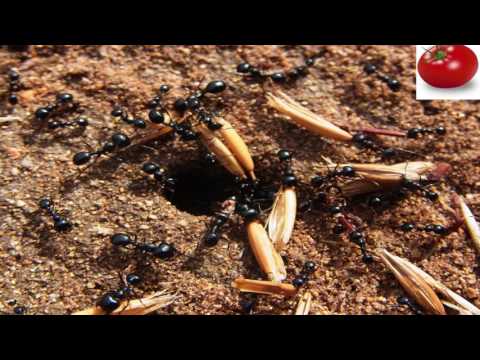
these are harvester ants and harvester
ants are harvesting seeds harvester ants
eat food you’re thinking as opposed to
what well not all ants gather food as a
resource some ants gather and I feel
terribly intrusive about this picture I
mean watching this poor grass off of
defecating but there we go it’s
producing feces you don’t get a lot of
feces because you have the Sun and then
leaves it feeds the grasshopper that
produces the feces so there’s not a
whole lot of resource there now you
might think feces well that’s a low
quality resource not if you’re raising
funds jet fuel it doesn’t get any better
and so this way they gather the resource
have special strains of fan G and the
fan G then a generate fungal biomass
which these ads then proceed to eat so
these guys are making basil they’re not
making tomatoes the harvester ants are
making Tomatoes
now notice that we don’t have a whole
lot of grasshopper faces and that limits
the size there are areas about as big as
the thing I’m standing on
that’s all they work with alternatively
if you move to Sun two leaves and then
harvest the leaves and there’s an
enormous quantity of leaves but you know
what leaves aren’t very good for raising
fungi and in fact the fungi which
exploit the leaves in the nest
are seven times more efficient very
highly specified particular strains and
these are really impressive ants they
have great big millions and millions of
members they have soldier ants which are
300 times the size of mininum ants and
various other different sorts of ant in
the colony in between they have Rhodes
which is sometimes as long as 300 yards
I mean that’s a lot and they even have
castes which going for street cleaning I
mean we’re talking really elaborate this
is massive low gain they’re consuming
such huge quantities they can even
become agricultural bests and so grass
so grasshopper feces is all well and
good but leaves let you get even bigger
and better now another colonial insect
two termites a completely separate group
deriving from cockroaches and these can
be plotted on a space here and we can
first of all the red ball are termites
that live in wood they live in wood they
eat the wood and eventually that
catastrophe as they literally eat
themselves out of house now they eat
their homes at that point they go over
the high-gain collapse and then in this
way have to reboot and move to a new
colonial situation well that’s all well
and good but there is another approach
one of them is whoa
as you get to the edge you’re looking
over saying oh my god what can we do
let’s go this way and so that in this
way by changing course they move towards
the prudent consumption limit remarkably
enough hardly any systems go prudent
notice they haven’t followed the top
half of the prudent line and systems
don’t do that as long as there is a high
gain resource in the vicinity they will
use it all systems do that
all systems are wasteful for example
you’d think in these times of expensive
and difficult fuel you’d reckon we’d
conserve gas do you take a picture of
the United States out in Minnesota and
South Dakota you can see a glow on that
glow is just gas being blown off and
wasted we never look after our resource
but once you’ve got to this prudent use
then all of a sudden instead of living
in your food you live in an area where
you move out to get the food and bring
it back in again dead twigs little
branches and so forth it’s a low gain
system so there’s lots of resource
there’s so much resource but 10% of the
methane in our atmosphere comes from
those guys
I mean it’s impressive they’re really
big and low gain you know what’s really
exciting it doesn’t stop there there’s
40 percent goodness in Deadwood that you
gather there’s still five percent
goodness in soil 65 percent of termite
species not biomass but species 65
percent of termite species eat soil whoa
it’s not much resource there but if
you’re clever and work hard enough and
are low gain enough you can still get by
on soil now if your termite you’re sort
of limited by the way that termites the
termites and there’s only so much soil
you can eat other organisms that live in
soil actual
you represent most of the biomass on the
planet bacteria are really good at
living in soil and they live in this
huge mass of renewable resource as far
as they’re concerned so in this way they
never run out and form this absolute
mass of material human societies do the
same thing Joe Tainter and I’ve recently
wrote a paper where we looked at the
thermodynamics of ants as opposed to the
Roman Empire I’ve already talked you
about
I’ve already talked to you about the
Roman roads which after ants use well we
ran the same comparison here is Caesar
in the Roman Republic
he used the rape loot and pillage
there’s a trouble with rape Luton
pillage you can only do it once the
travel is with you freight and looted
and pillage is nothing left and so that
in this way the Roman Republic did
wonderfully well they had a fund for
orphans and widows but in the end they
had to move to an empire
this is his nephew or Gustus and
Augustus is really low gaining he moves
away from taking gold there’s a lot of
gold out there if you can get it but
eventually it runs out so you have to
move to peasants there’s not much in a
peasant but there’s lots of them so you
go out you tax them the taxation system
in the Roman Empire was really really
impressive
in the end the Western Empire collapses
the Eastern Empire takes over but it too
begins to run into becoming too complex
with too big an overhead they’re running
short of materials konstanz the second
the Emperor before him in the East was
was Maurice and he was killed by his
soldiers because he half their wages so
being an emperor wasn’t that good a deal
so konstanz was very clever and he’s the
only example we know of the only one
that actually actively simplified in
this way then he gave away a fifth of
the Empire and gave it to his soldiers
it was such a good deal
that a revolting army killed their
general in North Africa and came back
into the system to get in on the deal it
works wonderfully well instead of Sun
making grain that’s then turned into
gold and silver which is consumed by the
soldiers the soldiers make the resource
instead of being a burden on society
there’s suddenly a wonderful asset to
society there the only system that we
know that we can think of that actually
actually actively simplified we have to
do the same now we’ve moved from the
industrial revolution where the strategy
was double the size of the engine
thicken the cable and pull harder if the
span is wider just make a bigger bridge
industrial systems were large but not
the systems we work with today the
systems we work with today gets smaller
and smaller
that’s why rotor tillers and motor cars
get more expensive and computers get
cheaper because there’s an economy of
size increase speed but an economy of
size now can we survive the difficulties
were under now a lot of people in
society are pretty angry about this in
this election on the left and the right
and so we’re getting pressured so what
can we do well the Romans knew about
coal and they knew about steam engines
but they killed the guy who invented the
steam engine and did so because it was
going to undermine the slave economy
they had an industrial option but they
wouldn’t go in that direction so here we
are we have a very complicated society
the burden is absolutely huge what we
have to do is only things which are
economical and worthwhile Elon Musk is
basically using oversized Victorian
steam engines you can’t take the train
to Mars even if the Train is going
twenty thousand miles an hour there are
physical limits millions of miles are
things we simply can’t
and so we have to not make the mistake
of the Romans but go with our future
which involves getting simpler and more
efficient and eventually we hope getting
into some sort of new pattern but it
will be fundamentally different thank
you for your attention [Applause]