
so solve the definition so what is a
poem what is poetry and it’s a very
difficult question to answer you know
every generation sort of kind of comes
up with their own qualifications of what
a poem isn’t it seen as more than what a
poem is but the word poem or poetry
council ancient Greek that I can’t
pronounce but I could pronounce the
Italian for AEO which means I create so
fundamentally a poem is a made thing
it’s a design the thing so then what
does it need to do what is it designed
to do but you know that’s manual okay
so William Wordsworth and he don’t be a
fan of William Wordsworth but he had a
very useful if not a bit abstract
definition of poetry and Wordsworth says
that poetry is the spontaneous overflow
of powerful feelings a very was worth
eonline right but he’s not wrong
all right so it’s a design thing a made
thing and was it designed to do to evoke
powerful feelings very enough okay okay
what all poems regardless of form style
school etc have essentially four main
qualities write a poem has to be
economical alright in this use of
language because what differentiates a
poem from a short story or novel often
is the length and the use of language
because the language that it uses it’s
very figurative all right it uses
metaphor used a simile it uses conceits
all right it plays the word games and in
the line so the alliteration assonance
consonants right things that you know
work really well in short spaces but you
might get annoyed by a novelist who
loved alliteration would you agree
after 300 pages maybe a lot of
alliteration my kind of hard to wear
thin on you but you know 14 lines
alliteration is also the point emotion
evocative as we said before it has a
stir some intense feeling within you
that’s perfectly fine if you read a poem
and it doesn’t move you you know that’s
perfectly fine you move on to the four
that does but poems are also visually
strong the poet has to rely on the image
that his language can create in your
mind okay so these are the four
qualities that I tend to use I’m sure
another poet might give you some
different qualities but these in my
opinion are the four most important
qualities for good poetry economical in
other words there is no word left that
is unnecessary bye-bye Dickens right
there’s no word in the poem
it’s unnecessary everything were then
there has to be playing some hope some
part for the larger role it use
distributive language but at the same
time the language can’t be too abstract
okay when ports are just starting out to
write they tend to you know hold on to
abstract things like love like freedom
etc with a problem with those types of
words is that they don’t create the same
image or they don’t create clear images
in the minds of the audience or the
minds of the reader so good force tend
to rely on solid things on things that a
reader can picture that they can realize
to then get to the abstract like freedom
at section all right so which is all
well and good right you know a bunch of
people you know wearing dark clothes
written in a cafe in Paris smoking
cigarettes and playing word games right
and I cry people read their book right
so what is the point of poetry you know
why is poetry or why should we think
poetry is important why should poetry
matter to us next slide because poetry
helps us deal with life and the world
poetry is a way of
understanding of empathizing of figuring
out your place in the world and I
realize that the most important thing
the most important lesson for teaches us
is that we are not alone in it okay I’ll
give you an example when you are
experiencing a trying moment in your
life when you are at your lowest moment
your lowest ebb or at your highest peak
what kind of language can you turn to to
encapsulate those emotions as much as I
love novels you’re not gonna sit down
with full you know Moby Dick all right I
know one line from Moby Dick they call
me Ishmael firstly so it’s poetry that
we turn to and I’ll Paulo say how many
of you like or actively read poetry
not many people okay cool give me a
second okay let me ask you another
question because I think you’re lying to
yourself allow me to prove it how many
of you like music hey okay take a walk
with me think about your favorite song
I’ll give you a second all right take
away the drums take away the instruments
what do you left with lyrics right words
are those words economical could that
singer carry that message in a much
longer form in other words could the
message of the other other song could it
be a short story yes no could it be a
novel could it be a film it could be in
any other form of art right agreed but
what you’re left with is rather
economical language all right is it
visually strong that they create images
in your mind what you think about when
you
okay
is it emotionally evocative this because
what you’re listening to is poetry so
let me go back to my first question how
many of you like and actively enjoy
poetry thank you
next slide now so one of the things that
poetry is especially powerful and
helping us deal with is loss is grief
death I’m going to read to you you’re
going to read with me I’ll read you
listen how about that so I’ll read these
two poems to you and you would listen
hopefully attentively and they both deal
with death slightly differently okay you
know what scratch that what we want one
sleep so this poem is called stop all
the clocks and it’s by the English
writer WH Auden anybody know who
ordinance yeah I got that I’ll give me
that yeah so good this isn’t my favorite
orden form hands down okay hopefully at
the end of it you’ll see why okay
because that’s all those things all
those qualities I said good poetry has
stopped all the clocks stopped all the
clocks cut off the telephone prevent the
dog from barking with a juicy bone
silence the pianos and with muffled drum
bring out the coffin that the mourners
come that aeroplanes circle mourning
overhead scribbling on the sky the
message he is dead
put crepe bowls round the white necks of
the public dogs let the traffic
policemen wear black cotton gloves
he was my North myself my east and west
my working week and my Sunday rest my
noon my midnight my talk my song I
thought that love would last forever I
was wrong
the stars are not wanted now put out
everyone pack up the moon and dismantle
the Sun or away the ocean and sweep up
the wood for nothing now can ever come
to any good that’s one of those poems
that just kind of gives you that gut
punch you know he captures what grief
really does to the soul what loss really
does to a person
sorry to bring the mood down but it’s
economical every word in there does
something it’s visually strong before he
touched the abstract ideas like love
right like goodness he’s filled with
tangible visible things that we can
relate to before we get to the abstract
that’s what good poetry does all right
it uses image in this way but then
listen also to the rhyme the rhythm the
meter orden is one of those masters like
the scene as if he could write almost
any form like Shakespeare is famous for
the sonnets but someone like Auden can
write sonnets villanelles whatever right
and all good poetry whether it is a form
for a tree or free-verse
has to understand the use of meter right
and that’s what makes it so similar to
music that’s why you can set poetry to
music because of its meter because of
its rhythm and going back to visually
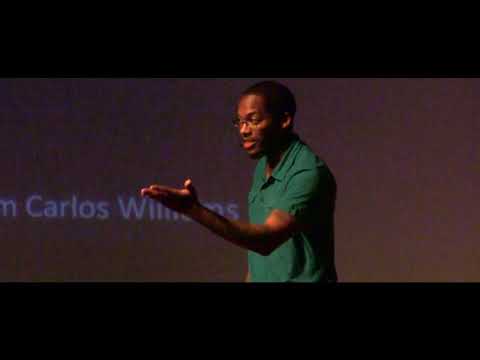
strong poetry William Carlos Williams
moose is what we call an imagist for it
he’s an American poet at the turn of the
last century and the images of school
took the idea of being visually strong
to the extreme it took that idea be
economical to the extreme right so you
can strip away everything that’s
unnecessary until you find that one
image that conveys the
meaning that you wanted to alright so
this is my favorite William Carlos
Williams for him boy I have lots of
favorite poems so sorry it was really
hard to get the number of forms down for
this thing you know the red wheelbarrow
by William Carlos Williams so much
depends upon a red wheelbarrow glazed
with rain water beside the white
chickens that’s it this could be a
painting right right and one of the
things I’m very passionate about is how
we introduced people to poetry I think
one of the reasons why not many people
didn’t read you know raise their hands
when I asked the question at first
because one of the most dangerous things
you know in terms of injuring our
ability to appreciate poetry is how
we’re taught it I think in preschool
we’re doing a great job ring around the
Rosie hickory dickory dock you know
we’re learning meteor learning rhyme
we’re learning
imagery we’ve done a great job but
somewhere between preschool and
kindergarten and you know prime the
upper grades in primary school something
starts to happen so by the time the kids
you know graduate from high school and
come to my classroom in the college
there’s what we call a poetry anxiety
you see a form on the page and the walls
go up the lights go out and people are
like don’t know what this is it’s
craziness alright so we need to work
actively against that I think one of the
biggest problems in education with porch
in particular is that we teach poetry
with comprehension in other words we
take meaning and we elevate meaning to
the top of the list when it comes to
appreciate in poetry but poetry like I
said before is a made thing it’s a
design thing it’s made to evoke intense
emotions right remember that stuff from
the first slide it took a while but we
got it up so remember it that’s what art
does right evokes strong
right that’s why you guys have favorite
songs because those songs evoke strong
emotion that’s why you have favorite
artists that’s why you like the you know
experience art you don’t take a kid to
an art gallery and say you know this is
the Mona Lisa for example you have a
test in five minutes what does it mean
you wouldn’t do that right
you wouldn’t sterilize art in such a way
but that’s something we do the poetry
every single day in the classroom no
part in the tangent the red wheelbarrow
four stanzas despite it being so short
is very very attuned to a meter right I
won’t bore you with the four
terminologies but essentially it’s
symmetrical the first times and the last
times I have the same meter and just to
give you a cheek guide without getting
into metrics and 40-meter just count
syllables right so the first in the last
time the San Jose both have seven
syllables and the middle stanzas have
six all right so what this does it
automatically creates the rhythm for you
all right
you use how you measure a meter in
poetry all right the syllables are
combined in different ways that are very
technical but I won’t get into that
so it’s a very economically well
designed the Machine despoilers and
three of the four stanzas deal with the
image this red wheelbarrow glazed with
rain water beside the white chickens
what can we extract from that image you
know what meaning can we extract from
that image where are we some place rural
a farm right it’s just rained we know
for sure the farmer raised chickens
that’s automatic any image any
photograph any painting could give us
that information in those trees those
three stanzas so all of the poetic
movements all of the emotional evocation
comes in the first stanza right so much
depends upon
was it that depends upon the red
wheelbarrow the farmers life
the farmers livelihood right the way of
life of this community the culture right
what would happen if there were no
wheelbarrow right that’s what caught
Williams has us thinking about and
that’s what Porsche can do in such a
small space you can imagine a short
story or film you know about a rural
area and how they try to you know make a
way of life for themselves but Cobb
Williams can do this in this form next
time and now probably as of five o’clock
on June 10th my favorite form or the
manliest by Percy Bysshe Shelley and
it’s a sonnet and the meter is
ridiculous Shelley ISM is one of the
English masters of sonnets
but porgy has a way of transporting us
alright so we’ve been to orden right at
ordens you know his funeral not his
funeral but him visiting a funeral we’ve
been in rural United States with
Williams and now Shelley you know it’s
gonna take us to ancient Egypt having
never been there himself we do know as
he was a rabbit Egyptologist he’s loved
learning about ancient Egypt and he
wrote this forum and most of the poem is
in his friends voice okay but listen
carefully if you hear the rhythm look
out for the imagery alright the tangible
images that you can place and then
finally listen for the emotion he’s
going to reach out and touch you with
very enough okay
I met a traveller from an antique land
who said two vast and trunkless legs of
stone stand in the desert near them on
the sand half sunk a shattered visage
lies whose frown and wrinkled
lip and sneer of cold command tell that
it’s sculptor well those passions read
which yet survive stamped on these
lifeless things the hand that mocked
them and the heart that fed and on the
pedestal these words appear my name is
Ozymandias king of kings look on my
works ye mighty and despair nothing
beside remains round the decay of that
colossal wreck boundless and bare the
lone and level sands stretch far away
now history buffs might know that
Ozymandias is the Greek name for Rameses
a second right and those of you know
your Old Testament Rameses does a guy
who we know through the Moses story all
right so no little ego here right but
look at Shelley’s poem right and irony
of the imagery of
Ozymandias Azure Ramses statue and the
inscription and and what really is there
right that the great works of man right
the height of Egyptian civilization
right the height of Egyptian Empire and
now nothing there is left in a way
reminding us that death is that great
leveller that time you know it’s
something that is undefeated and
undefeatable and so weird
Shelley is able to sort of bring us down
from our arrogant pedestals
I remember that there’s something much
more powerful out there I leave you
today with you know Instagram form right
from thousands of years long dead person
for it Rumi great poet to write although
I would love to be able to read them in
the original
but Rumi says stop acting so small you
are the universe in ecstatic motion so
you know a competing message from what
we get from Shelly you know there’s
greatness inside of us we are made of
star stuff as Neil deGrasse Tyson would
say you know that we are part of
something much bigger than ourselves
I think this is what really moves poetry
for me that’s what makes portly so
powerful for me and I hope that might a
little talk today has opened your eyes
maybe go and explore some for yourselves
thank you very much
you
Please follow and like us: