
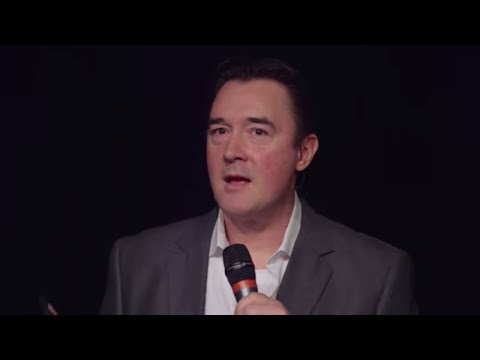
actor I have a BA in theatre and I also
have an MFA in drama and I know what
you’re thinking that makes me completely
unhireable
and I get that that’s all right however
what I do want to tell you my headshot
what I do want to tell you is what I
have learned through my training as an
actor and my work as an actor and to
begin with that I kind of have to tell
the story about how I got into this when
I was looking for colleges at that time
my mother was working at a law firm in
downtown Philadelphia and she came home
and she said one of the lawyers there
who was a partner in the firm had just
up and quit just gave up the entire law
firm and he went to go to work playing
the tuba at the Philadelphia
Philharmonic which was his life’s dream
and she came to me and said you know if
you don’t do what you want now it’s
going to come back and find you so I put
aside all the applications for colleges
that I had for biomedical engineering
and instead I looked at theater yay uh
so but what have I learned from this and
here’s the thing is by going to school
for theater and learning and being an
actor I’ve learned a couple of great
lessons and one of the big lessons that
I learned more than anything else is
that action commit to action do it the
joke that I will tell all the time
around my office is how many actors is
it take to screw in a light bulb
six one to do it five to stand around
and say I could have done it better if I
be given a chance right if you want to
screw in the light bulb screw in the
light bulb commit to action
the other one is expectations right no
one is really going to give you anything
you should be grateful for whatever you
receive no one is going to hand you the
light bulb to screw in if you want to
screw in the light bulb do it yourself
and the last one is a little bit
difficult because you have chosen a
profession that is very difficult to
make a living so you’re going to have to
work harder you’re going to have to work
harder than your friends you’re going to
have to constantly work to make this
happen
so with these ideas in mind I kind of
thought to myself 1 what do you do
I can sit around and I can wait for the
phone to ring which is what a lot of
actors will do or I could go out and I
could actually make my own work and I
figured if I make my own work then I get
to control my own artistic future and my
own financial future so at that time I
actually created Jet City improv with my
co-founder Mike Christensen this was
1992 we started the company with the
whole idea of now we get to get on stage
yay
I’m an actor whoo all right and then we
started doing shows every once in a
while and then we did a couple shows a
week and the next thing you know we’re
doing more shows and more shows and more
shows and currently we do 5 to 6 shows a
week 52 weeks a year a lot of shows so
after a while we’re doing so many shows
and I started to learn something
different
which was about the improv work we were
doing and that changed a little bit
about how I thought about the world the
main lessons that we talk about an
improv all the time is that it is not
about the individual my job is to make
my scene partner look good if I’m making
them look good than I’m doing my job and
in fact it even goes so far as though if
the audience laughed it’s something I
said it wasn’t me it’s actually the fact
that the rest of the team set me up so I
could say that so it is about the group
it’s not about the individual the other
thing is is that I learned how to fully
listen and listen completely not just
with my ears but to listen with your
entire body and then to be able to react
to whatever I heard the next lesson is
the big lesson in improv that we talked
about and it’s the ability to once I
hear something how do I accept that
offer and then how do I build on it and
the shorthand for that is yes and how do
I hear the offer how do I accept it how
do I build on it and the last one I
think is the one that is the most
difficult at times and it’s that
everything is an offer how
I feel about what happened that’s my own
judgment if it happened it’s real
I can either accept it or I can block it
and that’s my choice so with these ideas
in mind we’re doing comedy whoo
um things started to change a little bit
and about this time the company pivoted
uh we got addressed by one of our
performers who said I heard about this
camp at that time it was run by the
Northwest burn foundation it was called
camp I absurd and it’s for kids who have
been severely burned and so he said we
should go out and we should do a show
for these kids we thought okay that’s a
great idea so we contacted the camp and
they sat us down and said moon you’re
doing improv let me tell you the things
you shouldn’t say and they listed all
this stuff we shouldn’t say we said okay
great
and we walked out in front of a large
group of kids and of course it’s improv
so we asked for suggestions from the
audience so we said okay give me
something that you see lying around the
house and the kids at the burn camp said
so we’re like okay um give me something
you see every single day and they said
fire men so yeah we got a little freaked
out and at that point though we realized
that again the show isn’t about us right
the show is about them and the show is
for them we had to let go of our plan
and we had to do what we needed to do
for this audience and once we did that
the show worked out beautifully we have
done that camp every year since that
time this led to us doing other camps
and then finally going to a homeless
shelter one of our board members was
involved in a homeless shelter and said
you should come into a show and I said
well what if we come in into a workshop
so we walked in and here’s an entire
group of kids their hoodie pulled down
over their eyes looking down and we
started to play some games and by the
end of about an hour their eyes were up
and they’re smiling and they’re laughing
and they’re making eye contact with
people and and so I thought to myself
wow in the space of an hour we were able
to do that for some kids I mean if
that’s possible what else is possible so
that led us to then start working at the
juvenile detention facility we started
working with incarcerated youth at the
King County juvenile detention facility
and we went in and did weekly classes
and again a hard sell because I go to my
teaching artists and say hey we’re gonna
go to prison right one of my instructors
loved to tell the story about a game
they would play which was a naive
interrogation one of the prisoners would
be endowed with what they did you know
for their their crime like ripping the
tag off the mattress or chewing gum
under the moonlight whatever it is just
something ridiculous and they wouldn’t
know what their crime is but they would
have to walk in and two of the other
inmates would then be interrogating them
as if they were police officers and
giving them clues so then they could
eventually commit to the crime we played
this game in prison
right right and again it’s not about us
right it is about them what are we doing
how are we reflecting what they need
what are we providing them uh it reminds
me of when I was in graduate school my
teacher Steve Pearson was directing a
show and I was involved in it and oh and
very physical activity that we had to do
lots of running and jumping and climbing
up just very difficult physical activity
and at one point we finished the scene
and he looked at me and he said do it
again okay so I did it again
again very physical and at the end he
looks at me and he says yeah great do it
again so we kept running through the
scene and it got to a number of times
going through and I’m starting to get
tired and I’m exhausted and I’m
exasperated and I’m like what do you
want me to do and he looks at me he says
uh I want you to do it again the point
was I wasn’t gonna learn by reading
about it or by having him tell me how to
do it I was gonna learn by doing it so
do it again when we started doing the
work working with incarcerated youth and
with homeless work homeless youth and we
started doing this work of kids camps
there was no manual and if anyone did
tell us what to do they were usually
wrong so we learned from whatever we did
wrong and then we did it again and we
continued to do it last year we visited
a bunch of different camps and we did 22
performances all over Western
Washington’s Jet City improv these are
children’s camps for bereavement camps
kids were going through cancer
treatments again the burn camp camp I
upset lots of other camps we also
provided free weekly classes at the King
County Juvenile Detention Facility
we provided free weekly classes for for
homeless youth in the University
District and we actually started a brand
new program that’s working with kids
we’re going through a drug treatment
program as well this year Jet City
improv celebrates 25 years of being here
in Seattle as a founder I am extremely
proud of what we’ve been able to do
and I am astounded at the work of this
company things have gone on for me a
little bit and now I work actually a lot
of organizations working with some
business leaders and I come in and I
help people with their communication
their presentation skills and innovation
and inevitably when I walk into a
company there is a business leader or
CEO who comes to me and says you have to
help me my kid wants to go into theater
what do I do
and I tell them you let them write
because they are going to learn more
about leadership presence and
communication then probably most
traditional MBA programs are going to
teach them and they’re going to learn
more about critical skills
problem-solving skills that most college
degrees are not going to tell them
either and most importantly they’re
going to learn these rules if you want
to do something do it don’t have any
expectations no one’s going to give it
to you be grateful for what you get and
you’re gonna have to work harder and the
idea is is that if they do that
hopefully they can take these rules and
they can make the world a better place
thank you [Applause]