
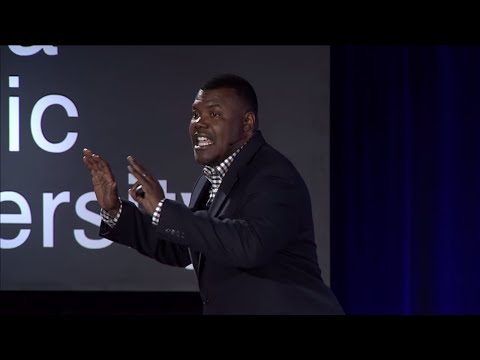
wife and I it was our wedding day
and I vividly remember the moments that
was entailed in that day exchanging our
vows
sharing the joyous occasion with our
family and friends
and who could ever forget opening the
wedding gifts yeah and discovering
glassware and silverware and three crock
pots cash gifts but there was one gift
in particular that stood out and I have
to be completely Frank with you I was a
little baffled when when we opened the
package it wasn’t a small appliance
wasn’t a toaster or a blender it was a
toolbox and I was I tried to be grateful
but in my mind I was thinking the
toolbox was not on the wedding registry
who would give me a toolbox but over
time the one gift that has offered the
greatest value to our family over time
has been that toolbox actually some of
my greatest creations and and disasters
around my house are largely attributed
to to my imagination in my toolbox and
many of you can relate having a vision
of what you want to create and you
immediately think hey what are the tools
what are the resources that I need to
help me facilitate this process
creativity innovation we love it in the
world we have a fascination with it but
I feel a need to pause just for a moment
and to acknowledge the obvious that the
innovative process is one that is
daunting that is arduous that is
challenging it’s not always clean
and contiguous and and actually
sometimes is absolutely frustrating and
overwhelming sometimes it forces us to
take a step back in and ask why in the
world that I start this project and so
what I would love for us to do for the
next few moments is to take a peek into
the innovators toolbox and to identify
maybe three tools that can be useful to
ensure that we stay engaged in this
process
you know once we get past the
preliminary steps of for example
creating urgency to start the process or
gleaning insight from inspiration that
that prompts us to to engage the process
of innovation but once we get through
those preliminary steps how do we stay
engaged in the process and so I have a
few suggestions that I would like to
offer that have been a resource to me
and others who have mentored and and and
worked with me in in times past so it’s
a beautiful photo so the first
suggestion that I want to offer is
smiles smiles and the smile is an
expression that characterizes positive
emotions joy hope gratitude zest now we
know for a fact that positive emotions
that they have the power to generate and
to sustain momentum they’re excellent in
the change process but I hear you
telepathically asking me well you know
how can we control the emotions you know
they’re naturally elicited they’re
naturally evoked they’re a natural
response to a situation and so one
consideration that would love for you to
ponder is to think about what the type
of context that we can create that
enables positive emotions to emerge on a
consistent basis and let’s face it when
we’re engaged
in this this process
of change many times negative emotions
fear anger insecurity and so I think
it’s absolutely critical that we that we
really ponder ways to create a culture
that allows these positive emotions to
emerge we know from research that there
is this direct connection that exists
between emotions and mindset and so some
of you are familiar with the research of
Carol Dweck out of Stanford University
and she’s done a ton of research on
neuroplasticity
and how intelligence is not static but
it’s actually developed but when you
think about this notion mindset is the
soil that cultivates emotional responses
so if you if you think about growth
mindset growth mindset naturally
cultivates and nurtures the development
of positive emotions
whereas fixed mindset it provides the
soil that nurtures that nurtures
negative emotions so I’m reminded of a
conversation that I had with a colleague
and this gentleman he taught a math
course on class and he had a class of
about 15 to 18 students and many of the
students were absolutely terrified of
math actually he had about five students
in the class who were seniors and they
waited until the last semester to
complete that one general education
course to to complete their their their
degree program and so with every class
he had this common spiel on the first
day and it was all about shifting your
perspective making this paradigm shift
right look at look at math differently
you know what you see is how you feel so
look look differently at math and
students for about five minutes they
would feel confident and they like oh I
can do this
and then he would put a compound
fraction on the dry erase board and then
they were searching for the drop/add
form quickly right and so he talked to
me about this experience yeah I don’t
know what we can do I mean how do I
approach this differently so that
students bring a different psychological
lens to this course and I said hey have
you ever considered covering growth and
fixed mindset as an option because it
really hits the notion that hey we have
the capacity is just about leveraging
the amount of effort is assessing the
resources that I have at my disposal
whether they’re internal or external he
said that’s a good idea let me try that
on the first day and so what he decided
to do was to cover growth and fixed
mindset and highlight some of the main
facets of Dweck’s research and he also
intersected that with the strengths
perspective and so he had all the
students reflect on their unique
capacity what are the resources that
you’re bringing into this classroom that
can help you become successful because
you can leverage those resources as
pathways to meet your goal and he said
that the dispositions of the students
shifted immediately and students felt
alive and they felt capable and they
came up with a classroom norm that they
can become they could be completely
transparent about their feelings towards
math so if they didn’t understand the
math concept they could say hey I don’t
understand this but they had to add one
word at the end yet or I don’t
understand this now and it sends the
message that you are capable of
understanding it it just takes time and
students walked into the classroom with
a heightened sense of joy with a
heightened sense of hope with a
heightened sense of optimism and so
those positive emotions created momentum
I actually saw one of the students on on
campus and she said I remember you or
that guy that talked about growth
mindset and and strings with our
instructor and I yeah that’s me Denzel
Wow
shetan and I said how did you do in the
course she said I did great I did great
I actually you know I was just initial I
just wanted to pass the course but I
actually got to be in the course and I
see a great job that’s pretty good great
job all right great job so positive
emotions is huge by the way we actually
have companies fortune 100 companies
across our country who are trying to
cultivate what we call a growth mindset
culture so companies that that are
highly innovative such as Microsoft and
Southwest I love flying Southwest so the
first tool that we see in the innovators
toolbox is is smiles smiles the second
tool I would love for you to consider oh
by the way I love this talk by dr.
Frederickson positivity doesn’t just
change the contents of your mind it
widens the span of possibilities that
you see and that tends to be a direct
benefit of positive emotion positive
emotion the second tool that I would
love for you to consider is style its
style and so you see the turnstile and
you see this image on the screen you’re
probably thinking about men dr. Hall
looks very nice on stage look at him
just smooth good-looking by the way I am
married so I’m sorry all right but
really what I’m getting at with style is
is not what we wear but how we’re wired
and so when I think of the term
innovation some names immediately come
to mind such as Beethoven and Mozart and
Maya Angelou in and Duke Ellington and
Michael Jordan Michael Jackson but the
off-the-wall thriller Michael Jackson
all right the that’s when he was at his
best these are individuals who engaged
the innovative process with their unique
resources they didn’t try to engage the
process like others they knew how to
lean into their natural proclivities and
inclinations to realize their vision so
when you think of some
like Albert Einstein he leaned into
curiosity to produce academic
developments that we still referenced
today or when you think about Michael
Jordan who leaned into competition to
revolution revolutionize professional
athletics and even even branding or
Michael Jackson who had the strength of
Maximizer everything had to be perfect
the right note the right rhythm the
right sound the right lyric and he knew
that all of those pieces would be
integrated to make perfect music that
would translate just one demographic of
people so how do we stay engaged in this
process
we lean into our capacity we lean into
our past capacity we embrace our unique
our unique style so my introduction as a
hire a professional goes back you know
goes back to 2001 and I had a good
relationship with the Dean who was a
mentor for me and he invited me to teach
psychology 101 and I had 35 traditional
college students in the classroom
waiting for me and to be honest with you
when he extended the invitation to me I
thought man I am special but I didn’t
know that he he gave me a class that
nobody else wanted to teach right it was
a Monday Wednesday Friday class at 8
o’clock in the morning and so he
couldn’t get any full-time faculty
members to teach it so he said hey Keith
would you like to teach and I’m like
uh-huh uh-huh and so I remember vividly
walking into the classroom and and I was
I was well prepared I was definitely
motivated and I you know went through my
diagrams I shared the content and I felt
it went well and he was sitting in the
audience and you know I concluded and
spoke to a couple of students he he came
beside me say hey before you take off
drop by my office I’m like okay I will
so you know I excused myself from the
classroom went to
his office he said hey hey close the
door and I’m like oh this is not good
all right
close the door felt like I was in the
principal’s office and he asked me uh
Keith what was that and I said pardon
what was that I said that was teaching
he said no no no no no he said I’ve seen
you present before and that’s not you
and I said well you know as I was
preparing I thought about instructors
that I had and times past and I thought
hey that is scholastic delivery I need
to model what I had seen you know I
thought I needed to be monotone throw in
a couple of words like die bow you know
yeah you know that that’s academic right
and he was like no no no he said listen
the reason why I invited you to teach is
because I like your enthusiasm I like
your energy I like the zest that you
bring to an audience and I knew that
students would be engaged if you
approached the course that way and I
said it’s okay for me to do that he said
absolutely actually I want you to do
that and if you don’t do that I won’t
invite you back I said okay not a
problem
listen that was a very liberating
conversation for me because I I stepped
into the classroom the next time not
feeling the burden of trying to do it
like someone else I felt like I could
step into that space and be completely
myself to present from an authentic
authentic space and what I quickly
assessed is that my students were
engaged and they were nodding and they
were smiling but I was also engaged and
I was loving it and it didn’t feel like
work and so the the second tool that I
would love for you to consider is is
your style
leaning into your talent leaning into
your strengths leaning leaning into your
interest in your passions and your
natural proclivities what a great
conversation with my mentor
I love this quote by the way this
age-old quote from Oscar Wilde be
yourself everyone else is taken isn’t
that a great fault that’s just such a
great thought and it’s good to reflect
on that from time to time hey some other
researchers just tied two strings we
know from from some studies that have
been done by Gallup that individuals and
professionals who employ their strengths
on a day to day basis they are six times
more likely to be engaged in their work
and even in the process of innovating
and change so it really behooves us to
to first identify our strengths but
secondly develop them thirdly lean into
them apply them the last thought I want
to share with you the last tool is
substance is substance so in the process
of change I think I have been guilty as
a as a high achiever and some of you may
be able to relate to this to become very
inundated with the details so you focus
on the day to day and sometimes we lose
sight of the the larger vision and so I
would say that one incredible tool to
consider placing in your toolboxes is
the tool of purpose and meaning I would
say that the vast majority of us that
work in higher education we’re not doing
it for for popularity or for prestige or
for fiscal capital even though we want
to be compensated based on our
contribution but as cliche as it may
sound most of us we’re in this industry
because we want to make a difference we
want to know that our presence that the
conversations that we had that the work
and time that we expended that it made
students better it made our community
better and in some way it made the world
better so taking a few moments to step
back and to reflect and say why am I
doing this extending beyond just the
what
and exploring deeply the why the
innovators toolbox smiles style and substance thank you so much