
[Music]
[Applause]
if you ask anyone to draw a scientist
there’s a good chance that you will end
up with the drawing of a person wearing
a lab coat in fact there is something
called the draw a scientist test which
was designed by a researcher named David
Wade chambers and has been used since
1983 to test how early children develop
stereotypes about scientists the
drawings that kids make are analyzed for
indicators such as symbols of research
and technology eyeglasses facial hair
and of course the lab coat today I want
to tell you a little bit about science
but most importantly I want to talk
about the people doing science I want to
give you a glimpse of what is actually
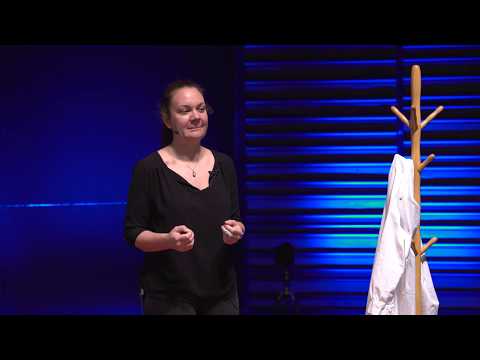
beneath this lab coat so let me take
this off first off actually a good
number of us don’t really wear lab coats
to work I do because I study biology and
I do experiments but if you talk to
theoretical physicists they don’t really
have to worry about getting stained by
dark matter or getting covered in black
hole hair computer scientists can
usually compile their code however dirty
without a smudge and if you talk to
field ecologist or geologists they will
probably trade a lab coat any day for
some cargo pants and a good pair of
hiking shoes and these are just a few of
many other examples but there is still a
metaphorical lab coat in the way that we
all act work and think as scientists
were expected to know things we’re
expected to have answers to the many
questions that humanity has but the
truth is one of the main character
traits of scientists is doubt we are
literally paid to doubt one of the
foundations of research
peer-review meaning that before
somebody’s research actually gets
published it has to be verified and
scrutinized by several experts from the
field who question every experiment
every step of the reasoning every
equation every line of code when we
start our new project our first job is
to read all the literature that has been
written by people before us on our
specific topics and to read this
critically which means we don’t just
have to question the research even
established research we also have to
make sure that we read all the articles
that may matter to us and we need to
make sure that we don’t overlook one
article somewhere that may be of crucial
value to us this is especially important
and at the same time difficult
considering the volumes of research
currently being produced an analysis
that was published in 2014 in the
journal research trends showed that for
the year 2013 alone
across all research fields more than 2.4
million articles had been published
this is a staggering number and it’s
still growing
doubling approximately every 9 years
when we finally get to start our own
work and experiments again we are
expected to doubt everything every
result that we get when we do get
results because the reality is science
actually involves a lot of failure so
much failure we talk about the results
and we publish big advances but we don’t
really discuss all the experiments that
went nowhere
all the calculations that took us on the
wrong track all the hours spent staring
at a blank screen or blackboard trying
to find the right angle to attack a
problem this means a lot of doubts and
all this doubt is only one short step
away from doubting ourselves and many of
us actually do take that step
you see scientists are very passionate
about their work and we’re very involved
in it so more often than not we take
science we take failure very personally
this is part of something called
imposter syndrome the idea that somehow
we don’t really belong here that we got
here by mistake and at some point
someone will discover us for the fraud
that we are right now because of this
discrepancy between who we think we are
and who we think we should be impostor
syndrome can become even worse for
people from minority groups if you are a
woman or a person of color or an LGBTQ
person then there are a few more check
boxes that you cannot check in the list
of stereotypes about scientists and that
can make you feel even more an outsider
when you have imposter syndrome the lab
coat can become much more than a piece
of protecting equipment it becomes a
disguise to hide who we think we truly
are and it can help assert our
credibility when we don’t think we have
any with our colleagues and our
supervisor in short it becomes a kind of
shield the sad thing is a lot of us know
about impostor syndrome but we have a
hard time admitting it and not to
ourselves and certainly not to others
but living with so much doubt can become
crippling and significantly affect our
mental health to the point of anxiety
and depression there has been a recent
flourish of studies published both in
science journals and in regular news
outlets shedding some light on the
prevalence of mental health issues in
academia in fact last year a study
published by the University of Ghent in
Belgium surveyed a population of PhD
students and they found that half of the
students actually exhibited at least two
symptoms of poor mental health and 1/3
of the students exhibited four or more
symptoms of poor mental health which was
putting them at risk of having or
developing a mental illness and of
course this doesn’t this does not
stop once you defend your thesis and
graduate the doctor title is not a cure
for impostor syndrome so postdoctoral
researchers and faculty even are not
immune to it and number a growing number
of universities now provide good quality
counseling services and that’s very
commendable but there is still
unfortunately some stigma associated
with mental illness which makes it hard
for people to come forward and talk
openly about it there is fear of seeming
weak and incompetent and ultimately of
damaging one’s career further down the
line I am a very lucky person because
people talk to me and I have been the
recipient of many stories and
confessions I did spend many late nights
in the lab hiding so that my colleagues
wouldn’t see me in case I would fail my
experiments
I still cry sometimes when I fail an
experiment that took weeks or months of
work or worse when I repeat it and I get
different results every time but knowing
that some of my friends were going
through the same difficulties and had
similar coping strategies was a huge
help some very talented people around me
have faced doubt and difficulties and
depression sometimes for years entirely
alone not talking about it until at one
point they could not hold it anymore and
they finally confided in someone the sad
thing is to them it probably seemed like
a big failure when the fact of talking
actually takes enormous courage and
having kept things together for so long
is a testimony to their strength and
resilience
my hope with this talk is to spark some
conversations first off between
scientists and the public maybe this way
we can dispel some of the stereotypes
that are still floating around by
shedding some light on who we are and
how we work we can show a truer image of
what science and
scientists are the good news is that
draw a scientist test that I mentioned
earlier over the course of three and a
half decades has shown that some of the
stereotypes have been receiving children
now draw more women more people of color
and less lab coats maybe this can also
help fight some of the distrust against
science that has developed in some parts
of the world recently science is made by
passionate and creative people but most
importantly people who question
everything that they do
first and foremost their own work people
who may not be completely infallible but
who will try very very hard to pursue
and find and disseminate the truth and
second I’m hoping that we start
conversations among scientists ourselves
science is amazing it’s it’s a lot of
fun it’s probably one of the best jobs
in the world but it can be a very lonely
endeavor even in a team especially in a
team we all want to do our best and we
sometimes put enormous pressure on
ourselves so that we don’t disappoint
and let down our colleagues and our
supervisors but there is comfort in
knowing that we fight the same battles
and we should be more supportive of each
other after all we’re here to do science
good science not to win an episode of
Survivor but in order to do that we need
to learn to let our guards down a little
and to trust each other in short we need
to learn to take off our lab coats
sometimes thank [Applause]
Please follow and like us: