
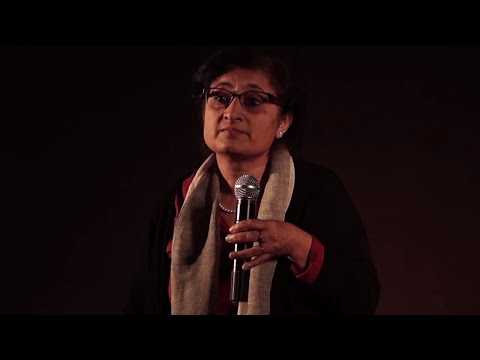
[Music]
a very good morning to all of you let me
begin first of all by thanking all of
you for my being here today it’s indeed
an honor for me to speak to youngsters
especially who are going to make very
very important choices in the
environments that they are going to fill
tomorrow for me alchemy of choice I
would like to go through some
experiences of my life human beings I
believe have the power of choice they
have the power to choose to make the
life how they wish I guess they among
the innumerable species are the ones who
are endowed with the power of mind who
can create who can think who can make
choices and it is because of these
innumerable choices of men and women
over millions of years that has created
the world that we live in today some of
these choices lead to big Wars led to
Maha
led to plunder and some choices later
non-violence the path of ahimsa the path
of love why are these choices led to the
very edifice and what mankind stands for
I believe it is our own individual
choices that are so very important to us
our small choices make a difference not
only to our lives
but to the lives of those that we relate
with coming to my own life as the police
officer the journey of my own choice
there were times very difficult times
when man had to stand up for justice
when I had to stand up for the poor for
the downtrodden
there were times as a young police
officer suddenly when I would see our
men at time of election paraded through
the cities creating fear among the
people I had to stand up against my own
officers there were times when I
remember in very very important
investigating cases
of very very important men high-profile
cases even before the Supreme Court I
stood my ground these are choices that
you make these are very very important
choices that you make that not only make
a difference to you but also to the
people that look up to you while at one
side she spoke off when she mentioned
out here it yes I was awarded with the
gallantry yes that is what the public
speaks for you well it the other end yes
you always have the do mostly sucks word
over your head that you may be
transferred out or you could be punished
but we make very small choices compared
to the choices that great men make be it
Gandhi beat what today I’m going to talk
it’s Martin Luther King he fought
against and he took the choice of
fighting for the black against the
discrimination of the white he took the
choice to go behind the bars and he
spoke very important lines that if we do
not fight for the injustice that is
happening
someday that injustice will come out of
our doorsteps so what is the choice that
we have before us he spoke of the
tyranny of the tyranny of the few and he
also spoke of the silence of the good
men he said that if you’re going to be
silent that is something that you will
have to think about and dear friends
when I speak this I wish to convey to
you because your youngsters tomorrow you
are going to lead your men and women
wherever you are if you do not stand for
that injustice and if you are silent you
are as bad as a bad man coming to my
next slide you must have read this
beautiful book To Kill a Mockingbird
Harper Lee sets this book in 1930s
Alabama state a highly reaches state of
America the lawyer
Atticus Indus decides to defend the
rights of the black man against the
white man for this the device
are up against arms against him he and
his two children have to bear the brunt
of their insults it is then when he
speaks and says that while I can learn
to live with those folk folks I have to
live with myself I have to live with my
conscience and dear friends again this
is the conscience that we must think
about this is what we must think about
do we have the strength do we have the
courage to have the power to fight
against what is the injustice that will
confront us and each of us that each
moment of our life wherever we are we
are confronted with his justice we see
justice all around are we silent
spectators in that injustice sometimes
even our conscience cannot help us this
is a very very thin border line that I’m
talking about I remember a foreign a
half year old child kidnapped in one of
the places that I was working in there
was this tension of this child being
conduct we were able to apprehend a boy
we suspected about 15 to 16 hours of
grueling questioning questioning an
interrogation questioning an
interrogation and we took us around not
only math city where I was working but
the adjoining city saying that he’s kept
the child here he’s kept the child there
15 hours took the tension who can
imagine the expectations from the public
the people your own it’s like a ticking
bomb syndrome each moment is very
important there is the child each one
feels that yes it is my duty to solve to
save that child it is then I remember
nearly after 15 hours when I took the
decision and I told my officers did you
tell the boy that we are going to put
him through extreme torture that somehow
made the boy come out with the truth
the young little boy four and a half
years was recovered brutally killed and
yet he had put him in a flower pot cover
it with mud the question before us is
here where is that line where is the
thin line that we need to cross on
where is our conscience maybe that will
happen you know our own organizations
how will you stand up but that
organizational culture the societal
norms will we be able to do that that
thin line is very very important the
same question came up before a German
quote quote similar circumstances the
the what the policeman had done was also
reviewed the judge came out came about
and said and held the police officers
guilty he said even the threat of
torture was crossing that line he said
it is an extremely slippery slippery
stope slope while he held him guilty
he also said he could understand the
ticking hamsa syndrome he could
understand the intense pressure and he
said that his vile eye to punish them I
while I do hold them guilty I will
exonerate them not punish them sometimes
maybe Henley strategize this is a
beautiful example I like to talk about
there was a high tension Hindu and the
Muslim community both up in arms against
each other because the previous night
and old Muslim lady had died and they
had bet the Muslim family had buried
that women in their part of the feet
accidentally some portion of her also
got buried in the most in the Hindu land
the Hindus are adamant that the lady
needs to be Exuma
the Muslims were adamant that as per
their Shariat they will not allow it to
be exhumed
so what soon you know villages and yupi
crowds come in thousands there’s
pressure one side the Hindus one side
the Muslims each up in arms that we will
not agree to what you want so one of the
police officers came up with this
beautiful idea he said why don’t we dig
a tunnel so he dug a tunnel the side of
the Muslim side the lady and slowly the
Muslim lady they did the sari the lady
was pulled to the other side and into
the Muslim field so yes can we
strategize in the organisations can we
think can we be cool can we take
decisions that can be very very useful
sometimes sometimes it may
happen that you may be pushed into your
decisions into your choices you all
would have read this book this beautiful
book on shooting an elephant elephant
George Oval while in STP you a police
officer working in Burma suddenly it was
informed that elephant had gone on
rampage it had gone must so he was
expected to go and shoot the elephant he
picked up his rifle more for the reason
that he wanted to take care of himself
rather than shoot the elephant because
he had no idea how to shoot the elephant
and that even with the rifle that
couldn’t shoot an elephant anyway then
he proceeded soon he had throngs of
people following him the crowd growing
larger and larger expectant expecting
why because they were excited the public
is always excited now they are going to
see a shooting of an elephant
finally and they see the elephant the
elephant is as mild as a cow because it
was no longer must he knew at that point
of time that he must not kill the
elephant but he when he looks back the
writer says the yellow expectant faces
looking at him for the reason that they
wanted him to kill the elephant he says
so as not to look a fool in the eyes of
those people he killed the elephant
brutally killed the elephant dear
friends I have said here will we shoot
our elephants how we will how will we
deal with these situations this is
ultimately our conscience that again
will speak for the choices that we will
make coming to my next light this is
again a very very beautiful slide it
talks about how we tend to rationalize
the choices that we make
have you not rationalized the choices
that we have made each point each moment
when we lie we when we tell the untruth
we always rationalize the choice here is
this beautiful story the parable of the
sorrow for different groups of people
from four different nationalities
wanting to crime and 18,000 feet pass go
across the pass the treacherous pass the
difficult pass very very excited no
earlier 3:00 3:30 in the morning Decatur
some of them not feeling very physically
fit to climb the cross the pass also
anyway they start the walk the new
zealanders me will leave earlier and
then the American will one of their
Moses also the writer he also follows at
fifteen thousand five hundred feet he
suddenly sees one of the news New
Zealanders coming back a body slung on
his shoulders and he literally dumps it
in front of this Mountaineer the
American writer and he says I’ve done my
bit you do your bit and he’s very angry
and leaves because the Sado the
half-naked sadhu barefooted sod who was
nearly did the others were kind enough
to give him clothes
the Japanese gave him some water in food
but they did not agree to give him the
pony that would take him down the slope
the shade was put left him on a mountain
and said okay that was a sunny site and
all left the South who died or lived one
doesn’t know the in the end the author’s
friends different questions him and he
must be very happy having reached the
summit and left and all a human being to
die the author says that what right had
the sorrow a barefooted sadhu or naked
sadhu come down a treacherous path when
he had another part to go by he said
afterward after all didn’t we have come
with the idea of crossing this mountain
he said ultimately that didn’t we all do
our share dear friends this is the point
where I would like to pause to think
this is the time where our ethics our
organizational ethics our choices that
we make our choices not only affect us
but also affect all that is around us us
our family our organizations our society
and what I said in the beginning it is
the whole edifice none of mankind
madam already mentioned this yes I would
also like to say that yes these are the
two difficult of different roads that we
have do we have the courage do we have
the conviction can we make the conscious
choice of following the difficult path
and difficult path here I talk of
upholding the justice seeing
that injustice is happening in front of
you are you able to talk to take the
right path
are you stand up able to stand up for
all that is valued the society and in
the end these beautiful lines I would
like to leave you with you oh but
chaotic yes but but but chaotic ghoshal
stagger despot barbecue a jewel no ho
Novikov haricot shelter Jia Jia Hara in
critical no thank you very much Thunder
ah
[Applause]
Please follow and like us: