
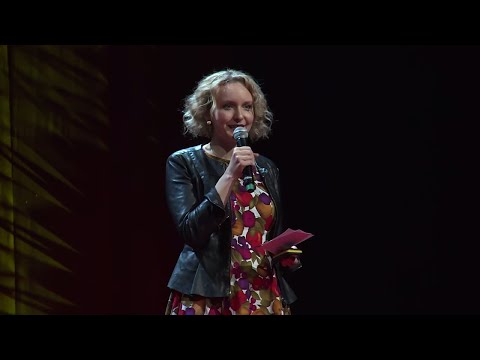
[Music]
[Applause]
I’ve learned to understand virtual
reality about how it’s more than just a
cool new gadget to get hyped up about a
new technology that’s exciting to play
with no I want to talk to you how about
how it’s about how it’s an artistic
medium a whole new form of
communications and like any other form
of media something that we should be
critical about now I’m gonna start when
I was 18 Here I am I was so passionate
about theater
I would devise productions with my
friends in the evenings and at this age
I just found out that I’ve been accepted
to do a degree at work University but I
was also really passionate about
computers so passionate that I built
them I repaired them at my local
computer shop thing is at the time
though I couldn’t see the relevance of
these two passions as much as I’d have
liked them to be connected they didn’t
really seem it but fast forward 10 years
and I produced one of the BBC’s first VR
experiences called Easter Rising voice
of a rebel the theater and the computers
they’re so intrinsically linked in this
piece you can’t really tell the
difference essentially it’s a piece of
digital theater but I have another
attachment to virtual reality which
slightly embarrassing I thought I
invented it about 2040 you know as in
the office as an that producer at the
time and I discovered this way they
forgot my phone up onto my head on my
coat I could create a virtual reality I
just moved my head at the same rate as
the panning shot I’d found as a
landscape and tada I wasn’t simulated
presence it was a revelation
but needless to say my colleagues found
us hilarious and told me alas I had been
picked to the post a few weeks later
it’s my birthday and my colleague John
bought me I
Google cardboard headsets now you’re
probably wondering why is there a
rectangle on the screen in those early
days with my Google cardboard at home I
had a revelation all other forms of
media pretty much happen in rectangles
or it’s virtual reality it’s all around
you this felt incredible I realized how
we situate our lives around these
glowing slabs these gulling slabs that
aren’t really natural do you ever see a
rectangle in nature I’ve never seen one
we even spent 8 hours a day looking at
these rectangles yes that’s almost half
of our waking hours on average I thought
maybe there could be another way maybe
it doesn’t have to be like this could
this be a bit like the development of
perspective in painting this here is an
example of one of the first known uses
of perspective and painting it’s no
Vangelis portrait from a late 700s
you’ll save away that the images here
they’re symbolic your brain fills in the
gaps whereas here this is one of the
first known uses of perspective and
painting it’s called the tribute money
and it speech from the early 1400s and
you’ll see here just look at the way
that simulation is key to creating a
sense of presence could this be another
leap from symbol to simulation I think
we’re moving further along this
continuum from representation to
simulation just take a look at it for a
moment and let’s situate some other
forms of media on it so for example
novels in the third-person there’s an
author representing a series of events
to you in a story that you’re being told
that’s it’s more than a representation
site of this continuum
however when you’ve got a medium like
gaming for example or immersive theater
they’re way more simulative and what’s
exciting about virtual reality is its
sweet spot it’s bang in that simulation
place now what I want to do for rest of
his talk is to unpick that creators
toolkit that simulation brings let’s
start with the physiology of this when
you’re in virtual reality the crew
has this power to elicit physiological
responses so for example your hairs
might raise on the back of your neck if
you’re standing next to a cliff edge for
example you might get shivers down your
spine or if it’s an adrenaline-fueled
experience you might feel your heart
racing the arse also really great for
relationship building you can build
bonds with other people or for people
who aren’t actually real but may as well
be the interesting thing is with 360
video I found this is that when somebody
smiles at you in 360 and looks you in
the eye you smile back it’s like an
auto-response I’m house Vicky
physiological responses
I tend I feel that little endorphin rush
– now psychologists would describe this
and especially as it matures as a
parasocial relationship so you know
about feeling I don’t if you got this
when you’re a teenager about your idols
it’s as if you really know them well
that feeling could be elicited with
virtual reality and fast tracked you
could hang with your favorite
celebrities or even with great thinkers
and learn from them something else
virtual reality is good at is embodiment
you can be put into the shoes of another
and this can often create a sense of
empathy not necessarily but it can do
this is a still from my frame friend
Jane gauntlets piece dancing with myself
and you’ll see you’re at dinner you’re
having a night out but you experience
what it’s like to be her having an
epileptic seizure it’s essentially a way
of creating a shift in your
understanding of a world these pieces
where you’re placed in somebody else’s
shoe shoes could create a shift in your
whole sense of understanding of a world
or just pace your filter bubble so now
let’s look forward let’s look to what
happens after you’ve taken the headset
off fast forward hours days even years
the thing about VR memories is they
stick they really stick and we know for
education theory but people learn better
usually when they’re doing the same
applies where they are because in
virtual reality we’re learning through
doing it’s something that I did rather
than something that I observed and that
is crucial it’s also crucial
virtuality impacts our sense of self so
when something’s something that you did
rather than something you’re it becomes
a life experience what is an identity if
not a collection of our life experiences
virtual reality creators have the
potential to adjust your whole sense of
self I think that this is becoming quite
clear as the are craters power is so
different to any other form of media
it’s not necessarily better but it’s
different and we need to understand it
now just this week
Mark Zuckerberg announced that he wanted
to get 1 billion people as users a
virtual reality but high stakes here
so when UNIX put on a virtual reality
headset please know this but the person
who handed you that headset the person
of a group of people who created that
experience and the headset manufacturer
they have a duty of care towards you
because you’re vulnerable let’s unpack
those ethical challenges so firstly
critical distance so a lot of my VR
crater friends and me actually we get
excited rave about how you’ve got this
direct route through to manipulate the
emotions of your audience it’s kind of
like engineering empathy it can you can
make people feel a certain way and that
can feel green but step back if that
power is in the hands of somebody that
you don’t necessarily agree with their
attentions might make you feel uneasy
just think for example that example I
gave you about manufacturing social
bonds out of thin air of people who may
or may not exist could there be a
purpose there that makes you feel
uncomfortable you see the thing is with
most normal or traditional forms of
media when we suspend our disbelief
there is a suspension space and it’s in
that suspension space where critique
happens that is critical distance now
this actually isn’t a new issue there’s
an eminent theater practitioner of a
20th century called Burt or Brett and he
advocated a technique called the from
dance defect which roughly translates to
alienation
the audience in his day was theater
tended to enjoy getting swept away the
heroes there was romance it was all
quite something going to the theater but
he wanted his audiences to really
deconstruct the socio-political
environment of a time think about those
characters motivations to be really
aware so he developed the foreign banks
defects or alienation maybe ask for your
creators can look into this and actually
learn from it but also you as audience
members when you put on a VR headset you
can do something too you can leave time
and space after the experience and
remember to do this to ask yourself some
key questions about that piece so for
example why did that create to make that
experience how did they want me to feel
and if everybody did this experience in
the whole world how would it change
things on a grand scale so yes we can
take a leaf out of this book here you
see the R is more than a medium it’s a
whole industry it’s an industry that is
forming around us and industries have
biases they have issues around ramp
representation and the most positive way
for an industry to be is to represent
the diversity of a population in all of
its vibrance so what can we learn from
the construction of other industries if
we go back in time for example and
change Hollywood’s early days or Silicon
Valley or would you differently I think
there’s a lot things like racism and
sexism in work cultures they feed
through into the product we know this
and they feed through then into
audiences in society there is a golden
opportunity here to create from scratch
a healthy dynamic inclusive virtual
reality industry but it will take a
concerted efforts it will take a
concerted effort now to create a virtual
reality industry which reflects
society’s best self and not its worst I
want to finish on this note the future
is not inevitable it doesn’t just happen
we don’t just
back and watch no it’s owned by all of
us and we don’t make virtuality as a
create it doesn’t happen in a vacuum it
relies on a relationship with audience
and with society so I’ve got something I
need from you which is your feedback
next time you do VR experience please
let us the industry know what did you
think of it did you have any ideas that
you’ve come from that what comments did
you have what critique so now is the
time to do virtual reality but with your
wits about you thank you
[Applause]
[Music]
Please follow and like us: